
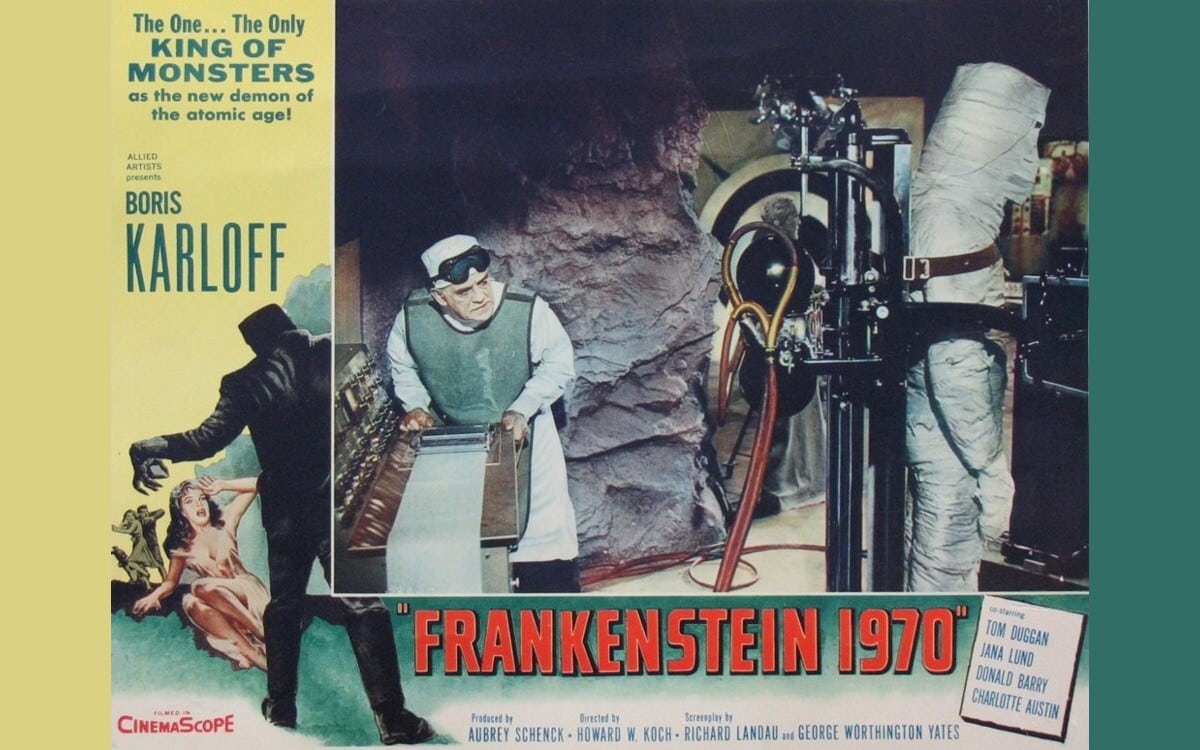
Boris Karloff makes a return to the creature that made his name, but this time as the creator. RICHARD PHILLIPS-JONES revisits Frankenstein 1970, from 1958
It’s 1970, and an ageing Baron Victor von Frankenstein, the last of the Frankenstein line, is short of funds and, for a fee, he allows a film crew to use his crumbling mansion as the location for a horror movie about his family’s past scientific endeavours.
The Baron hasn’t let on about exactly why he needs the cash: He’s looking to purchase an atomic reactor, in order to try once again to fulfil the family efforts to create life, and the desperate Baron isn’t above taking the lives of the film crew in his home, in order to get the required materials…
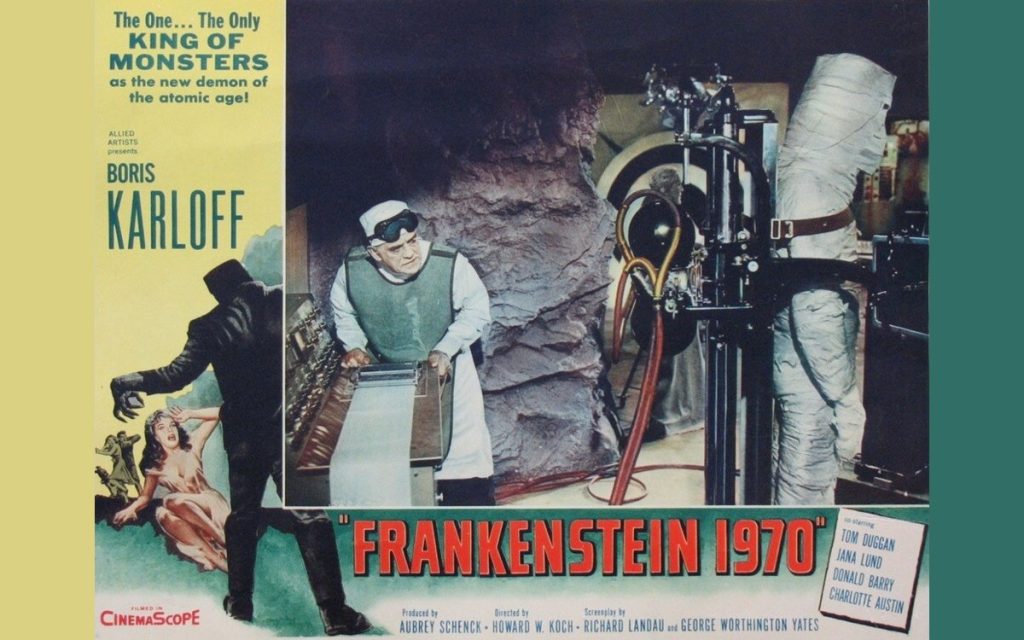
A curious American response to Hammer gatecrashing the market with their Technicolor redux of Mary Shelley’s immortal tale, Allied Artists’ Frankenstein 1970 must have already felt somewhat old-fashioned when it came out, despite the then-futuristic title and premise, its atomic‑age sci‑fi aspirations doing little to disguise what is essentially a creaky, gothic‑by‑numbers storyline that even Universal might have baulked at in the dying days of their horror cycle.
It didn’t help that the film was shot in black-and -white, on a visibly tight budget and schedule, and one can imagine that a large chunk of the money went on hiring Boris Karloff and using the lavish Cinemascope process, which admittedly helps the film look much more handsome than it should.
The film-within-a-film structure also adds a playful dimension. The film crew blundering around the castle with their kit makes for an interesting contrast against the Baron’s archaic laboratory, creating a pleasingly odd atmosphere, and the castle setting, borrowed from another production (see trivia point), is surprisingly atmospheric.
Sadly, these meta overtones, which could have made for a bold reinvention, are squandered in a screenplay which simply ends up retreading old ground that had already been walked multiple times.
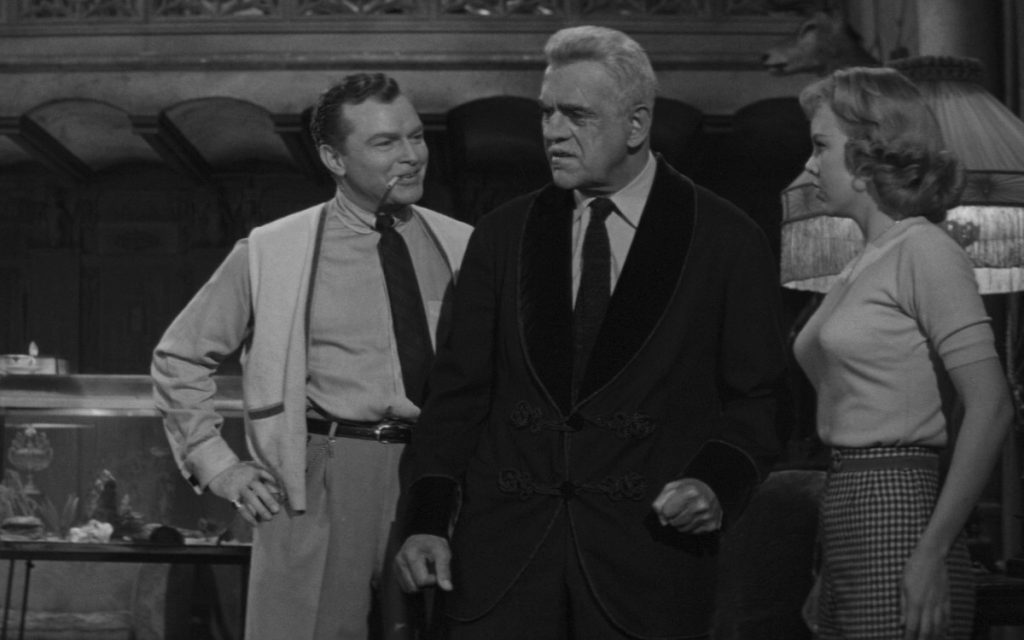
Yet it can’t be denied that Frankenstein 1970 remains oddly enjoyable, and that’s all down to Boris Karloff: His Baron Victor von Frankenstein is a bitter, disfigured survivor of Nazi torture, and Karloff, in a scarred make-up, gives proceedings a gravitas which transcends the hackneyed material, delivering florid speeches with conviction, gliding through the castle sets with a kind of haunted dignity, and giving the impression of someone genuinely enjoying the opportunity to finally be the creator, rather than the creature, as he reached the age of 70 and perhaps the film’s most charming, and touching moment is when the Baron models his new creature on one of Karloff’s own, earlier publicity photos.
Regrettably, the final creature design doesn’t do justice to that scene, and the best that can be said for Mike Lane’s turn as the bandaged, bulky and somewhat ungainly creature is that he’s just plain uninteresting – perhaps on a longer schedule, Karloff might have been able to take Lane aside and offer some tips.
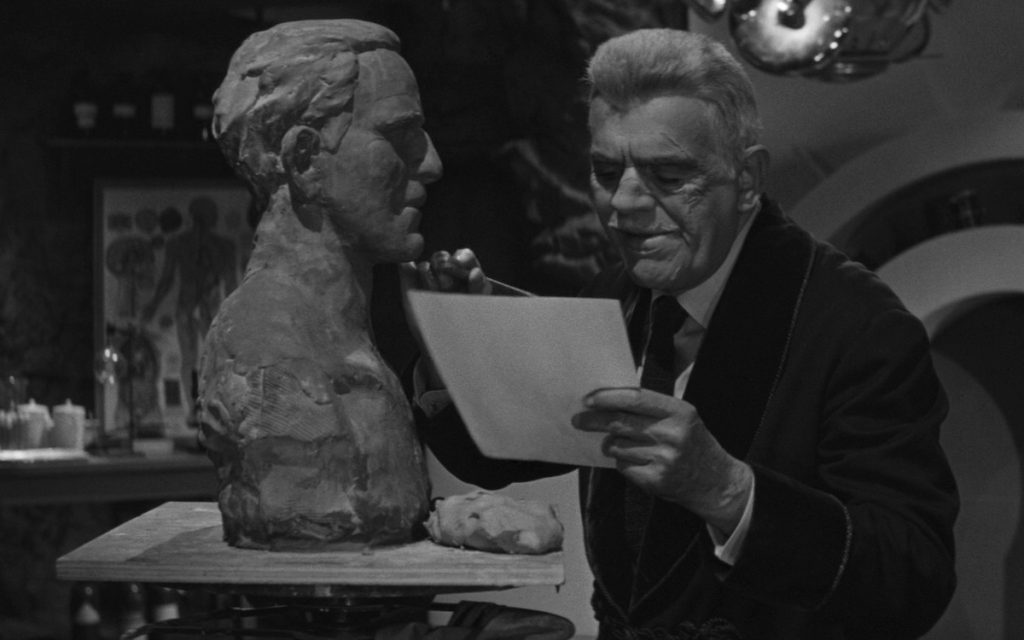
Still, if Frankenstein 1970 never quite escapes its limitations, it still has a certain appeal as a quirky, transitional curio, of the old American horror traditions giving way to those British upstarts. Frankenstein 1970 may not be a great film, but it’s certainly a fun one — and for fans of Karloff or Frankenstein lore, it remains an affectionate, atmospheric oddity worth revisiting.
TRIVIA POINTS: The US censors took exception to the grinding sound made by a disposal unit where Frankenstein disposed of spare body parts. It was replaced by a sound effect of a flushing toilet: cue, much unintended hilarity on the part of the viewer.
Mike Lane doubles his duties by appearing as Hans Himmler, the actor playing the creature in the film-within-a-film.
The set was recycled from another film, Too Much, Too Soon, which had just been shot on the Warner Bros. backlot where Frankenstein 1970 was made.
Director Howard W. Koch later focused on producing duties, including Airplane! in 1980 and Ghost in 1990.