

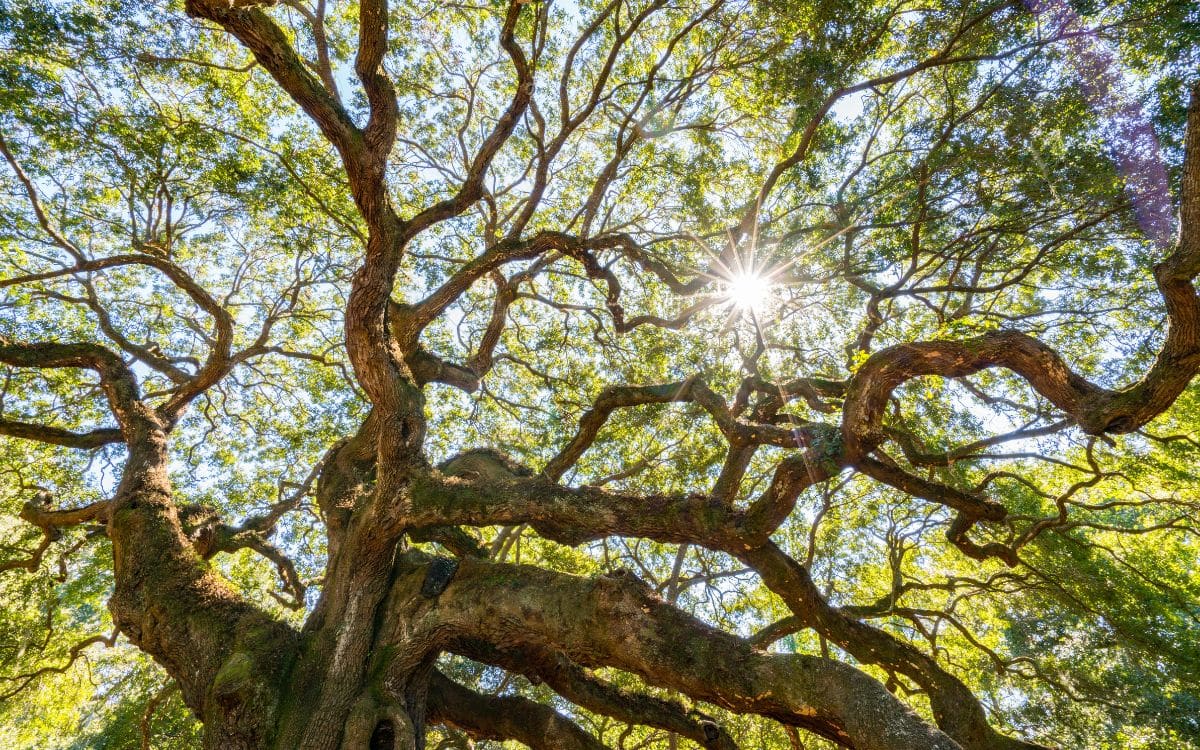
Walk through almost any British wood and you’ll pass trees that our ancestors regarded with a mixture of admiration and caution. They offered shelter, medicine, timber and food, but they also carried stories, superstitions and beliefs that have survived for centuries.
Some trees were thought to offer protection. Others were associated with fairies, witches or the dead.
A few were considered so important that cutting them down was believed to bring terrible misfortune.
Modern pagans often associate particular trees with the Wheel of the Year, but long before the idea of an eight-fold pagan calendar emerged,
Britain’s trees already played a central role in seasonal customs.
From the oak at midsummer to the rowan protecting homes in autumn, they were woven into the changing rhythm of the year.
Oak, the king of the woods
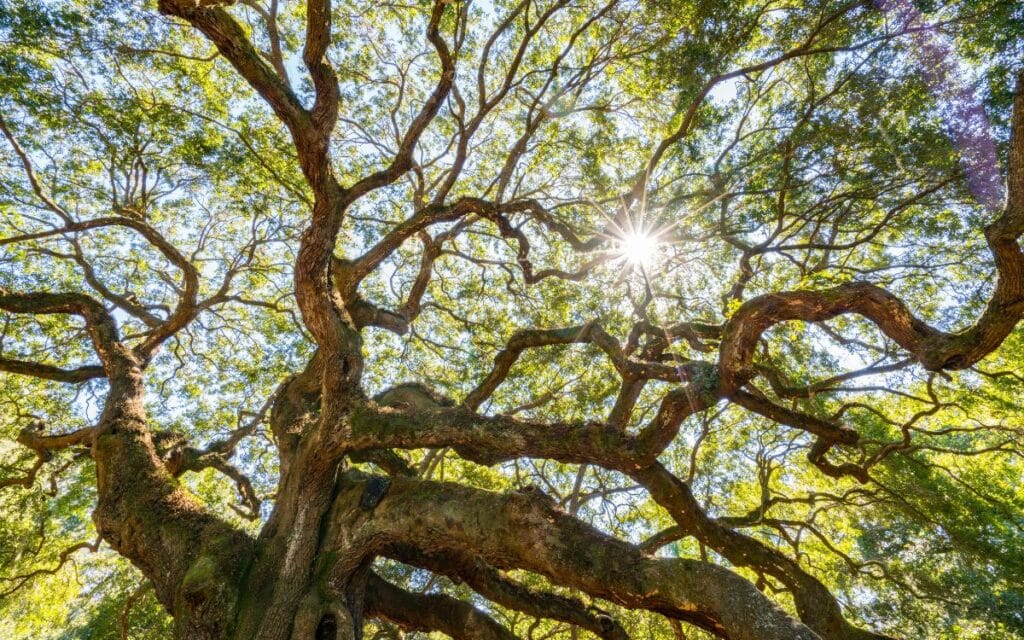
Few trees command more respect than the oak.
Strong, long-lived and capable of surviving for centuries, the oak became a symbol of endurance and strength across Britain and Ireland. It provided timber for houses and ships, acorns for livestock and shelter for countless species of wildlife.
Folklore gave it an even greater status. The Roman writer Pliny claimed that Celtic druids held the oak in special regard, particularly when gathering mistletoe, although exactly how widespread those beliefs were remains open to debate.
Today, the oak is often linked with the summer solstice, when the countryside is at its richest and most vibrant.
Ancient oak trees still dominate churchyards, village greens and old estates, quietly reminding us that some have stood watch over generations of local history.
You’ll find more stories in our articles about oak folklore and Britain’s remarkable ancient trees.
Ash, the tree between worlds
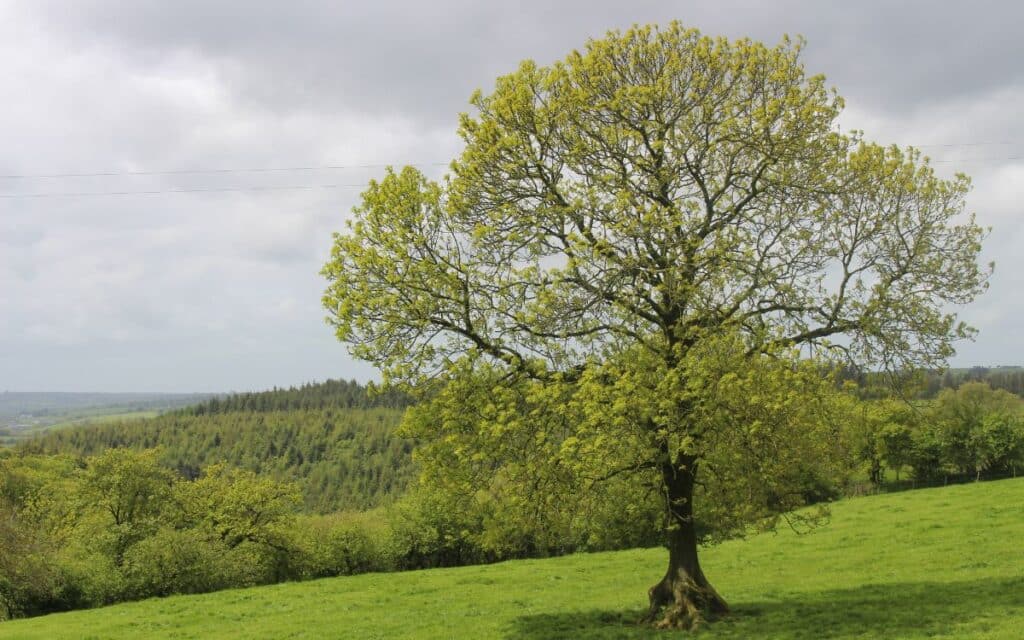
The ash has always occupied a curious place in folklore.
Its flexible wood made it invaluable for making tools, carts and spear shafts, while in Norse mythology the great tree Yggdrasil connected the heavens, the earth and the underworld.
British folklore often regarded the ash as a protective tree.
Ash leaves were carried against illness, while ash saplings were sometimes used in healing rituals, particularly for children believed to be suffering from mysterious ailments.
Although ash dieback now threatens these magnificent trees, centuries of folklore ensure they still occupy a special place in Britain’s imagination.
Rowan, protection against evil
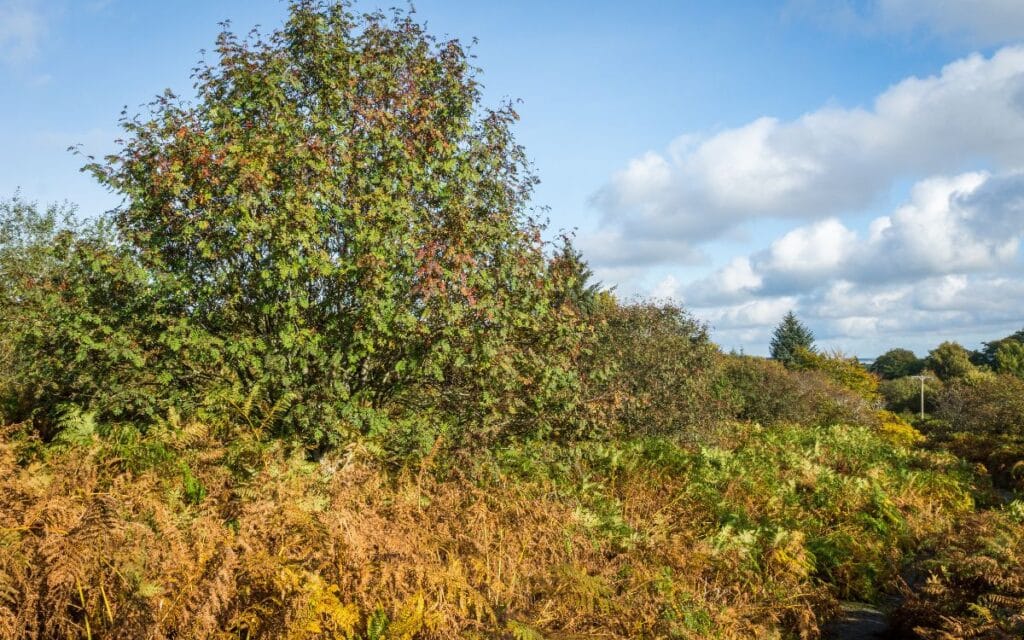
If one tree became synonymous with protection, it was the rowan.
Across Scotland, northern England and parts of Wales, rowan trees were planted close to homes because they were believed to keep witches and evil spirits at a distance.
Their bright red berries were thought to possess protective powers, while crosses made from rowan twigs were hung inside houses and byres to safeguard families and livestock.
It’s difficult to travel through the Highlands without noticing rowans growing beside old cottages and farmsteads. Whether people truly believed in their magical powers or simply respected tradition hardly matters. The custom endured because generation after generation felt it was worth preserving.
Our article on rowan folklore explores these beliefs in greater detail.
Hawthorn, where the fairies live
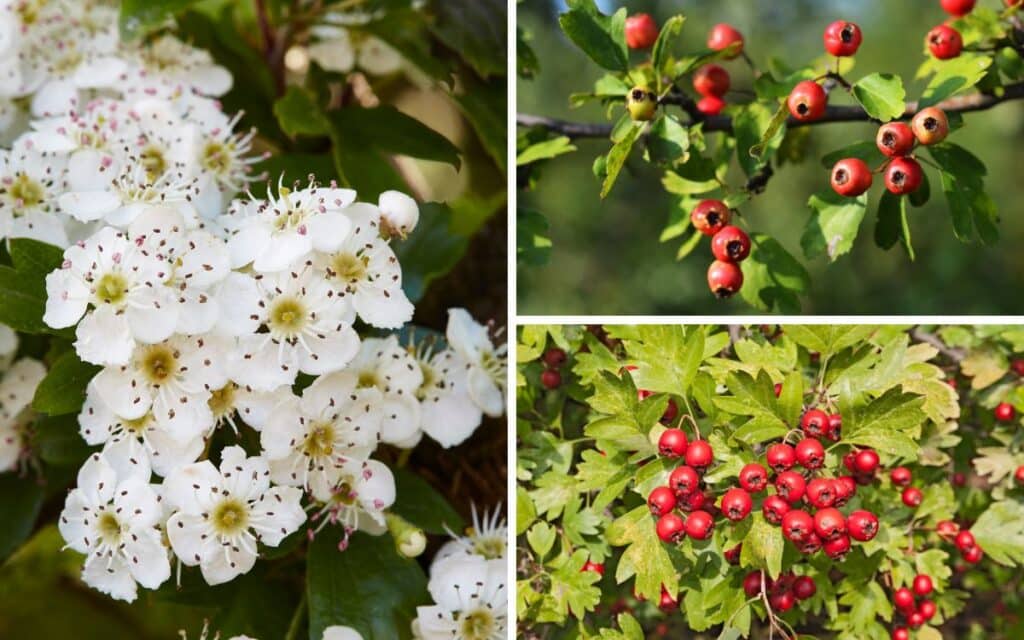
Few British trees inspire quite so much caution as the hawthorn.
Every spring it bursts into spectacular white blossom, filling hedgerows with one of the country’s most familiar sights. Yet folklore has long warned against disturbing it.
Across Britain and Ireland, solitary hawthorns were often regarded as fairy trees. Cutting one down was believed to invite disaster, bringing illness, financial ruin or even death upon the person responsible. Stories of road builders diverting new roads rather than remove a lone hawthorn continue to surface even today.
The tree also became closely associated with Beltane. May blossom decorated homes and villages as people celebrated the arrival of summer, although bringing hawthorn indoors was considered unlucky in some parts of the country.
It’s one of the finest examples of how admiration and fear often sat side by side in British folklore.
Holly, the guardian of winter
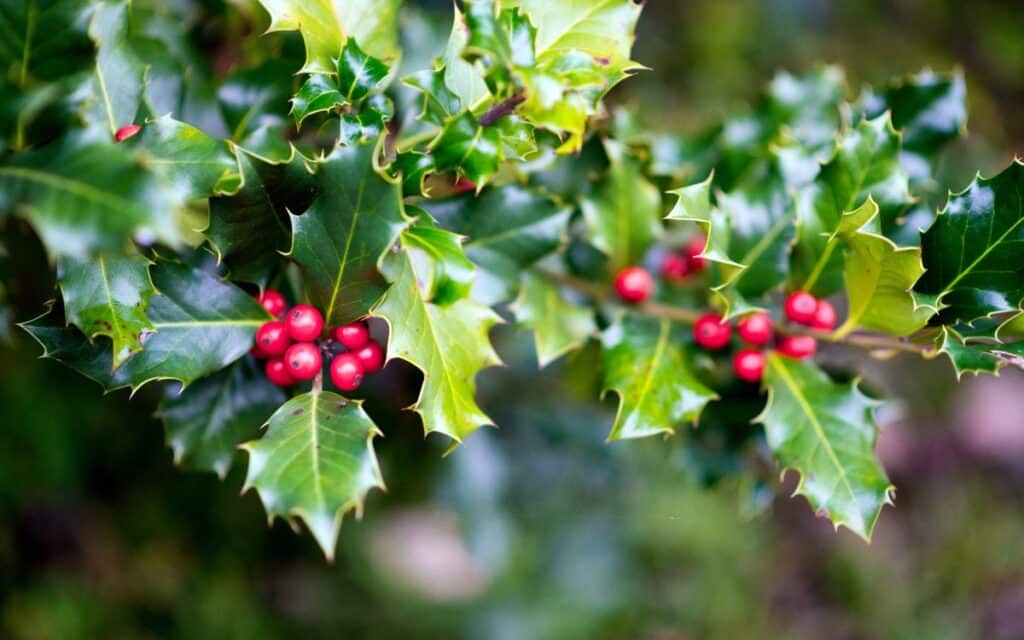
While hawthorn belongs to spring, holly belongs unmistakably to winter.
Its glossy leaves and bright red berries remain vivid long after most other trees have shed their foliage, making it an obvious symbol of endurance during the darkest months of the year.
Long before it became associated with Christmas, holly was thought to protect homes against lightning, evil spirits and bad luck.
Branches were hung inside cottages throughout winter, not simply because they looked attractive but because they were believed to guard those living beneath them.
Many of today’s Christmas decorations quietly preserve those older traditions, even if their original meaning has largely been forgotten.
Trees and the turning year
One reason trees appear so often in folklore is that they provide an unmistakable calendar.
Snowdrops emerge beneath bare branches. Hawthorn blossoms announce late spring. Oaks reach their full glory in summer.
Rowan berries glow scarlet as autumn approaches, while holly remains green through winter when almost everything else has faded.
Our ancestors didn’t need printed calendars to know the seasons were changing. They only had to look at the trees around them.
That natural rhythm explains why modern pagans often associate particular species with different points on the Wheel of the Year. Although these connections are largely modern interpretations, they draw upon centuries of observation, folklore and seasonal tradition.
If you’d like to explore more of Britain’s remarkable tree and plant folklore, browse our collection of articles on trees and plants, where you’ll find stories about everything from fairy trees and sacred woods to mistletoe, herbs and the surprising legends hidden in Britain’s hedgerows.