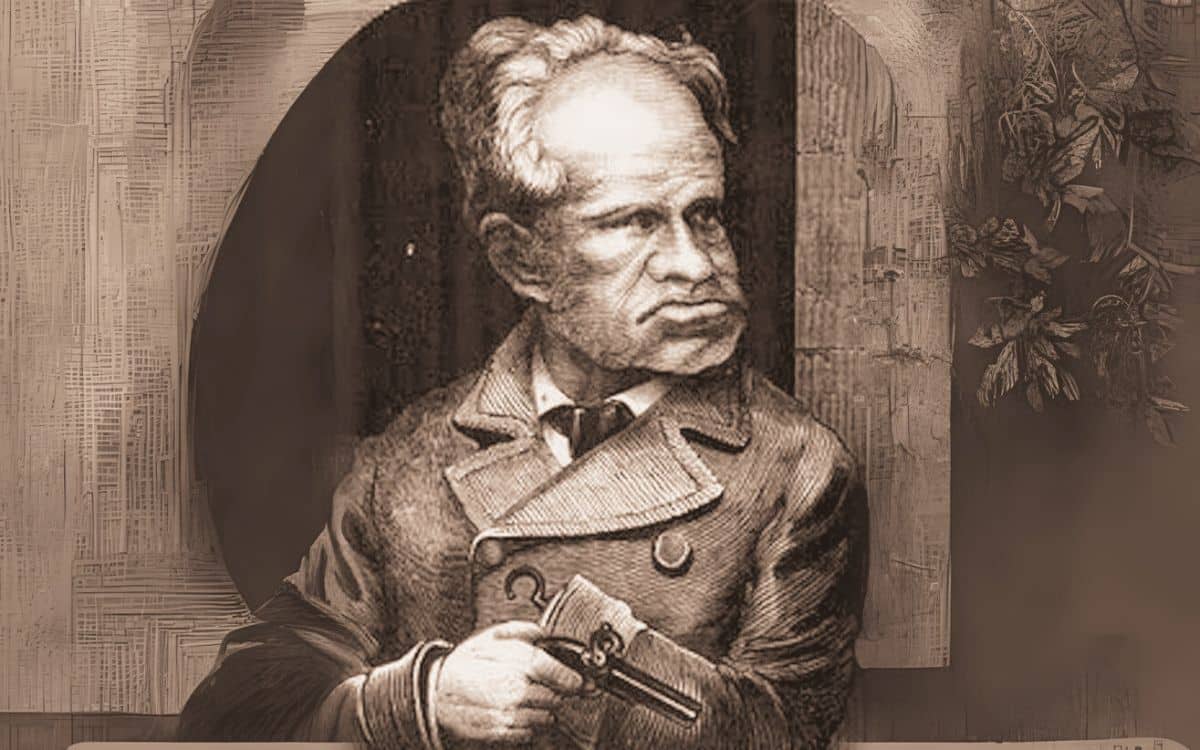
He escaped trains, fooled police, and died on the gallows, yet the ghost of Charles Peace may still wander Yorkshire’s prisons and alleys
The name Charles Peace stirred Victorian headlines like few others.
His crimes were brutal, but his reputation became something else entirely: a blend of murderer, master of disguise, and devilish anti-hero.
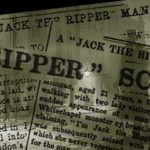
Newspapers couldn’t get enough of him. Wax figures were modelled in his image. Even comics later turned him into a mischievous outlaw, scrubbing away the blood.
His tale was everywhere, from Leeds to London, Sheffield to the Strand.
But his legacy wasn’t just in print. In Yorkshire today, some say his ghost still lingers, especially in the dark corners of Armley Gaol and Banner Cross, where he committed his most infamous crimes.
Charles Peace, a killer with many faces
Born in Sheffield’s Darnall district in 1832, Peace’s early life was marked by pain.
A steelworks accident at age 14 left him with a permanent limp and a deepening bitterness. Yet this didn’t slow him down—it only made him more inventive.
By adulthood, he was living a double life: family man by day, burglar and lockpick by night.
He was also a violinist of unusual skill, earning the nickname “The Modern Paganini”. His talents and charisma made him hard to suspect – and harder to catch.
That all changed with the murder of PC Nicholas Cock during a burglary in Manchester in 1876.
Two innocent men were wrongly convicted. Peace, disturbingly, sat in the courtroom disguised, watching their trial unfold.
After Manchester, Peace became obsessed with Katherine Dyson, his neighbour in Sheffield.
Her husband, Arthur Dyson, warned him to stay away, but Peace didn’t listen.
On a dark November night in 1876, Peace ambushed and shot Arthur dead just yards from his home near Banner Cross.
The crime shook the city. Peace fled to London under an alias, living quietly as a photo-frame maker while continuing his string of burglaries.
Dramatic capture and confession
In 1878, Peace was caught in Blackheath after a bungled burglary ended with another constable being shot (he survived).
The arrest was sensational. Police had captured not a petty thief—but a man wanted for murder.
On the train to Sheffield for trial, Peace made one last bid for freedom: he jumped from the moving carriage, but knocked himself unconscious.
His luck, finally, had run out.
Tried at Leeds Assizes, Peace was convicted in 10 minutes.
His final days at Armley Gaol were grim. On 25 February 1879, he was executed by the famed hangman William Marwood.
Yet Peace’s story didn’t die with him. Instead, it grew in legend.
He became a regular figure in Victorian penny dreadfuls.
A waxwork of Peace stood in Madame Tussauds’ Chamber of Horrors.
In the 1960s, he starred in “The Astounding Adventures of Charlie Peace”—a children’s comic strip that painted him as a trickster, not a killer.
He was no longer just a criminal. He was a character, a cautionary tale, and in some ways, a celebrity.
The haunting of Charles Peace
And yet… there are whispers he never quite left.
At Armley Gaol, staff have reported a strange phenomenon: anyone who sits in the spot believed to be where Peace’s prison bed once stood falls asleep unexpectedly.
Is it suggestion—or something more lingering?
Visitors and ghost hunters claim to have heard the distant strain of a violin echoing through the empty corridors.
Others report a feeling of being watched, particularly in cells connected to Peace’s final days.
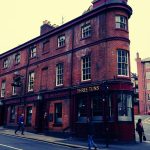
Over in Banner Cross, where the Dyson murder took place, a quiet barbershop now stands near the site.
Locals speak of a chill in the air, an unease that never fully lifts — a place where obsession turned fatal and peace was never restored.
Charles Peace was different.
He wasn’t a faceless criminal. He was a man who manipulated the press, lived in multiple identities, and enthralled the Victorian imagination.
His legacy was printed, performed, waxed, and now… whispered.
In Yorkshire’s darkened cells and quiet streets, his story lives on—not just as history, but perhaps as something still pacing the night.
Have you seen or experienced something eerie at Armley Gaol or Banner Cross? Tell us about it in the comments section below.