
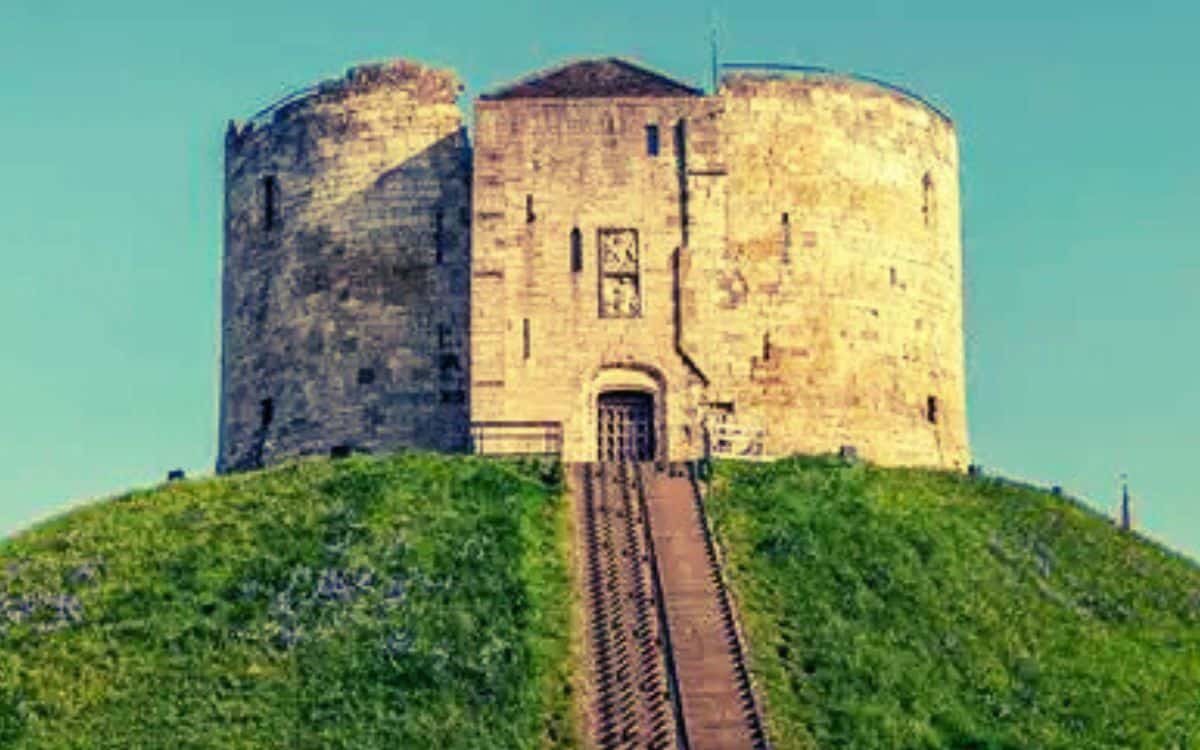
Clifford’s Tower in York remains a chilling monument to both historical tragedy and ghostly legend, drawing visitors into its haunted legacy
York is often called the most haunted city in England, and Clifford’s Tower may well be its darkest place.
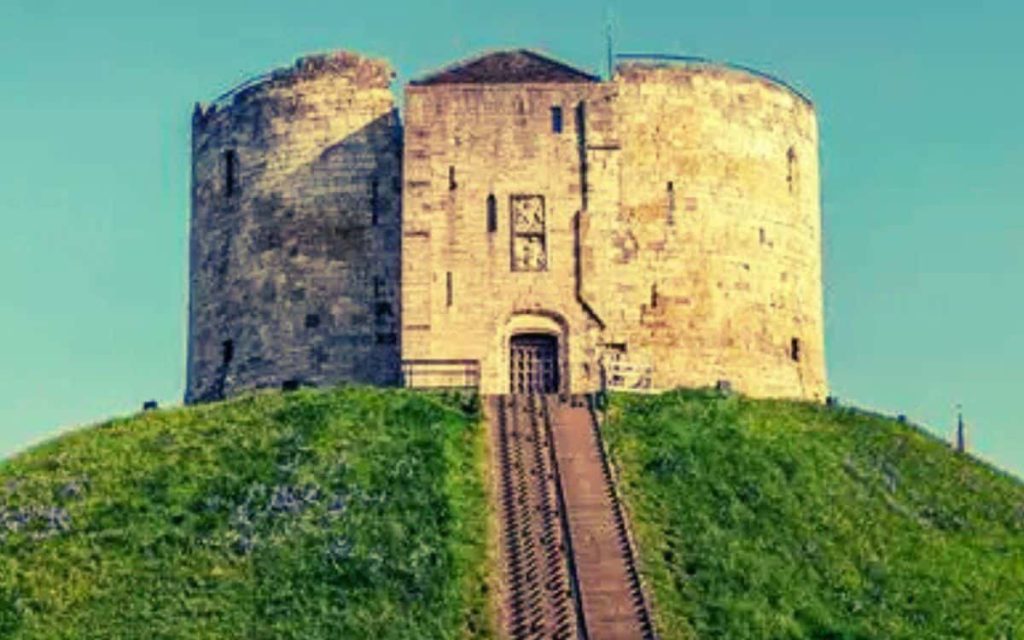
Perched on a grassy mound, the tower watches over the city like a ghost of its own past — silent, tragic, and endlessly unsettling.
Clifford’s Tower is no ordinary medieval ruin.
Beneath its weathered stones lies the memory of one of the most tragic events in English history: the York massacre of 1190.
On that fateful March day, an estimated 150 members of York’s Jewish community sought refuge inside the then-wooden tower, desperate to escape a violent mob fuelled by antisemitic hatred.
Trapped, terrified, and faced with unthinkable choices, many chose death at their own hands rather than conversion or slaughter.
When flames engulfed the tower, those who survived the fire were murdered upon emerging.
The hill, it is said, drank the blood of the innocent — and the land has never truly healed.
The current stone tower, built decades later by Henry III, still sits atop that haunted mound.
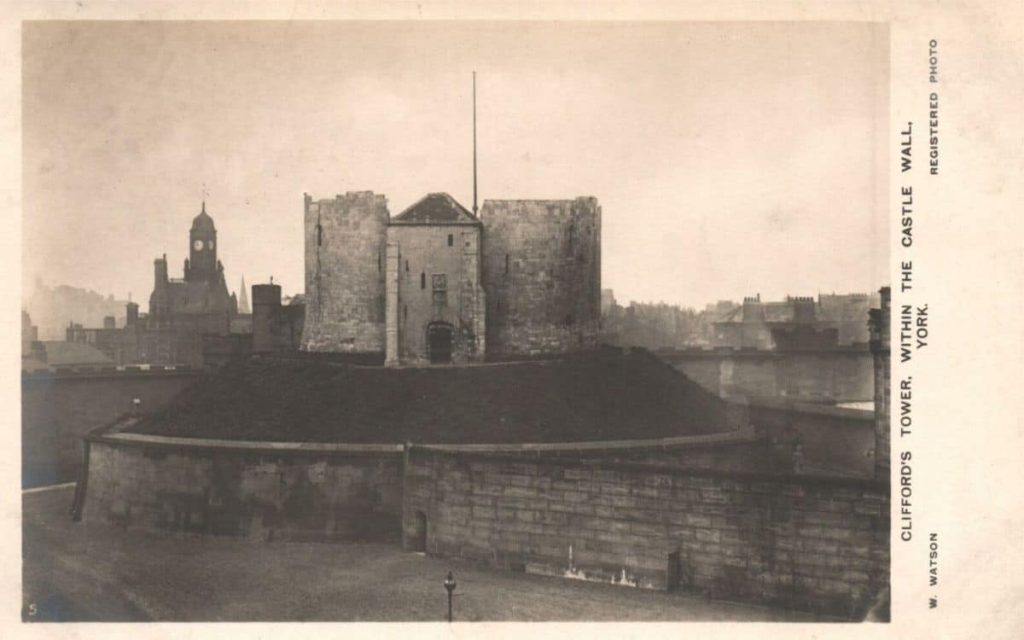
Visitors often describe an oppressive atmosphere, even on bright days.
At night, it becomes a place of uneasy quiet and spectral presence.
Echoes from the Fire
Local legend holds that on the anniversary of the massacre, the stone walls of Clifford’s Tower bleed.
Though no scientific explanation has been confirmed, witnesses claim to have seen red streaks running down the interior.
Others speak of the smell of smoke lingering inexplicably, or of sudden chills when standing in the centre of the ruin.
Shadowy figures are sometimes glimpsed between the tower’s archways, flickering and vanishing before the eye can focus.
Some have heard crying, chanting, or even screams carried on the wind — though no one is near.
Whether these phenomena are echoes of 1190 or the collective memory of a haunted city, they form a chilling part of York’s ghostlore.
The Ghost of Roger de Clifford
The tower takes its name from Roger de Clifford, a nobleman executed during the reign of Edward II.
In 1322, after taking part in a rebellion against the king, Clifford was hanged in chains from the tower’s walls — a brutal, public warning to others.
His death was said to be slow and agonising, and his spirit is now believed to linger near the site of his execution.
Some visitors have claimed to see a solitary figure pacing the tower’s perimeter, dressed in period garb with a heavy chain dragging behind him.
He vanishes when approached.
Clifford’s restless presence is said to contrast with the sorrow of the Jewish spirits — his ghost filled with frustration and regret, forever bound to a place that bears his name but not his redemption.
A Place of Memory and Mourning
Today, Clifford’s Tower is cared for by English Heritage and is one of York’s most visited landmarks.
A metal plaque installed in 1978 commemorates the victims of the 1190 massacre.
Around the base of the mound, daffodils bloom each spring in a wide circle — planted in the shape of a six-pointed star, echoing the Star of David, a living memorial in flora.
The site invites quiet contemplation.
Visitors who come for history often leave speaking of something else — an unseen weight, a hush that lingers, a feeling that you are not alone.
Whether you believe in ghosts or not, Clifford’s Tower demands reverence.
It is not just a ruin — it is a place where tragedy and time have twisted together into something enduring and powerful.
Visiting Clifford’s Tower
Clifford’s Tower is located just a short walk from York city centre and is open to the public year-round.
The newly restored interior features a rooftop viewing platform, offering panoramic views of the city and a rare perspective on the site’s layered past.
Visitor Tips
- Best time to visit: Early evening, just before sunset, when the tower casts long shadows and the air cools.
- Guided tours: Join one of York’s many ghost walks, which often include stories of the tower and nearby hauntings.
- Accessibility: Steep steps lead to the entrance, and inside the tower, narrow stone staircases require careful navigation.
- Reflective stops: Don’t miss the memorial plaque at the base of the mound and the surrounding daffodil ring in spring.
Have you seen or experienced ghostly activity at Clifford’s Tower? Tell us about it in the comments section below.