
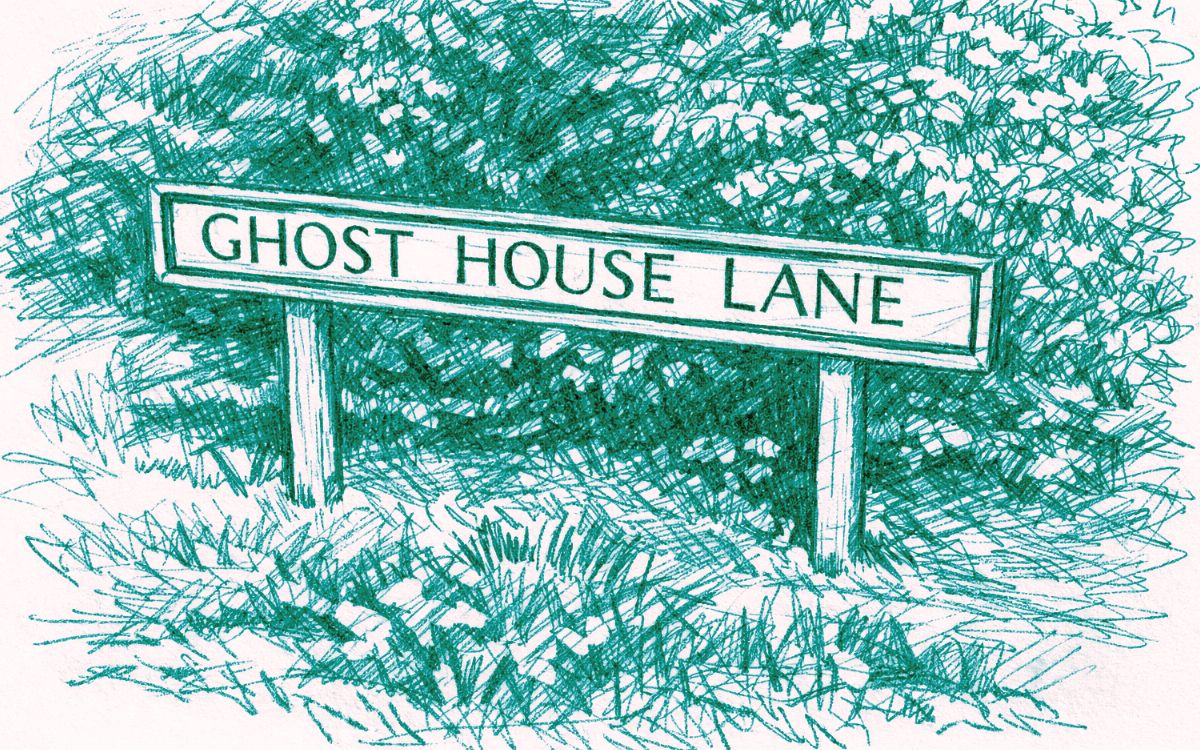
Ghost House Lane in Chilwell, Derbyshire, is a street name that sparks curiosity and keeps a dark local legend alive.
Long before modern housing filled the area, a small cottage stood at the end of the lane. Locals referred to it simply as the Ghost House.
Its official name was Ash Flat House, but that rarely featured in conversation. What people remembered was the story attached to it.
That story begins in the early nineteenth century, when a travelling pedlar stayed at the house and failed to move on. Pedlars were a familiar sight at the time, walking from village to village selling goods and carrying money.
They were also, by nature, easy to lose track of. When one did not reappear, it was noted and talked about.
Some years later, the story took a darker turn. A man connected to the house, John Baguley, was said to have admitted shortly before his death that he had killed the pedlar for his money and buried the body nearby.
The confession appeared in newspaper reports rather than court records, but it was enough to fix the idea in the local mind. From then on, Ash Flat House was no longer just a cottage. It was the Ghost House.
Reports of strange happenings followed, though they were never dramatic. There were no detailed accounts of apparitions or violent disturbances.
Instead, people spoke of unexplained noises, things being out of place and a general sense of discomfort. The house had a reputation for feeling unpleasant, and that reputation travelled faster than facts ever could.
By the Victorian period, the Ghost House was well known locally. People pointed it out to visitors and retold the story.
Some treated it as harmless folklore, while others preferred not to joke about it. Either way, the lane’s name made sense to those who lived nearby.
When the house was demolished in the mid-twentieth century, the story might have faded with it. Instead, the name remained.
Ghost House Lane stayed on maps and signposts, quietly preserving the memory of what had once stood there. New residents arrived with no direct link to the original events, but the question remained the same: why is it called that?
The answer was passed on, slightly altered each time, but always recognisable.
Chilwell’s Ghost House was not about dramatic hauntings or tidy endings. It was simply a house with a grim story that stuck.
Something bad was said to have happened there, and people never quite forgot it.
The house has gone, but the lane remains. It might not be a tourist hotspot, but it is still one of the Spooky Isles’ most intriguing street names.