
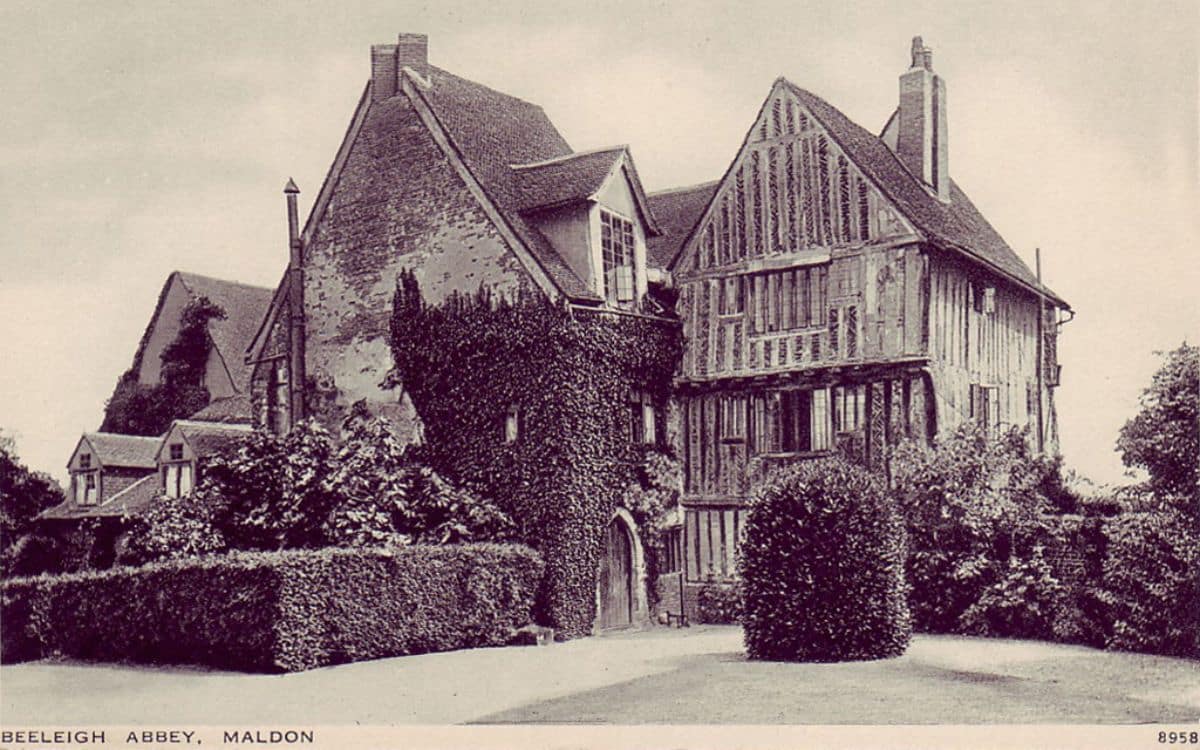
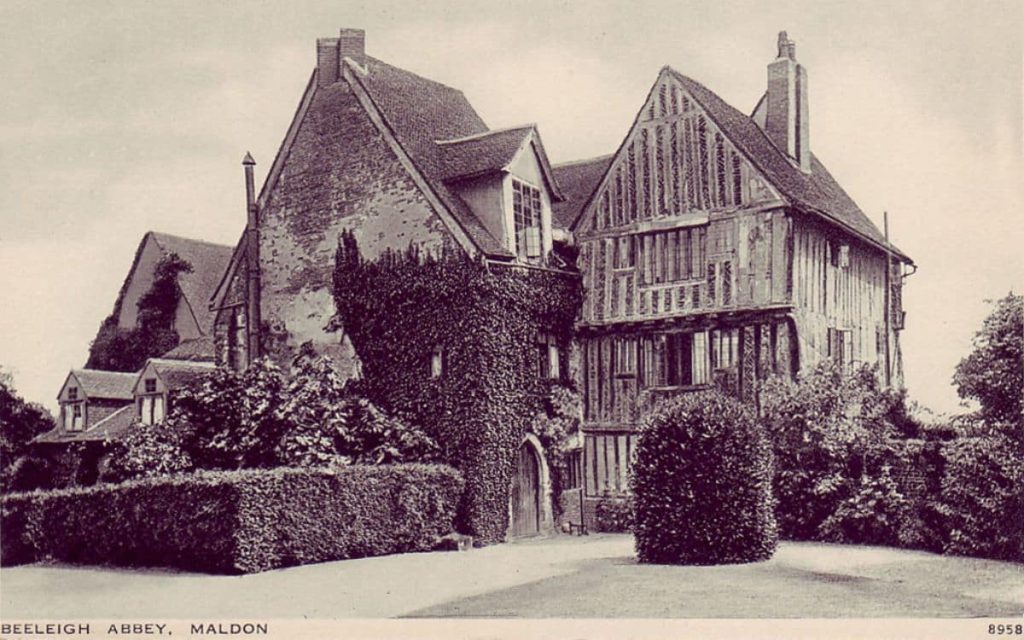
Beeleigh Abbey in Maldon, Essex, is said to be haunted by a headless Tudor courtier and spectral monks.
From violent poltergeist activity in the James Room to whispers of ghostly wailing, discover the chilling hauntings tied to this medieval abbey.
The Headless Spectre of Sir John Gates
Each August, Beeleigh Abbey is said to echo with cries from the Tudor court.
The ghost of Sir John Gates, a courtier executed for treason in 1553, is believed to stalk the abbey’s James Room.
Witnesses describe him as a headless apparition, his restless wraith returning on the anniversary of his death.
Some reports fix the haunting to 11 August, others to 22 August, reflecting the confusion of dates during that violent summer.
Local folklore insists that Gates himself declared, “I lie on my bed still,” a phrase chillingly echoed by the spectral impressions said to appear on the bed in the James Room.
Ghostly Phenomena in the James Room
The James Room is the centre of Beeleigh’s hauntings.
Visitors report a hooded figure standing silently in the corner. Some see a monk, a reminder of the abbey’s monastic origins, while others insist it is Gates himself.
Poltergeist activity adds to the fear. Beds shake violently. Trapdoors open without warning.
One visitor claimed she awoke to find her bed shuddering before discovering a painful mark on her arm.
In other accounts, the shape of a human body presses into the mattress beside the living.
Such tales place Beeleigh Abbey alongside other infamous English hauntings, from the spectral monks of Clerkenwell House of Detention to the violent manifestations of Borley Rectory.
Beeleigh Abbey’s Bloody Past
Founded in 1180 by Premonstratensian canons, Beeleigh Abbey gained importance when Roger Niger, Bishop of London, had his heart interred there in 1241.
King Edward I and Queen Eleanor visited in 1289, marking its status as a place of pilgrimage.
The Dissolution ended monastic life.
In 1540, Henry VIII granted Beeleigh to Sir John Gates, whose loyalty to Lady Jane Grey sealed his fate. He was executed on Tower Hill in 1553, his property seized by the crown.
Over the centuries, Beeleigh became a farmhouse and even a pub before bookseller William Foyle purchased it in 1943.
The Foyle family’s restoration preserved the abbey and created the celebrated Beeleigh Abbey Gardens.
Visiting Beeleigh Abbey Today
Beeleigh Abbey remains private, but its gardens open to the public between June and September.
Visitors can wander the landscaped grounds, admire the medieval buildings, and sense the eerie atmosphere that has inspired ghost stories for centuries.
Walkers on the River Chelmer footpath can glimpse the abbey’s walls and nearby Beeleigh Falls.
Even from outside, the site carries a brooding weight, as if centuries of treachery and prayer still echo in its stones.
Beeleigh Abbey’s hauntings persist, circling back each summer when the headless courtier is said to return.
Whether monk or traitor, the James Room spirit has ensured the abbey’s reputation as one of Essex’s most haunted sites.
Have you seen a ghost at Beeleigh Abbey or along the River Chelmer? Tell us about it in the comments section below.