
A Victorian terrace in Hackney in London hides a surreal past — one man’s obsessive tunnelling turned 121 Mortimer Road into one of London’s strangest legends
In the quiet, leafy stretch of Mortimer Road, Hackney, stands a Victorian house unlike any other.
To passers-by, 121 Mortimer Road might look like just another handsome London terrace. But beneath its solid brick façade lies one of the capital’s strangest urban legends — and, some say, a lingering spectral presence.
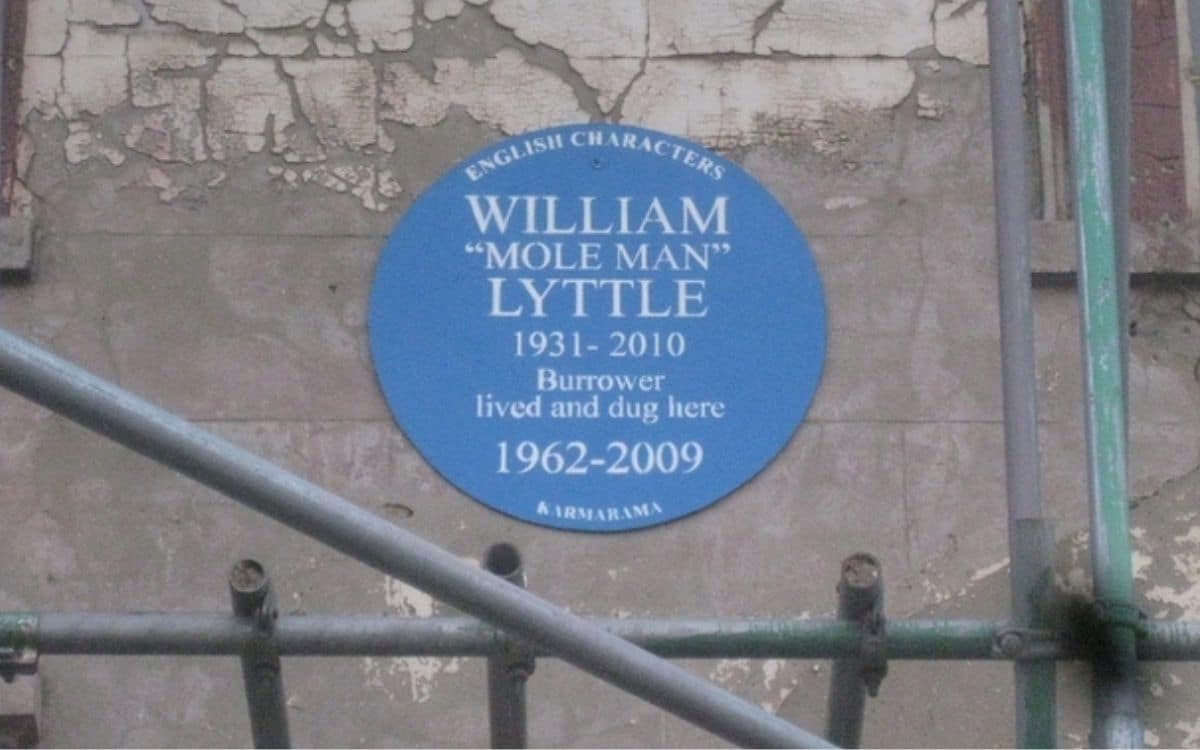
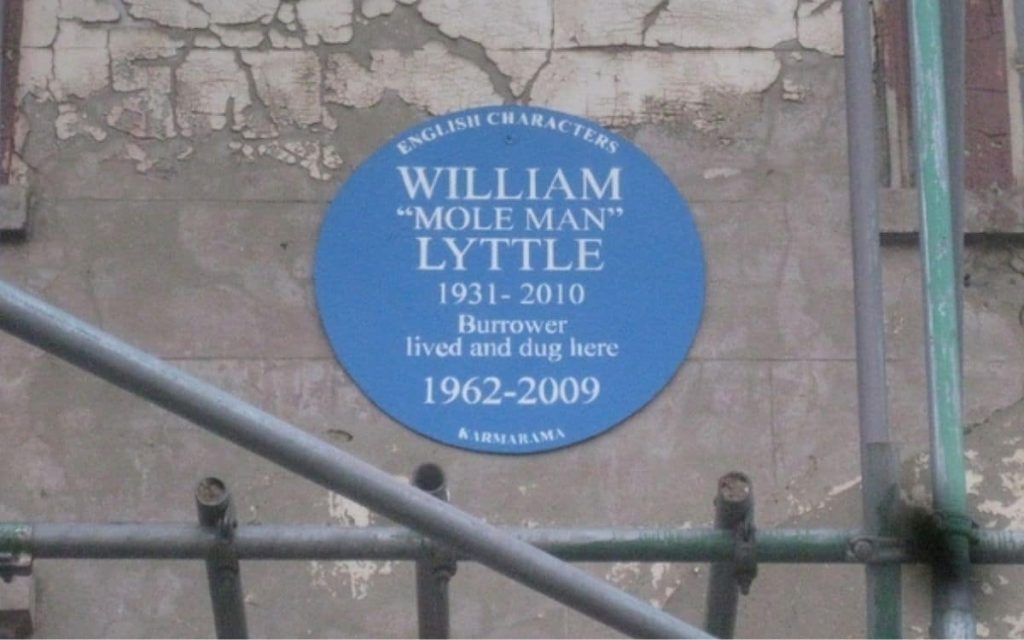
It all begins with a man: William Lyttle.
To those who knew him, Lyttle was a brilliant yet eccentric civil engineer with a wild beard, a love of opera, and an obsession with digging.
Starting in the 1960s, he quietly began burrowing beneath his home, initially under the pretext of building a wine cellar.
But over time, his project expanded into an immense labyrinth of tunnels that sprawled beneath Hackney’s streets.
Locals took to calling him the “Mole Man”, and a mix of curiosity, concern, and awe surrounded his strange legacy.

A cursed obsession beneath the earth
Lyttle’s subterranean ambitions went largely unchecked for years.
But in 2001, the earth fought back.
A sinkhole opened across the pavement outside his home.
Electricity outages became frequent after he accidentally struck a 450-volt cable.
Concerned neighbours and council officials launched investigations, and in 2006, Lyttle was finally evicted by court order.
The council poured more than 2,000 tonnes of aerated concrete into the tunnels and removed 33 tonnes of debris, including cars and building waste.
Lyttle, ever the digger, was rehoused in a high-rise flat with strict warnings not to touch the foundations.
But the strange energy of 121 Mortimer Road didn’t leave with its creator.
Lyttle passed away in 2010, yet those who live nearby claim the street hasn’t quite settled.
Some say you can still hear dull tapping from beneath the pavement in the quiet hours of the night.
Others report the uncanny sensation of movement underfoot, as if the tunnels continue to breathe, and the Mole Man still digs somewhere below.
A local legend with an uneasy echo
Ask Hackney locals about the Mole Man House, and you’re likely to get a wry smile followed by a hushed story.
Some describe Lyttle as a local character, a harmless oddball whose myth grew larger than life.
Others recall the genuine worry his tunnelling caused — the tremors, the damage, and the haunting feeling that the very earth was hollow.
Today, the house still stands, its weathered brickwork bearing silent witness to years of madness and ingenuity.
Visitors often stop to stare.
You can’t see the tunnels — they’ve long since been filled — but there’s an undeniable atmosphere.
A sort of charged stillness.
The windows look ordinary, the door closed, yet many report a strange magnetic pull when standing outside, as if the ground beneath still remembers what it once concealed.
Some locals call it the weirdest house in London.
Others call it cursed.
Few pass it without feeling something.
From madness to masterpiece
In 2012, the property went to auction and was purchased by artists Sue Webster and Tim Noble.
Rather than erase the past, they chose to embrace it.
The weathered exterior remains, a testament to its previous occupant, while inside, architect David Adjaye transformed the interior into a stylish home and studio.
Deep skylights channel the underground obsession back into the light, but the atmosphere remains quietly uncanny.
In 2021, the house won “Best Dwelling” at the New London Architecture Awards.
It stands today as both a design marvel and a lingering monument to obsession, mystery, and the power of myth.
The Mole Man House is no longer a hazard — but its legend is more alive than ever.
So next time you find yourself near De Beauvoir Town, pause outside 121 Mortimer Road.
Listen closely.
Feel the ground.
You may just catch the echo of a spade in soil, an unseen hand still digging below.
Have you seen or experienced the Mole Man House? Tell us about it in the comments section below.