

A modest grave in Elstree holds the memory of Martha Ray, whose violent death in 1779 shocked Georgian London and inspired whispers that still linger today
A simple stone lies in the churchyard of St Nicholas’ Church in Elstree, just north west of London. Weathered by time and largely unnoticed by passers-by, it bears the name Martha Ray.
At first glance, it’s an ordinary Georgian grave. But behind it lies a tale that once shocked all of London — a story of music, obsession and murder.
Martha Ray was born in 1742, the daughter of a corset-maker. Through charm, intelligence and a rare singing talent, she rose to become the long-time companion of John Montagu, the 4th Earl of Sandwich. Though never married, she lived for nearly two decades in comfort and prominence, moving in elite circles just outside the bounds of full respectability.
But comfort did not mean safety.
In the late 1770s, Martha caught the attention of James Hackman, a former army officer who had since taken holy orders. His courtship was awkward and persistent. When Martha refused his proposals of marriage, Hackman’s admiration turned to obsession.

He began following her, growing increasingly jealous and unstable. On the evening of 7 April 1779, he followed her to Covent Garden theatre, where she was attending a performance of Love in a Village.
As she stepped outside into the bustling London night, Hackman approached. He drew a pistol and shot her in the face at point-blank range. She died instantly. In a second, a woman who had spent years treading the line between notoriety and acclaim was gone.
Hackman tried to shoot himself but failed. He was quickly subdued by onlookers and later stood trial at the Old Bailey. His defence hinged on a plea of insanity, but the court rejected it.
The evidence showed he had bought the pistols that same day. Letters he had written spoke of despair, jealousy and premeditation. He was found guilty of murder and, just twelve days later, was hanged at Tyburn on 19 April 1779.
Murder of Martha Ray shocks London
The murder of Martha Ray shocked Georgian society – not only because of its brutality, but because of the people involved: a well-connected mistress and a clergyman driven to violence.
After her death, Martha’s body was removed from London and buried quietly in Elstree. For decades, her grave went unmarked. In 1824, renovations at St Nicholas’ Church disturbed her original resting place. Her remains were reinterred in the churchyard, but again without a stone.
It wasn’t until 1920 that a later Earl of Sandwich paid for a modest marker. The current stone bears only the basics: her name and a nod to the tragic events that led her here.
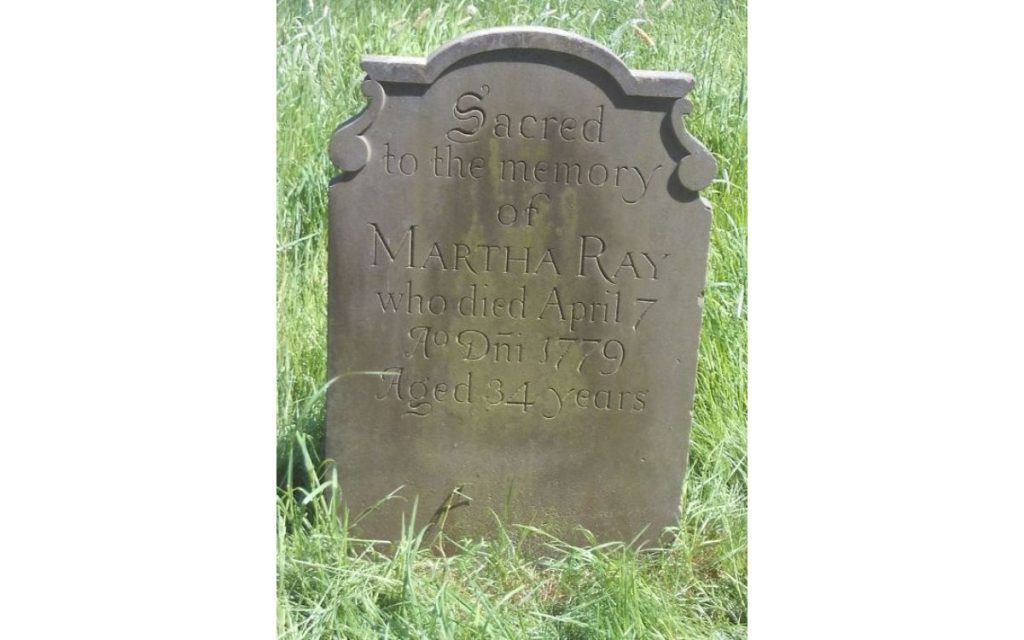
Today, the grave sits in the shadow of the church tower. It is easy to overlook. But those who pause often describe an unusual stillness in the air—a tension, as though the ground remembers what happened.
Some visitors have reported hearing faint sounds on the wind. A woman’s voice, perhaps. Or maybe just a breeze moving through old trees.
Planning a visit?
St Nicholas’ Church in Elstree is open to visitors, and Martha Ray’s grave remains in place near the tower. It’s a quiet corner of Hertfordshire, far removed from the theatre lights and gunfire of that April night in 1779.
Have you visited the grave in Elstree or heard the story of Martha Ray before? Share your thoughts in the comments below.