

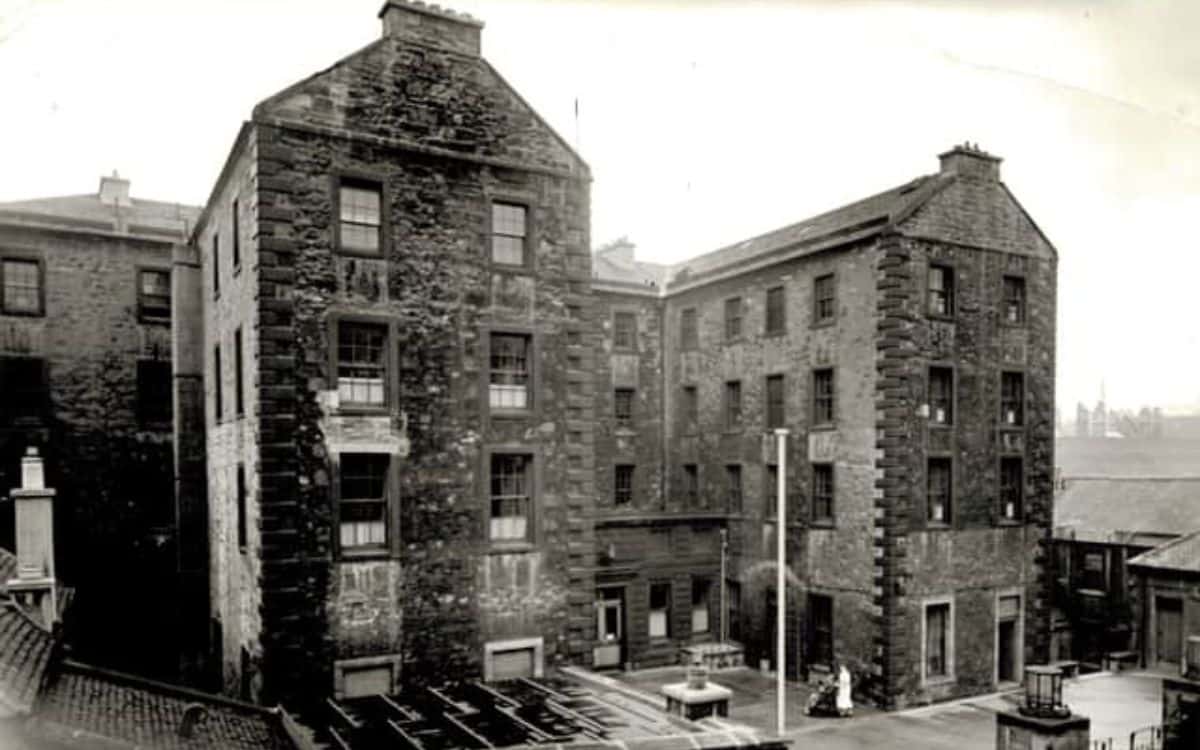

Near the foot of the Royal Mile, most people only see the glass and steel of the Scottish Parliament.
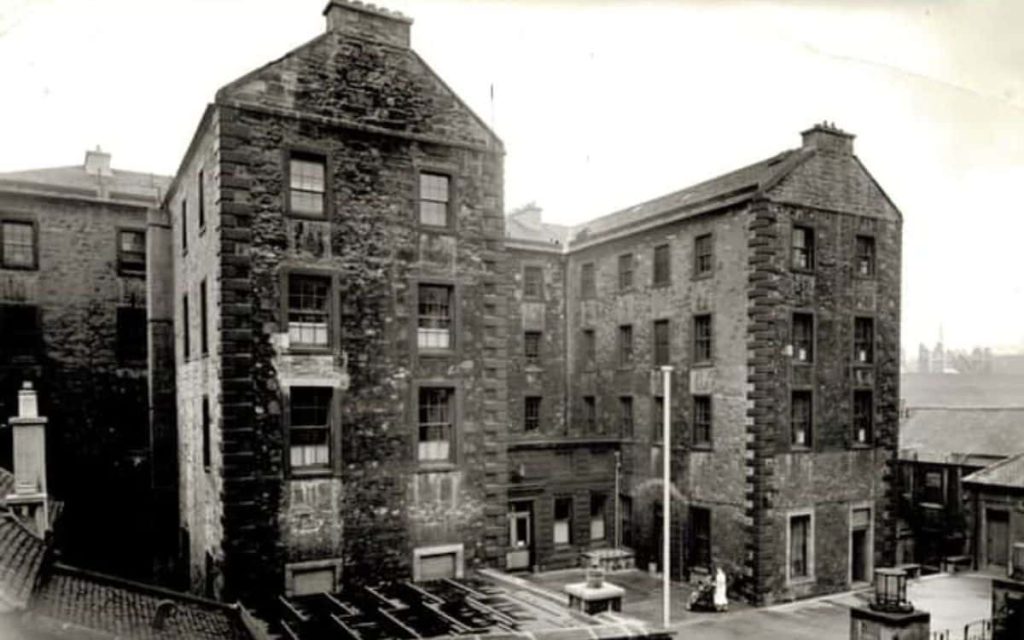
Thousands pass it every day without realising that hidden within its modern walls stands one of the strangest and most disturbing houses in Edinburgh – Queensberry House.
Its plain 17th-century façade now blends into the parliamentary complex, but behind those walls lies a story that shocked the city three centuries ago, and that some say still haunts it today.
History of Queensberry House
The Douglas family lived in Queensberry House, a grand Canongate residence built around 1680 for Lord Hatton, master of the Scottish mint.
William Douglas, the first Duke of Queensberry, bought it in 1686 and died there in 1695.
The house then passed to his son, James, and in 1697 to his grandson, also named James – a boy who would later earn infamy for reasons far darker than politics.
From an early age, young James Douglas showed violent and unpredictable behaviour, attacking carers and other children.
Described by contemporaries as “an imbecile” and “violently insane”, he was eventually confined by his family to a locked room in Queensberry House.
His only contact came when food was delivered or he was forcibly cleaned – a harsh measure taken less for his wellbeing than to protect those around him.
In 1707, when James was 10, the Treaty of Union was signed.
The Treaty of Union united the Kingdom of Scotland and the Kingdom of England into a single sovereign state, known as the Kingdom of Great Britain.
On the day of signing, there was a mixture of celebration and rioting.
The union was unpopular among ordinary people, as Rabbie Burns so eloquently put it, “We’re bought and sold, for English gold. Such a parcel of rogues, in a nation.”
But, for those who would prosper, the Union brought opportunity and the promise of riches.
The Duke of Queensberry was among this group, and he and his family are believed to have left Queensberry House to join in with the celebrations.
During this time, only a kitchen boy was left in the house along with young James.
No one knows how – perhaps it happened during the rush to celebrate or the panic to escape – but somehow James’s door was left unlocked and unguarded.
A few hours passed before the Duke, his family, and the rest of the servants returned, tired and hungry.
Stepping into the grand home, they were met with the unmistakably pleasant smell of a roaring fire and assumed a meal was being prepared.
While the family retreated to their private quarters, one servant followed the smell and walked down the twisting stone staircase towards the kitchen to see what was being cooked.
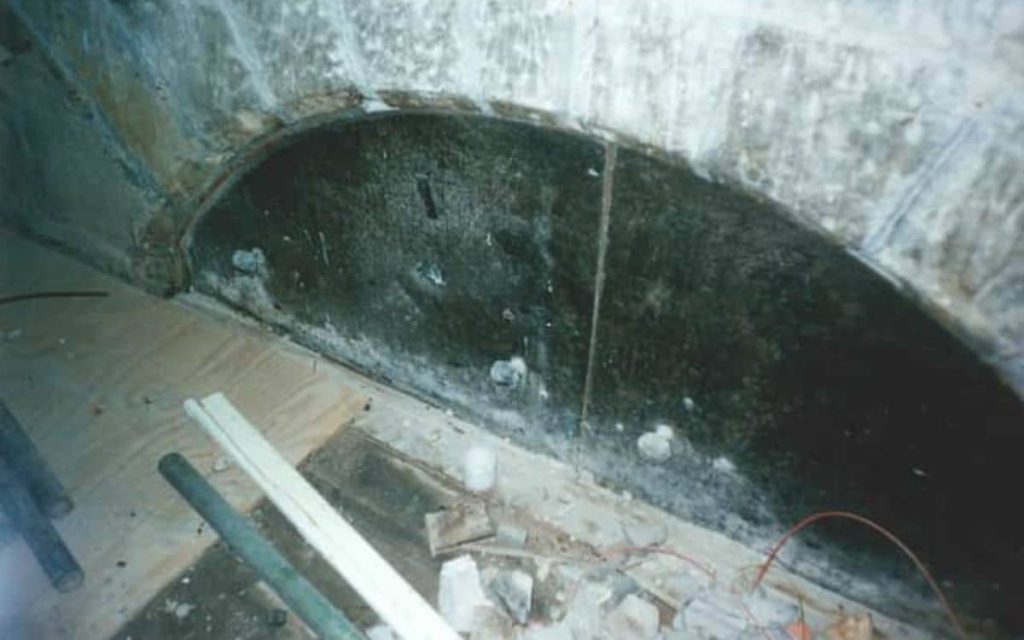
The only light was coming from the large open fire used to cook.
The flames cast shadows that danced along the stone walls.
As they stood at the entrance to the kitchen, the servant could see the silhouette of a small figure with their back to them, sat to the side of the fire, working the spit.
Assuming it was the kitchen boy, they called out to him and asked what was being prepared, but received no answer.
They called again: still no answer.
Frustrated by this perceived insolence, they approached the boy and tapped him on the shoulder.
The face that met them when he turned round was not that of the kitchen help, but that of young James, who had escaped his confinement.
‘Horrendous scream shatters silence’
It was then the servant’s horrified gaze fell upon what was being cooked on the spit – the body of the poor, unfortunate kitchen boy.
A horrendous scream shattered the silence and echoed around the halls of the lofty mansion.
Everyone in the house heard it and immediately rushed to the kitchen to investigate.
While they ran to the kitchen, the servant who had discovered this macabre scene ran in the opposite direction, out into the street, screaming as they went.
The Duke’s reaction was just as horrified.
His young son had killed, cooked, and eaten a servant in his charge.
The young boy’s blood was splattered on the walls around the fireplace and smeared over the grinning mouth of his own flesh and blood.
Young James was immediately apprehended and confined to his room, and the remains of the poor kitchen boy were solemnly removed from the spit.
The aftermath of this story is almost as horrific as the act itself.
The power and position the Duke held meant no criminal charges were brought against his murderous son.
Other than some critics of the Treaty of Union, who claimed it a “judgement on the Duke for his odious share in the Union,” it was almost as if the abhorrent event hadn’t happened.
In fact, his heir was allowed to inherit the Marquisate and Earldom of Queensberry, but, due to his mental state, did not succeed to the Dukedom.
Although young James passed away in 1715, the harrowing impact of this tragic event continues to reverberate through the ages.
Frequently, the air around the fireplace is filled with eerie and terrified screams, haunting the space with their inexplicable origin.
Many witnesses have described these bone-chilling cries as the anguished voice of a young boy, forever etched into the haunted history of the place.
From the early 1800s until 1996, Queensberry House was used as a hospital or home for the elderly.
Throughout this time, chilling reports emerged of shadowy forms seen darting about the cold and draughty corridors, and blood-curdling screams seemingly unrelated to any of the patients’ voices.
Some nursing staff even spoke of being pinned against walls in one particular area by an unseen force.
Perhaps this was where James grabbed the unsuspecting kitchen boy before slaughtering him?
In an ironic turn of events, in 1997, Queensberry House – once owned by a man in part responsible for the dissolution of the old parliament – was acquired by the newly formed Parliament and is now used as office space for administrative staff.
While the past horrors of the kitchen boy’s tragic fate may still echo within the walls, the area where the oven still stands has undergone a modern refurbishment, transforming into an exclusive private bar for MPs and their guests.
One can’t help but wonder, as they raise their glasses in a toast, are these the only spirits that remain in Queensberry House?
When I thought about putting together this book, one story immediately came to mind as essential: the chilling account of the cannibal in Edinburgh.
It’s a personal favourite of mine, told to me by an uncle when I was a young boy.
I am fascinated by this story both for its intriguing nature and its spooky undertone, and it’s a building I’d love to explore further.
The notion of a cannibal’s ghost lingering in the house where he was once imprisoned, especially considering his noble lineage, contrasts with Scotland’s more well-known cannibal, Sawney Bean, making it a compelling inclusion.
Given the fascination with the darker aspects of ghost stories and ghost hunting, it’s surprising that this particular tale has been overlooked.
It’s possible that it’s because the building is inaccessible due to its current use and purpose, but it could also be down to being such an uncomfortable subject matter.
In my opinion, it’s a story like no other, with origins uniquely rooted in Edinburgh and deserving of inclusion.
Have you ever passed Queensberry House without realising its grisly past? Tell us what you think of this disturbing Edinburgh legend in the comments below.
You can find more information about Wayne Gilbert’s Eerie Edinburgh articles, videos and books at www.eerieedinburgh.com and our interview with him on Spooky Edinburgh.