

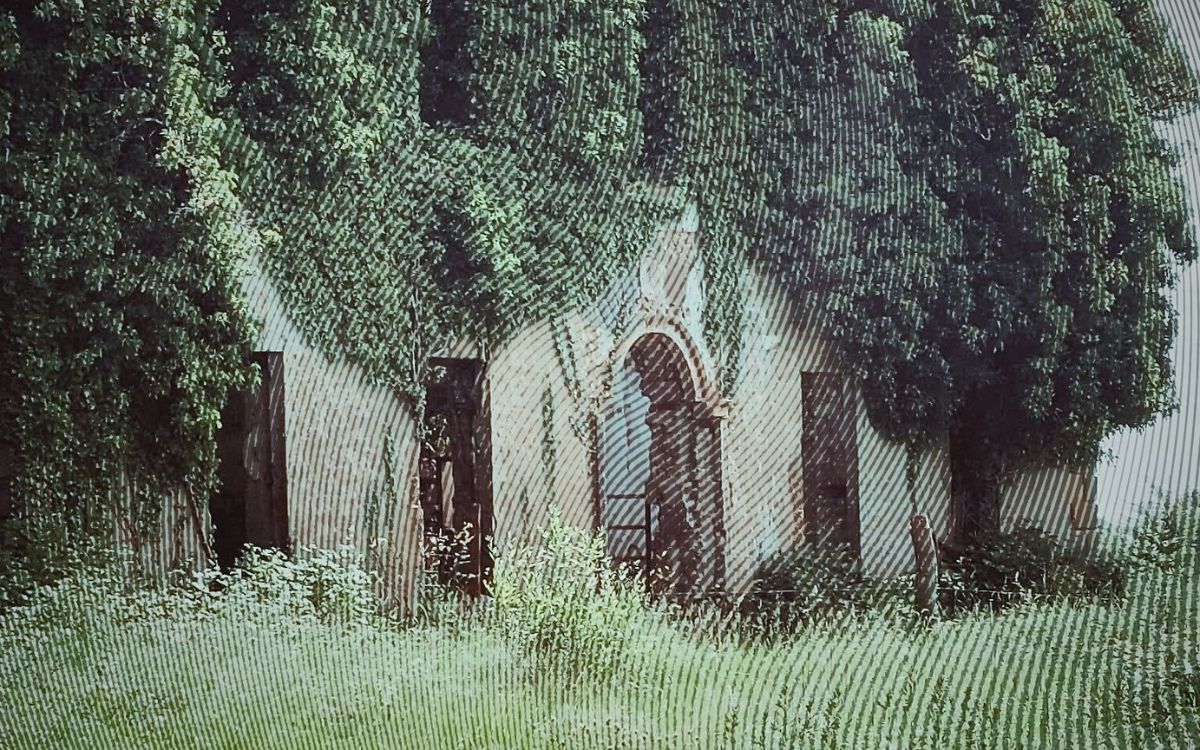
South-east of Tyrrellspass, County Westmeath, on a quiet rise at Rathgarrett, once stood Tore House — a Georgian dream of symmetry and command.
Built in the eighteenth century by the Pilkington family, it appeared in every register of its age: the Taylor and Skinner map of the 1770s, Griffith’s Valuation, and the ledgers of Henry Mulock Pilkington, master of more than 1,600 acres across Westmeath and King’s County (now Offaly).
Tore was never just a residence. It was a declaration in stone — five bays wide, two storeys tall, fronted by orchards and a tree-lined avenue that rolled toward the horizon.
For over a century the family prospered, the house their centrepiece of civility and order.
Then came 1922, and the wild season when Ireland’s great houses blazed.
On the night of 11 June, Tore was set alight. Official reports blamed agrarian grievance, not politics, but the result was the same: ash, smoke, and the quiet retreat of the Pilkingtons into history.
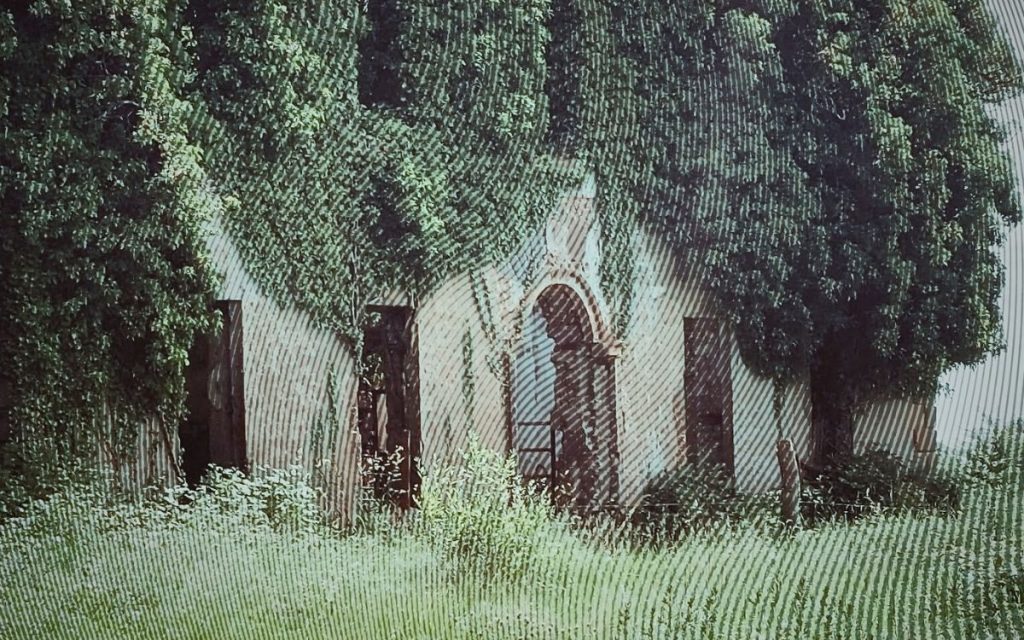
When the embers cooled, nature returned to claim her due. The orchard ran riot, ivy strangled the gate lodges, and the gardens held their silence like a confession.
Today, beneath the grass and hawthorn, faint lines of foundation still mark where doors once opened to music and light.
Locals call it Toor, or sometimes Torr, as their grandparents did — a name softened by the years but never lost.
Folklore: The Fairy-Ring Country
Westmeath has long been Ireland’s fairy heartland — a county laced with raths, lone whitethorns, and the uneasy shimmer of the unseen.
Around Tore, that enchantment deepens. Ancient ringforts scatter the barony of Fartullagh — earthen circles the old people call the forts of the Aos Sí, the fairy folk who walk parallel to our world.
Even now, farmers steer their ploughs wide of those hummocks, and new roads curve politely aside rather than trespass.
Folklore collected in the 1930s Dúchas archives tells of lights wandering the fields, music drifting on windless nights, and cattle found dazed at dawn.
One of Tore’s outer boundaries, it’s said, brushed too close to a rath. No servant would break that soil.
The Pilkingtons dismissed such talk as country fancy. But boundaries, once crossed, have long memories.
So when the fire came, locals muttered that “the good people” were only taking back what was theirs — a reckoning wrapped in flame.
Paranormal Aftermath: Echoes in the Ashes
Tore House has no formal ghost — no white lady or headless groom — only the weight of something left unfinished.
Investigators who’ve walked the grounds speak of a hush that resists intrusion, of sudden cold pockets where the avenue once ran, of the faint scent of smoke when there is no fire for miles.
Residual hauntings, perhaps — the replay of panic and loss etched into soil and air.
Instruments twitch unpredictably. EMF spikes near buried iron. Thermal dips trace the garden wall.
But what unsettles most is not the data. It is the sense of being observed — gently but intently — by a landscape that remembers being wronged.
Some nights, the wind through the hawthorn carries a low harmonic hum, neither mechanical nor natural.
Stand still long enough, and it begins to sound like breathing.
Whether the charge beneath the field is electrical or elemental, no one can say.
Little of Tore House remains now — only the walled garden slumping into itself, the orchard turned wild, and the echo of a doorway that opens onto nothing.
Yet the story endures — a house raised by ambition, destroyed by fire, and haunted not by ghosts, but by boundaries ignored.