
Science is important.
In its various guises, science is gradually helping humanity to understand life, the universe and everything, so it makes good sense to employ certain aspects of some of the various sciences in our paranormal investigations and research.
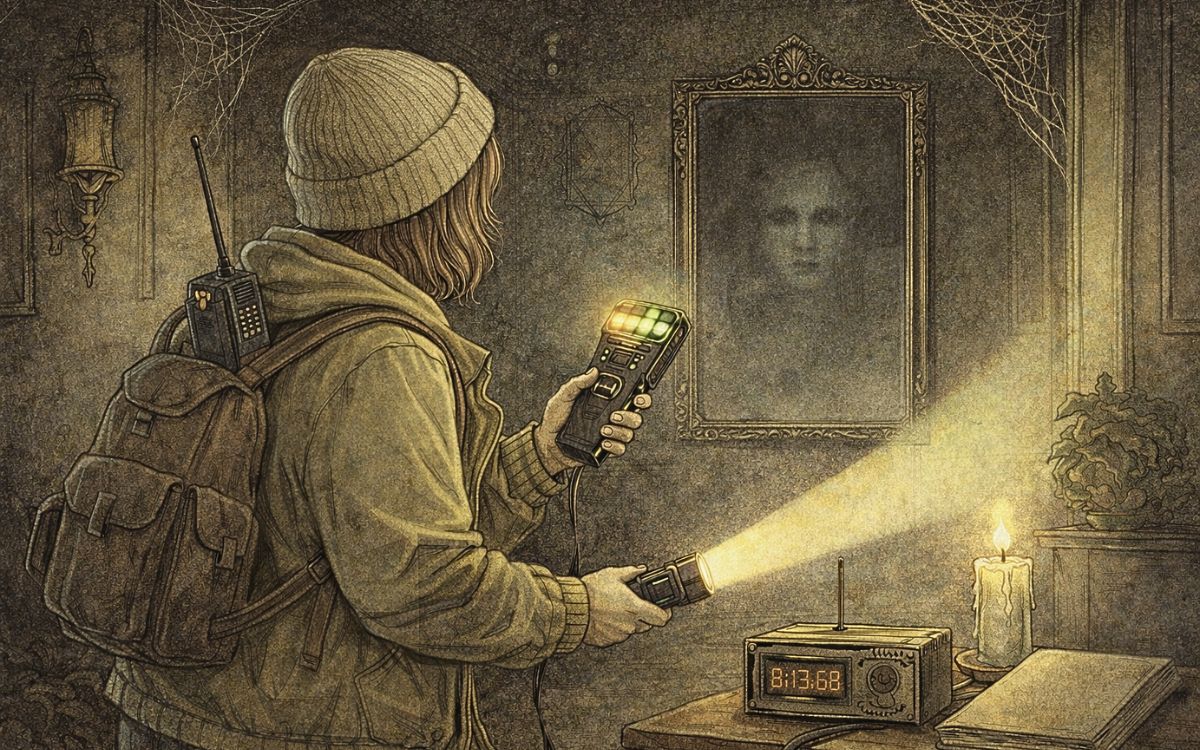
But, by using the word science, I am not referring to the ever-growing gamut of “gadgets” that you can now buy. While a few of them might have some merit, the majority are nothing more than smart ways to get your hard-earned money out of your pocket and into that of the people who manufacture this silly tat.
What I am talking about is familiarising yourself with at least the basics of some real science, so please read on.
Physics
Read about the nature of matter and energy, how matter is not a fixed entity but rather is “constantly becoming”. In other words, it is in a state of constant flux, forever changing.
Understand a little about both acoustics and infrasound, and how these can influence how we experience what is going on around us, and how different frequencies and vibrations give shape and meaning to our whole universe.
How energy can neither be created nor destroyed, and the way this means that it flows through all things, both animate and inanimate, always.
Because the nature of matter and energy would seem to be immortal, some people tend to argue that this fact, in and of itself, is conclusive proof of survival after death — but they are wrong. (Although, for myself as a Christian minister, it does confirm the presence of God in all things and at all times.)
What makes us who we are is not just a collection of bone and sinew infused with energy. It is our consciousness.
Psychology
Reading a bit about psychology will help paranormal investigators and researchers incredibly, simply because it deals with the mysteries of the mind and the nature of consciousness itself.
Study how we know we are who we are, and how we manage to develop our own sense of self.
Learn about our perceptions and how easily these can be fooled when exposed to certain stimuli and clever suggestion. How our minds always try desperately to make sense of the world we live in, even if we are literally fooling ourselves a lot of the time (as in pareidolia).
How we are so easily influenced by others in quite subtle ways without even knowing it, and how our memories are actually mostly made-up rather than recalled.
Psychology also highlights how our imaginations can both enrich our existence and stimulate our creativity.
And, perhaps the most important point of them all: how we still don’t really understand what consciousness actually is, nor how it works.

Socio-cultural anthropology
Here you will learn about people’s behaviours and beliefs, and how these are influenced by the local culture and the wider society in which they reside.
It will help you to understand why certain people are far more susceptible to suggestion than others, due to their being brought up in an environment where things like magic, ghosts and demons were not only believed in but accepted as being an integral part of everyday life.
While, on the other side of the coin, you will have the hard-nosed sceptic who believes in absolutely nothing save hard science and technology.
There are exceptions, of course there are! But these will usually (though not always) mean that an individual has ended up rebelling against their own culture and belief by adopting the polar opposite.
Anthropology also includes the study of various rites and rituals, which can sometimes include what we would refer to as spells, etc., and of course various religious beliefs themselves.
Physiology
This will teach you a little more about how our bodies work and how they react to different types of situations.
For example, how the stress hormones adrenaline and cortisol influence our heartbeats and blood pressure, getting us ready for flight or fight.
And how, when we are in a dark, quiet and probably strange place, our senses become heightened extremely quickly. Meaning that we shall hear the quietest of sounds, feel the slightest draught, and notice things with our eyes we did not see before.
Now, compare that to how your body and brain were feeling when you met up with your paranormal group earlier on in the day. You were happy and expectant, just like everyone else in the group. Therefore the pleasure hormone dopamine is being released into your system, causing you to feel happy, comfortable and safe, surrounded by your friends.
Can you see from this how quickly our perceptions change?
All of these sensations come from the very ancient, reptilian part of our brain which concerned itself with the very basic things such as pain, pleasure and survival.
Humans enjoy being happy, but we also enjoy being scared.
We are all thrill seekers of one type or another. That’s why some people do bungee jumps, skydiving, ride rollercoasters and, of course, go ghost hunting.
The important difference between being a paranormal enthusiast and all of the other things mentioned above is that, at least in my own humble opinion, the paranormal can sometimes carry a lot more real and potential danger, and should never ever be viewed as being “just a bit of fun”.
Chemistry
Just as our hormones can influence our judgement and perceptions, so too can certain chemicals.
By chemicals, I mean such things as the way certain fungi can affect us, and being very careful that the building you are visiting has not been sprayed with any kind of pest control substance, etc. (Some — not all — paranormal groups have been known to enter unsafe buildings without having prior permission to do so.)
But we also need to consider both prescribed and, indeed, proscribed narcotic substances and their possible side effects. And yes: this does indeed include alcoholic beverages!
(I have come across a good few dozen paranormal groups in my time, and most of these either met up in the local pub or in one of the members’ houses. In each of which, copious amounts of alcohol were flowing freely both before the (ahem) investigation and after, during the group debrief.)
Some substances will stimulate, while others might have a more sedative effect. However, most of them can and will exert some kind of influence upon our perceptions and emotional state — up to and including audiovisual hallucinations, especially, in the case of prescribed medication, if the correct dosage has not been followed as stringently as it should.
Conclusion
There is, of course, a lot more to all this, but the above should serve as a cursory introduction as to how science can support paranormal investigation and research in very real terms by enhancing our understanding of people, their culture and environment.
If anyone desires to be a halfway decent investigator or researcher, then they really should be prepared to constantly refine their knowledge and skills through continued education and training.
Possible practical applications of the above, then, are manifold — not least in assisting paranormal enthusiasts in debunking certain happenings that can seem, at least at first glance, to be paranormal in nature. (It is difficult to “debunk” something if you are not equipped with the correct tools for doing so.)
God bless and keep you all, and stay safe out there.