
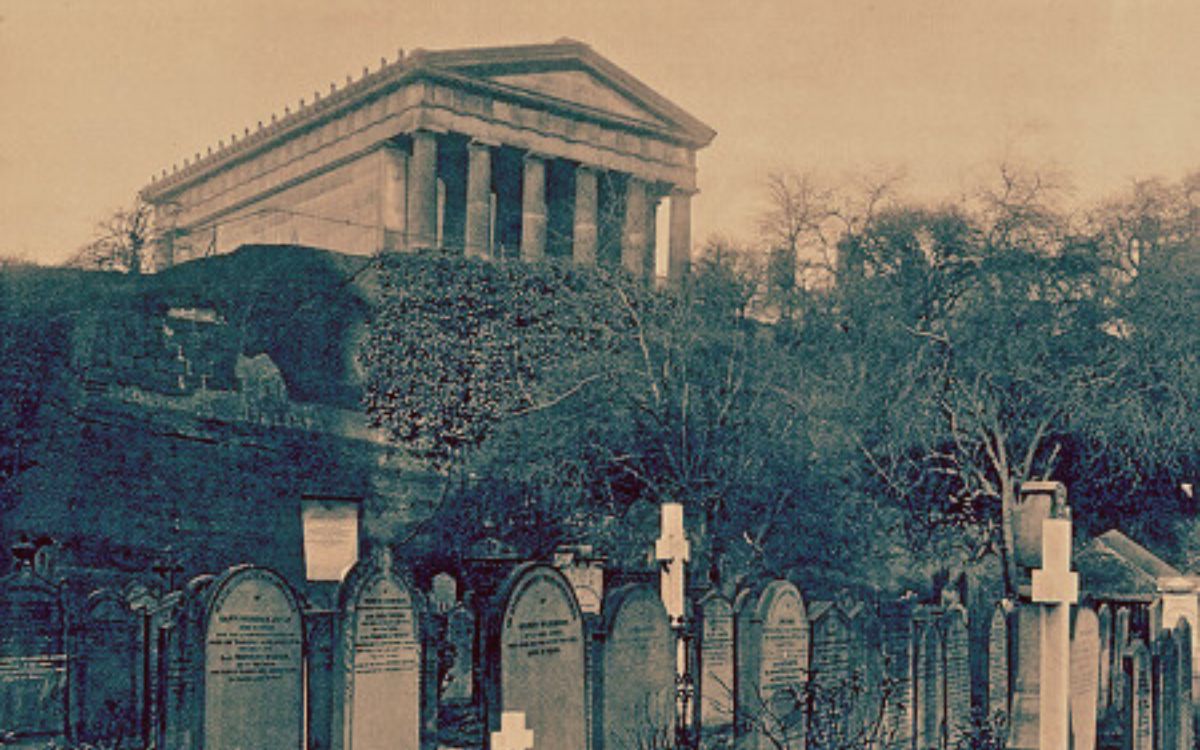
Long after dusk falls over Liverpool, shadows stir in the depths of an old sandstone quarry – now St James’ Cemetery – where the dead lie thick and the living speak of ghosts that never left
What was once a bustling Victorian burial ground has become a place of uneasy silence, watched over by the towering presence of Liverpool Cathedral above.
With around 60,000 souls interred here between 1829 and 1936, the cemetery holds more than just memory—it holds stories the city still whispers after dark.
From Quarry to Necropolis
Before it cradled the dead, this site was carved by human hands as a sandstone quarry.
In the early 19th century, Liverpool’s rapid growth left churchyards overflowing. Civic leaders, seeking a more dignified solution, turned to the disused quarry beneath what would later become the Anglican Cathedral.
Its steep rock walls and natural seclusion made it the perfect setting for a new kind of burial ground—a garden cemetery, rich with winding paths and monumental stonework.
Here, merchants, mayors, paupers and plague victims were laid to rest in a carefully planned necropolis that reflected both Victorian grandeur and the unspoken fear of death.
Today, even in daylight, a heavy stillness lingers. But after dark, something older stirs.
The Tragic Death of William Huskisson
Among the most prominent figures buried in St James Cemetery is William Huskisson, a Member of Parliament and an influential statesman of the Industrial Revolution.
But it is not his political legacy that echoes—it is the manner of his death.
On 15 September 1830, during the grand opening of the Liverpool and Manchester Railway, Huskisson stepped forward to greet the Duke of Wellington.
In a fatal misjudgement, he crossed the tracks in front of Stephenson’s Rocket.
The locomotive struck him, causing injuries that would make Huskisson the first widely reported casualty in railway history.
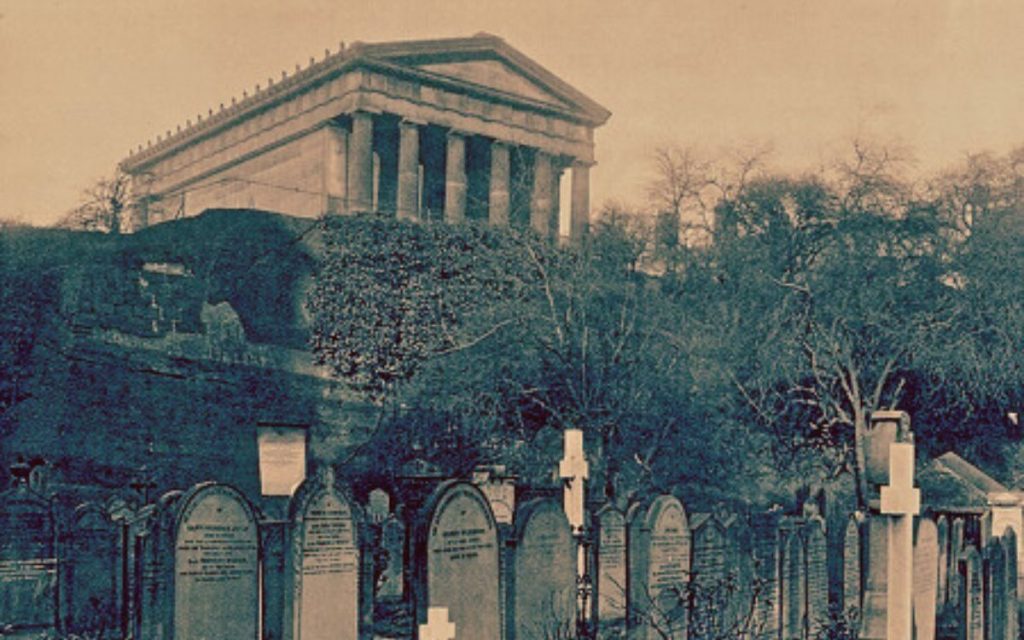
His death shocked the nation and drew crowds to his funeral, where he was buried beneath a towering mausoleum that still dominates the cemetery.
Yet some claim that his spirit never truly found rest.
Visitors have reported seeing a tall man in early 19th-century dress gliding near the mausoleum before vanishing into nothing.
Others say they hear whispers or feel the sudden chill of unseen footsteps beside them.
Some believe Huskisson is doomed to relive the moment of his violent death, his final tragedy echoing endlessly through the cemetery shadows.
Shadows and Whispers Among the Stones
Huskisson is far from alone.
With tens of thousands of bodies buried in close quarters, tales of hauntings are stitched into the very soil of St James Cemetery.
Locals speak of cold spots and murmurs carried on the wind—disembodied voices that seem to drift from nowhere.
Dark shapes flit between tombstones, disappearing before the eye can settle.
Some describe the eerie sensation of being followed, footsteps echoing their own until they stop—and find only silence behind them.
The old catacombs, carved deep into the quarry walls, amplify the unease.
Once used to store coffins and remains, these recesses are now bricked up, their secrets sealed behind stone.
Still, paranormal investigators claim the catacombs hum with an energy that defies explanation—perhaps the unrest of those denied peace.
A Place of Memory and Mystery
Though it was officially closed to burials in 1936, St James Cemetery was later reshaped into a public garden.
Today, its leafy walkways and quiet benches offer a strange kind of refuge in the heart of the city.
The towering cathedral casts long shadows over crumbling memorials, its presence as imposing in death as it is in life.
By day, the cemetery feels reflective — its history close, but gentle.
By night, that feeling shifts.
The weight of forgotten names, unmarked graves and century-old sorrow presses close. Even the wind seems to walk carefully through the trees.
It is a place where history lingers not only in stone but in the air itself.
Visiting St James Cemetery
Address: Upper Duke Street, Liverpool L1 7AZ
Access: Open daily as a public garden. Entry is free.
What to see: William Huskisson’s mausoleum, the bricked-up catacombs, and the towering sandstone walls that enclose the site.
Have you experienced anything spooky at St James Cemetery in Upper Duke Street? Tell us about it in the comments section below!