

Durham City, 1 May 1942, a clear night lit by a full moon. At 2.33am the still night air was disturbed by a warning of approaching enemy bombers.
The aircraft neared the grand Durham Cathedral which houses the sacred remains of St Cuthbert. It was feared the historic building was the target.
Suddenly, a mysterious fog arose from the surrounding river. The cloud shrouded the cathedral in a cloak of invisibility, protecting it from the enemy.
The fog clung to the immediate area around the ancient building and did not spread further. Potentially saving it from the Luftwaffe bombs, which were dropped elsewhere.
The all clear was given at 4.02 am. The mysterious fog disappeared as quickly as it had arrived.
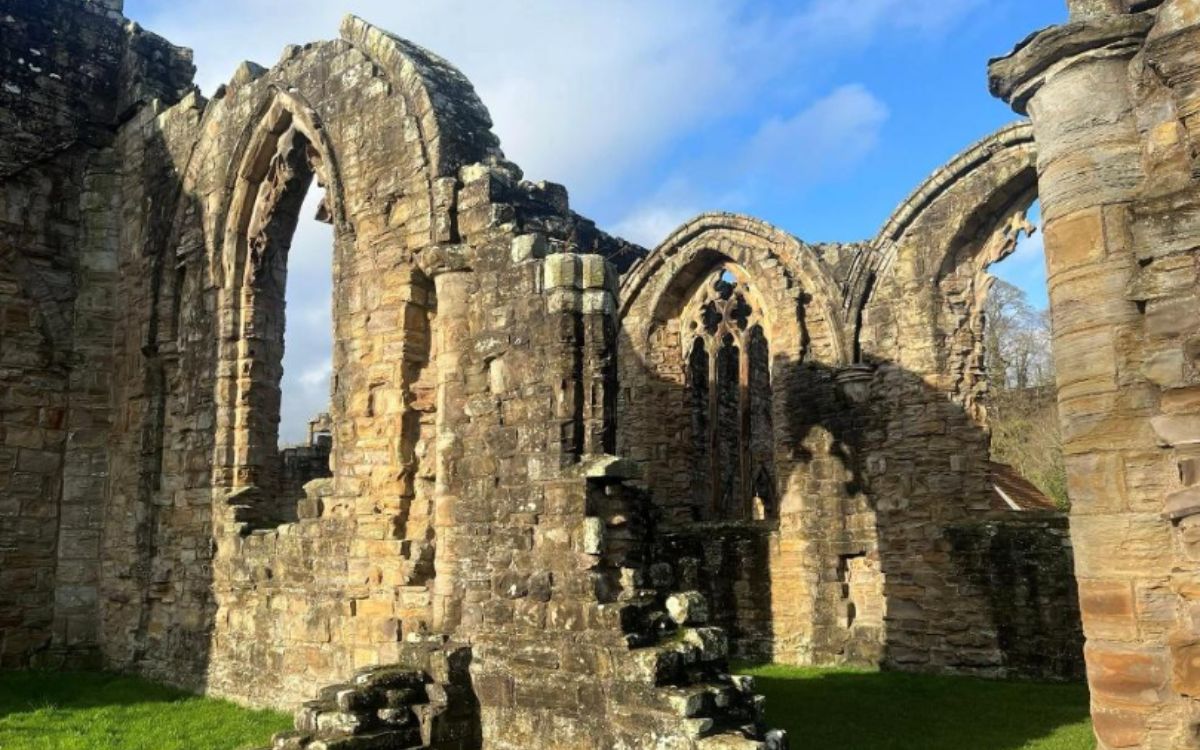
Two of those enemy bombs were dropped at the nearby monastic ruins of Finchale Priory. Miraculously they avoided the building but created a deep crater which sits dangerously beneath the waters of the nearby river.
Local legend says that the cathedral was saved that night by St Cuthbert and his miraculous mist.
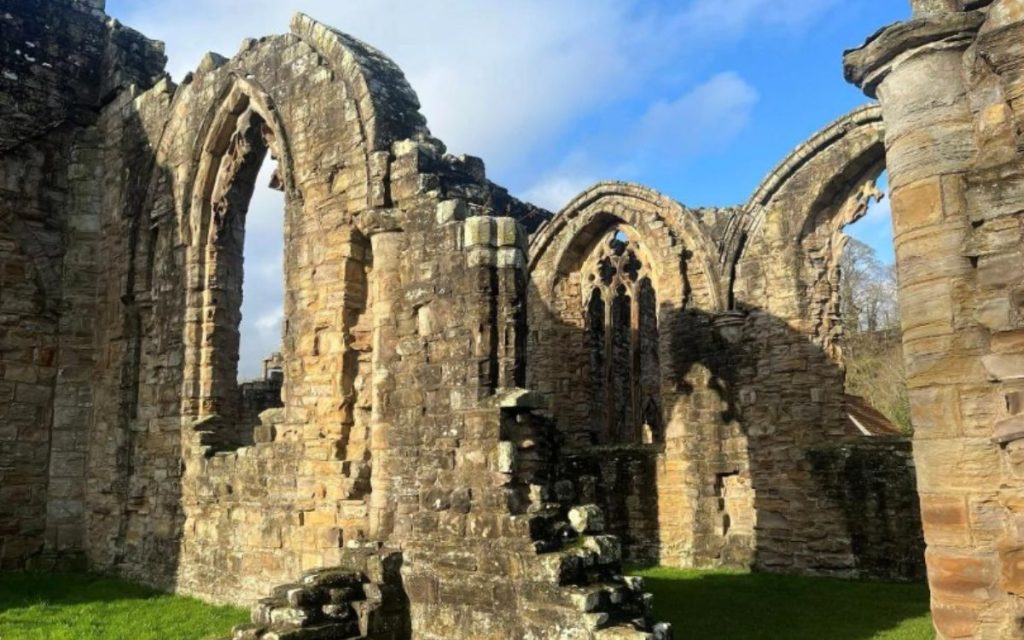
What is Finchale Priory?
Finchale Priory, where the bombs dropped, was founded in 1196 on the site of the hermitage of Saint Godric.
Godric was an adventurer who traded as a merchant. He travelled to many countries across the world, including Jerusalem.
Eventually, after visiting the Farne Islands in Northumbria, he gave up his life at sea and became a hermit. He moved to Wolsingham in Weardale where he lived in woodland amongst packs of wolves, dedicating the rest of his life to Christianity.
In 1112 or 1113 Godric took up residence near the site where the ruins of Finchale Priory now stand.
Later he built a hut with a chapel and remained there for the next 60 years. After his death he was buried against the north wall of his church.
The spot is still marked by a cross within the ruins of the priory.
Life at the hermitage was hard, but Godric persevered. The hut was battered by the weather and the river often threatened to wash the site away.
On one occasion Godric was attacked by a band of Scots. This did not deter him.
It is said that Godric had power over the elements. He would stand for an entire night naked in the freezing waters, emerging to roll in nettles and briars on the riverbanks the next morning.
The area was infested with snakes, but Godric befriended them. They would slither into his hut and warm themselves by his fire.
He gave sanctuary to a stag which was being chased by hunters. Godric gained a reputation as a healer and people would come from miles around to be cured by his miracles.
However, not all was good at the hermitage. Godric was plagued by demons which tormented him.
They threw him from his bed and pelted him with stones. These attacks could be likened to modern-day poltergeist activity.
On occasions invisible forces would drench him in wine.
It is written that the devil himself paid a visit to Godric, taunting him with a tale of buried gold.
Godric took a spade and dug for the gold, only to disturb a nest of imps living underground. They screamed at Godric with devilish laughter and bombarded him with fireballs.
After Godric died, a priory was built on the site of his hermitage. It later became a holiday retreat for the monks of Durham Cathedral.
Ghosts of Finchale Priory
Local legend tells that it was monks from Finchale Priory who murdered Lady Lily Lumley from nearby Lumley Castle and threw her body down a well. Her ghost is still said to haunt the castle.
As I found out on a recent visit, the ruined priory has an atmosphere that some visitors feel is malevolent.
I took a friend to visit the site, a gentleman who is no stranger to spooky places. He had no prior knowledge of the area and we had anticipated a leisurely morning stroll around the ruins.
We planned to take some photographs and feed the ducks which mill about in the nearby river. There is a café on site which sells duck food along with coffee and cake.
The café is in a farmhouse which dates to the 1200s.
However, our visit was cut short.
As we walked through the gates to the ruins and began to wander amongst the stones, my friend became increasingly uneasy and agitated.
He said the atmosphere was so oppressive it was making him feel ill, so much so that we had to leave.
As we got back in the car and drove up the winding country lane away from the priory, he began to relax and said a weight had lifted from him.
The dark, ominous presence he felt had been clinging to him was gone.
He later recounted that while wandering amongst the ruins he felt as if he was being followed by someone with a limp.
This was an interesting observation.
We later discovered that the woodland surrounding the priory is allegedly haunted by an unpleasant monk who drags one leg behind him as he walks.
There are other strange manifestations which have been reported around the site.
The spirit of a lady in grey who tragically drowned supposedly wanders the riverbanks.
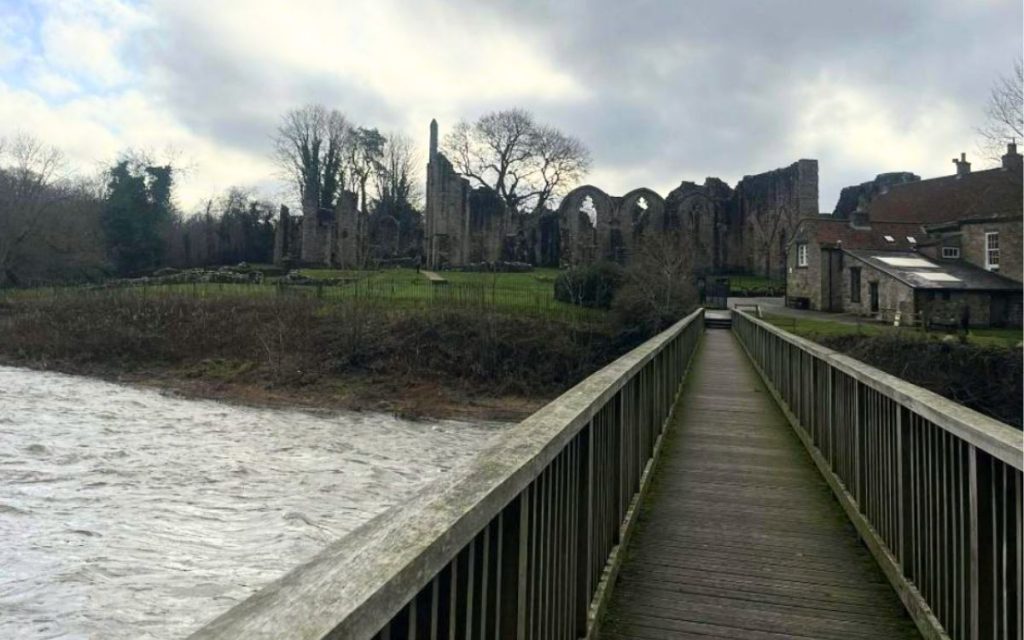
There are also reports of timeslips from the bridge between the woodland and the priory. Witnesses are said to have glimpsed the building in its former glory hundreds of years ago.
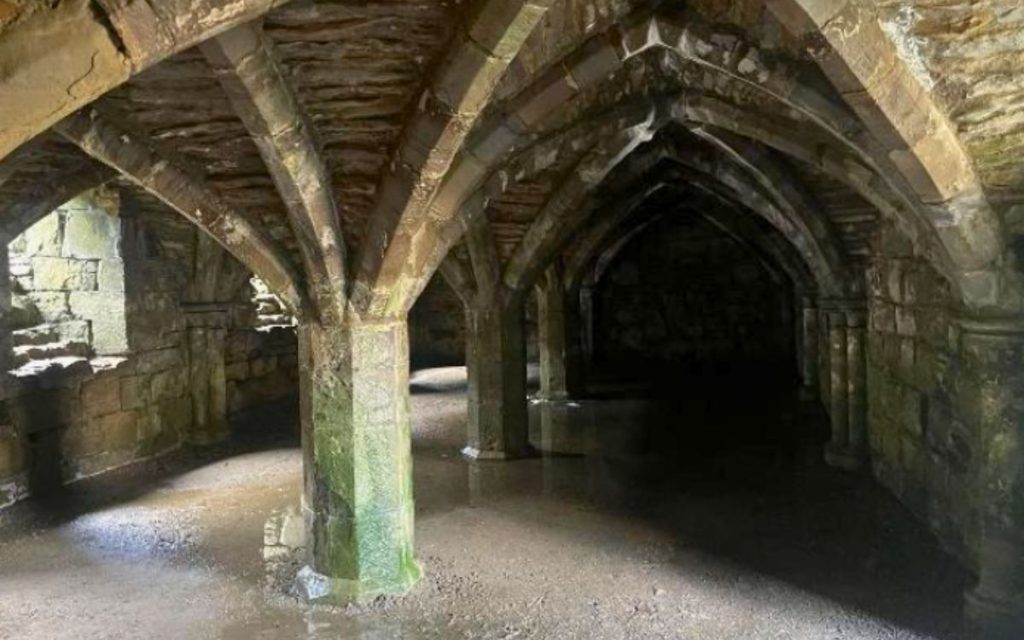
Another legend tells of a secret passage from Durham Cathedral to the priory where something evil lurks.
An unknown horror is said to stalk the subterranean depths, so terrifying that no one has ever survived the journey along the passage.
Maybe it is the lair of those naughty imps, or even the devil himself protecting his hidden gold.
Finchale Priory, DH1 5SH, is managed by English Heritage and is open to the public throughout the year. The café and facilities on site are privately owned.