

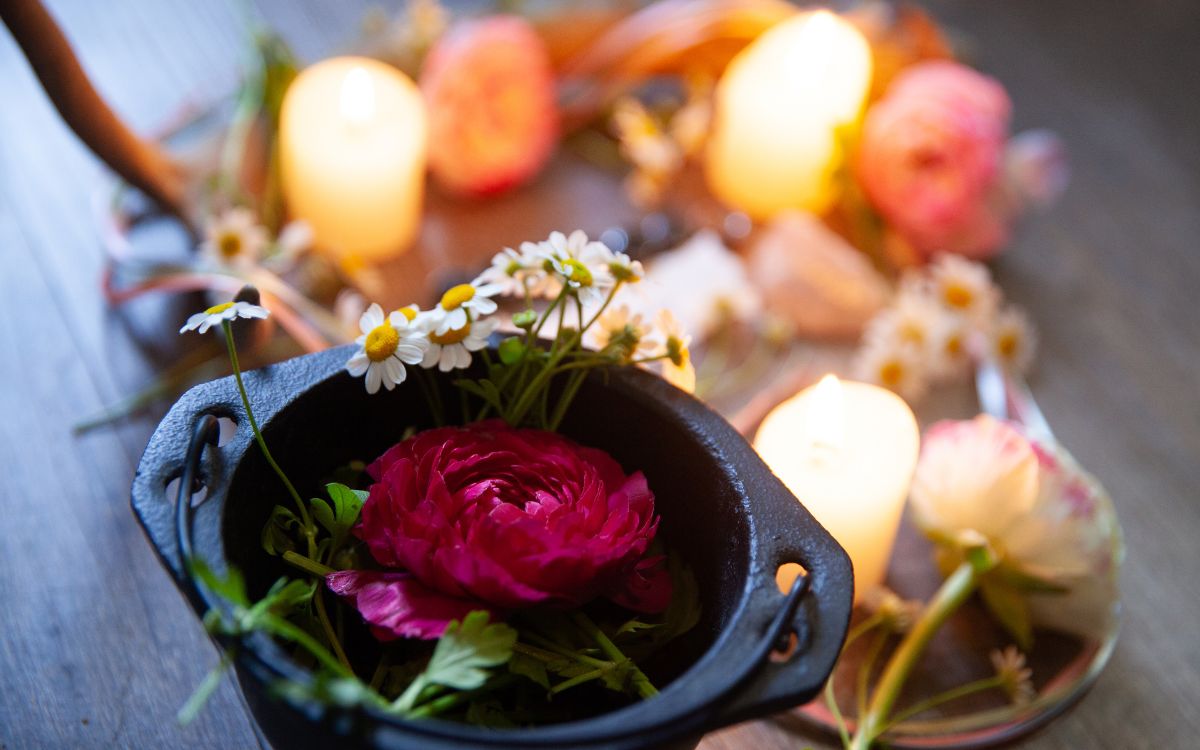
On the night of 30 April, long before ribbons are tied and maypoles are raised, Britain and Ireland step quietly into something much older.
Beltane is a fire festival, a turning point, and a moment when the year shifts into summer and the world briefly feels less solid than it should.
Today, most people recognise the date as May Day. But Beltane lies beneath it. Older, stranger, and still faintly flickering if you know where to look.
What does Beltane mean?
Beltane is a Celtic word usually translated as “fires of Bel”, referring to an ancient deity associated with light or the sun. It is, at its heart, a fire festival celebrating the arrival of summer and the promise of fertility in the months ahead.
For early communities, this was not symbolic. It was practical and urgent.
Spring marked the beginning of the farming year. Crops had to grow, animals had to thrive, and families depended on it. Beltane sat at the point where hope either began to take shape or quietly failed.
That is why so much of the festival revolves around fertility, not just in a romantic sense, but in the wider idea of growth, survival and abundance.
Traditionally, Beltane celebrations included courting rituals. Young men and women gathered blossoms in the woods and came together around evening fires. These encounters often led to matches and marriages, sometimes immediately, sometimes later in the year.
The land was becoming fertile, and so were the people.
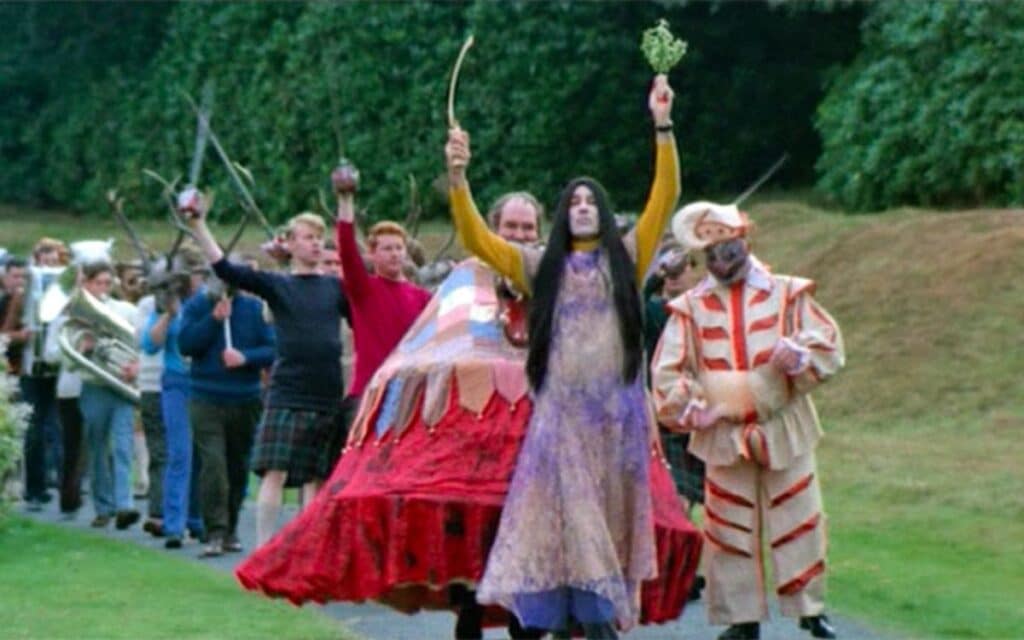
This atmosphere of fire, ritual and unease has carried into modern culture, most famously in the 1973 film The Wicker Man, which draws heavily on imagined pagan traditions rooted in festivals like Beltane.
Fire, fertility and the unseen
At the centre of Beltane was fire.
It was believed to cleanse, purify and strengthen. Cattle were driven between two fires, or through their smoke, to protect them from disease and ensure the fertility of the herd. Ashes were scattered, flames were shared, and entire communities gathered around the same source of light.
But this was not only about agriculture.
Beltane was also a liminal time, a threshold between seasons, when the boundaries between the human world and the unseen were thought to weaken. Like Samhain in autumn, it was believed that spirits and the aos sí, the fair folk, were more active on this night.
Offerings were left outside, not as kindness but as a quiet acknowledgement that the world was not entirely human and that it was wise to remain on good terms with whatever might be passing through.
Although Beltane is often described as the most overtly sexual of the pagan festivals, modern Pagans rarely express this directly in ritual. Instead, it appears in symbolism.
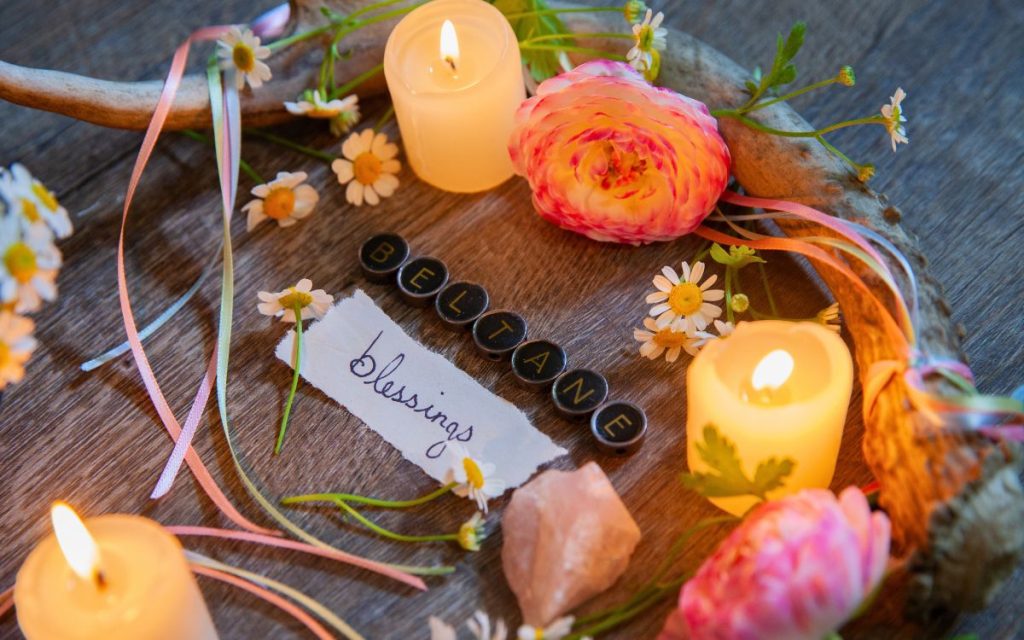
The maypole, with its ribbons and circular dance, is one of the clearest surviving echoes of this, representing union, fertility and the weaving together of life.
In pagan belief, Beltane is also the moment when the God, born at the Winter Solstice, reaches maturity and unites with the Goddess. This sacred union ensures fertility across the land, but it can also be understood more personally.
As the Druid Emma Restall Orr has suggested, Beltane speaks not only of physical fertility but of the “fertility of our personal creativity” — the need to live actively, to create and to grow in our own lives.
From Beltane to May Day
Over time, the rawness of Beltane softened.
As Christianity spread, many of the more ritualistic or unsettling aspects faded, and what remained became May Day — a brighter, more orderly celebration of spring. The fires disappeared, the sense of danger receded, and the festival moved into daylight.
But the bones of Beltane are still there.
The maypole, the flowers, and the marking of early May as something special all echo the older festival, even if the meaning has shifted.
Across Europe, the same night is known as Walpurgis Night, also marked by bonfires and long associated with witches and restless spirits. Different traditions, but the same instinct: that the eve of 1 May is not an ordinary night.
Beltane in Edinburgh: a modern revival
The largest Beltane celebrations in the UK today take place in Edinburgh, where thousands gather on Calton Hill each year on 30 April.
The evening begins with a procession led by figures representing the May Queen and the Green Man — ancient symbols of fertility and growth. The Green Man sheds his winter form and is revealed in his spring aspect before joining the May Queen in a ritual union that marks the arrival of summer.
Around them, a cast of striking figures moves through the firelit landscape.
The Red Men embody chaos and instinct, while the White Woman and her attendants represent order and protection. The Blue Men recall ancient warriors painted with woad, and torchbearers carry flames that act as both spectacle and symbolic gateways.
Fire arches blaze, representing thresholds between the earthly world and the spirit world, and the celebrations continue until dawn.
Although the Edinburgh event draws from Celtic and Scottish folklore, it also incorporates influences from cultures around the world, making it a vivid and theatrical expression of Beltane rather than a strictly traditional ritual.
How to mark Beltane today
You do not need to stand on a hilltop in Edinburgh to feel Beltane.
The festival still makes sense in simple ways.
- Light a candle or small fire to acknowledge the turning of the year.
- Spend time outdoors at dusk, noticing the shift from day into night.
- Bring flowers or greenery into your home as a nod to the season’s growth.
- Take a moment to think about what you want to grow in your own life, not only materially, but creatively and personally.
Beltane is not only about fields and livestock anymore. It is about energy, momentum and the sense that something is beginning.
Discover more at our Wheel of the Year: Pagan Calendar Guide.