


Some people express surprise when I tell them that many churches are reputed to be haunted.
But why not? For centuries, these buildings stood at the heart of their communities, silently witnessing countless baptisms, weddings and funerals.
It seems only natural that the intense emotions connected with such events might still echo down the ages, later perceived by those sensitive enough to experience psychic phenomena.
One of the most intriguing haunted churches in Britain can be found on Garlick Hill in the heart of old London. Known as St James Garlickhythe, the church can trace its origins back to the 12th century. The name “Garlickhythe” refers to the nearby landing place, or “hythe”, where garlic was sold in medieval times.
Destroyed in the Great Fire of 1666, the church was rebuilt by Sir Christopher Wren between 1676 and 1682. Owing to its abundance of windows, it later became known as “Wren’s Lantern”.
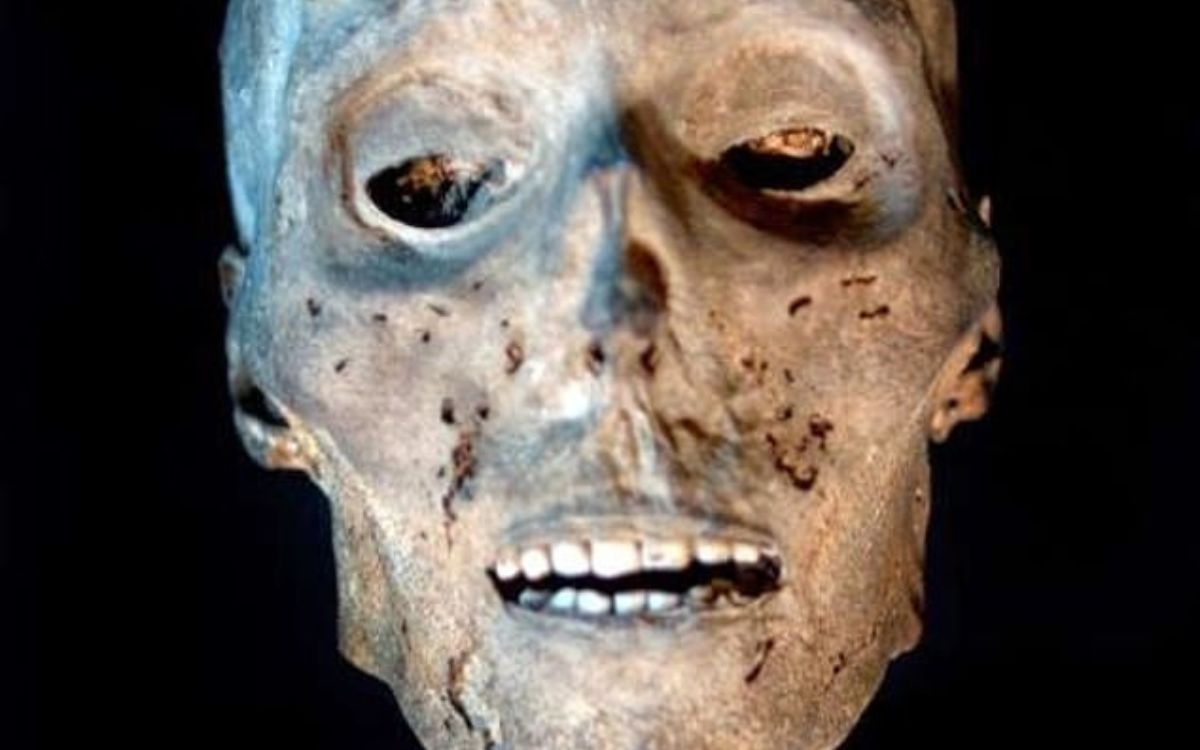
In 1855, a mummified male corpse was found in the crypt and placed on display in a glass-panelled coffin for curious visitors willing to pay a small fee. The most likely figures behind this idea were Francis Caton, the Parish Clerk, and Benjamin Hicks, the Beadle.
The body was kept behind the organ, but he was later moved — no doubt with the permission of Dr Burnet, the Rector — to a cupboard in the narthex, where he was more formally exhibited to visitors during arranged viewings.
However, the corpse may have been discovered earlier, as Vestry minutes from 1838 record that extensive repairs were to be carried out at the church, including instructions for the mason to “take up paving and steps to the altar and make level”.
Some researchers believe that during these works the body was uncovered beneath the floor of the chancel, as reports concerning its existence apparently date from around this period. It may then have been moved to the vaults, where it was rediscovered in 1855 during the clearing of the crypt.
Theories as to who he could be ranged from a Roman general to the first Lord Mayor of London. An analysis carried out by the conservation team at the British Museum in 1986 suggested that the mummy was an adolescent who died around the turn of the 18th century.
This theory was later supported by Julian Litten, Curator of Public Affairs at the Victoria and Albert Museum and an authority on historic burial practices. Litten proposed that Jimmy was Seagrave Chamberlain, the 16-year-old son of a Barbados sugar planter, whose memorial can be found on the wall of the church’s north aisle.
Later carbon dating tests carried out for a TV series called Mummy Autopsy confirmed that the corpse dated from 1641 to 1801. The highest peak in the carbon-dating results suggests that he most likely died around the time of the Great Fire of 1666.
Further examination revealed signs of balding, tooth decay and osteoarthritis. The corpse also had pierced ears. Some have suggested that he may have been a sailor who died at sea, was embalmed aboard ship, and later brought to the church for burial once the vessel reached port.
However, others dispute this. Usually, only individuals of some importance would have been buried so close to the sanctuary, making it unlikely that he was an ordinary seaman.
St James’s reputation as a haunted church only began after the discovery of the corpse, which became known as “Jimmy Garlick”. Visitors claimed to sense a strange presence within the building, and it was theorised that the ghost of the mummified man was unhappy about being exhibited to the paying public.
It is also said that choirboys would sometimes carry the mummy around the church as a joke — something that can hardly have pleased “Jimmy”. However, the Rector, Fr “Johnny” Johnson, soon put a stop to this practice.
In May 1941, during the Blitz, a German bomb struck the church, grazing Jimmy’s coffin before falling into the crypt. Fortunately, it failed to explode. Following this incident, reports of paranormal activity increased.
Interestingly, many hauntings are said to intensify after buildings have been altered or damaged. Is the spirit reacting to the disturbance, or could such phenomena simply be a form of psychic recording triggered by environmental change?
According to the Stone Tape Theory, residual energy stored within the fabric of a building can be released through structural alteration, resulting in displays of recorded paranormal activity.
Peter Underwood, renowned ghost hunter and author of Haunted London, records that during the Blitz a fireman spotted a white figure inside the church. The figure ignored his calls to take shelter and vanished when approached.
On another occasion, a visiting priest reportedly saw the same white-clad figure standing in the nave for a few seconds before it disappeared. In yet another account, a woman sitting in one of the pews noticed a tall figure dressed in white standing on the north side of the church with its arms folded, staring intently towards the tower.
She turned to see what had attracted its attention, but when she looked back, the figure had vanished. Investigating the spot where it had stood, she found nothing.
Underwood also recounts the experience of an American tourist visiting the church with her two sons. The older boy suddenly became terrified and insisted that they leave immediately.
He claimed to have glanced up the staircase leading to the balcony and seen the figure of a man with crossed arms wrapped in what resembled a white winding-sheet. Its face and hands appeared like those of a dried corpse.
Neither the boy nor his mother knew anything of the mummy or the stories associated with it, and the balcony had reportedly been empty only moments before the apparition appeared.
Mr Underwood also mentioned in another of his books, Ghosts and Haunted Places, that Sir John Betjeman — the English poet, writer and broadcaster — had seen the apparition of the mummy during a visit to the church.
Underwood himself likewise believed he saw “something” moving in the balcony during a midday visit. A check of the church confirmed that no one else was present at the time.
Other paranormal activity connected with the church included poltergeist phenomena such as moving objects, unexplained noises, and even sightings of a phantom cat, although it remains unclear whether these occurrences were linked to the “mummy” apparition.
Eventually, “Jimmy Garlick” was removed from public display and placed in a new coffin in the crypt. The inscription on his final resting place reads:
‘Stop stranger stop as you pass by. As you are now, so once was I. As I am now, so shall you be. So pray prepare to follow me’.
It is intriguing that the ghostly activity within the church seemed to fade once ‘Jimmy’ was hidden from prying eyes. This has led some to believe that his spirit is finally at rest, no longer disturbed by the curious gaze of the living.