

BROADCAST: in six parts 6-22 January 1981 (see footnote)
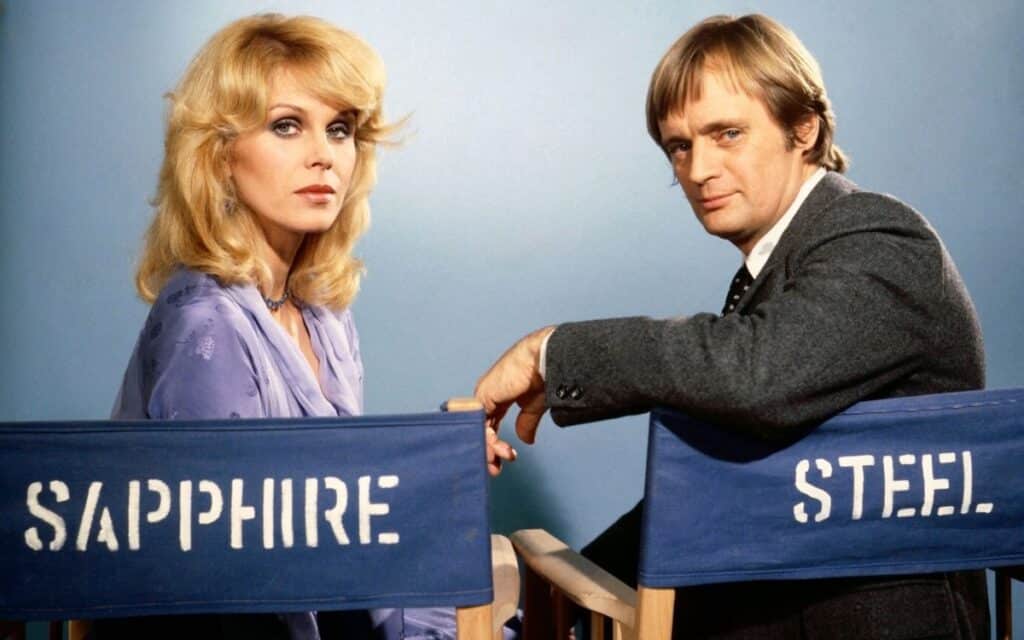
STARRING: David McCallum (Steel), Joanna Lumley (Sapphire), David Collings (Silver), Catherine Hall (Rothwyn), David Gant (Eldred)
WRITER: P.J. Hammond
DIRECTOR: Shaun O’Riordan
Sapphire & Steel – Assignment III: The Creature’s Revenge Review
Rothwyn and Eldred seem no different from any other couple in the early 1980’s, living in a flat atop a tower block with their baby. But they are part of an experiment to examine 20th Century living: their home is really a time capsule, sent back from the 35th Century, and invisible to present-day city dwellers.
The capsule is run by a system, a living organism created through the genetic splicing of animal materials of various sources, but the tortures those very sources have suffered in laboratories manifest themselves when the creature controlling the capsule develops its own agenda of malevolent retribution.
When the couple lose contact with their bosses in the future, Sapphire & Steel arrive on the scene…

Unlike previous assignments, where humankind stumbles into pre-existing weaknesses in time, Assignment III presents a situation largely of humanity’s own making. The creature exists because somebody decided they could rewrite the rules of nature without considering the consequences.
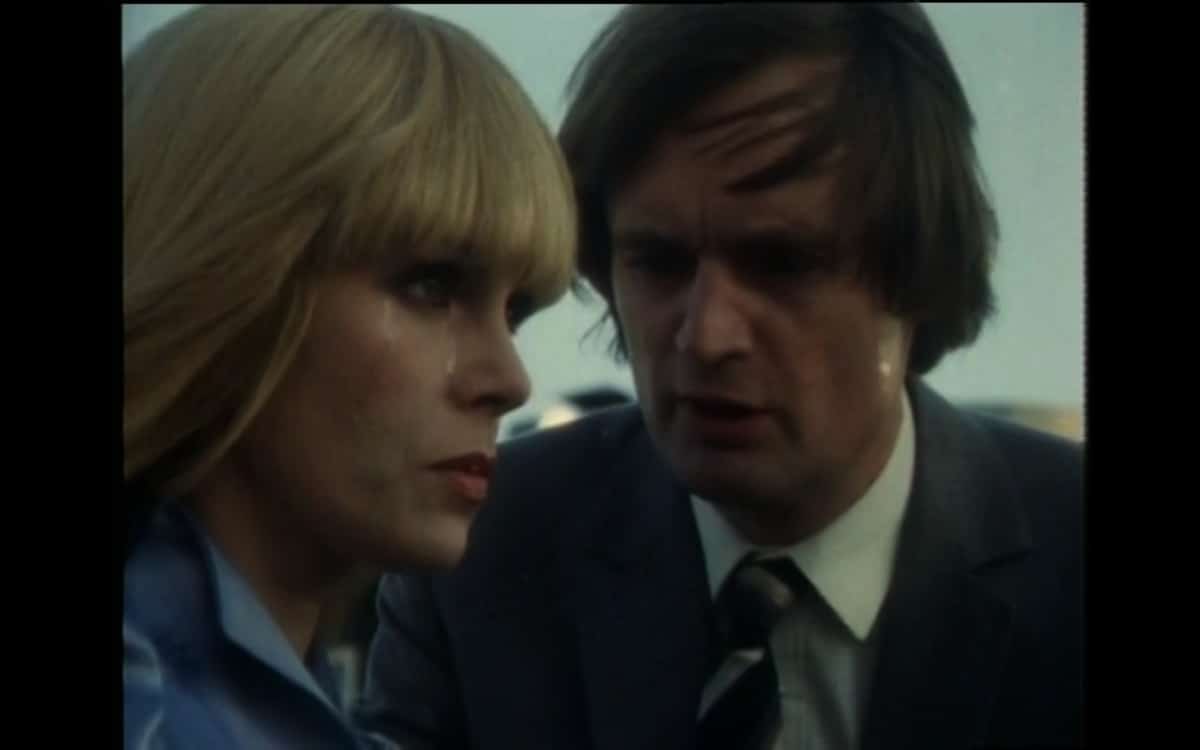
In the first three episodes, we see Sapphire & Steel outside, on the roof of the tower block, trying to find their way through to the hidden residence through an invisible shield. The decision to show the pair outdoors in the wider environment, shot on film, is an interesting artistic decision in retrospect.
Was this an attempt to open up Sapphire & Steel’s world beyond the claustrophobic confines established in the first two stories? Perhaps, but when that approach (whether enforced by financial constraints or not) had already established a signature look and feel to the show, these sequences can’t help but feel a bit jarring.
Then, there’s the creature itself: Regrettably, even to my very young eyes at the time, its appearance was ultimately a letdown and, even now, allowing for the budgetary and technological restraints put on the production, it’s difficult to be charitable towards it. chills.
It’s a frustrating distraction from a story which asks us to contemplate genuinely unsettling ideas. A lifeform accidentally created through genetic manipulation, removed from its proper place in history, and capable of causing temporal instability is exactly the sort of abstract threat Sapphire & Steel usually excels at. Unfortunately, the more clearly we see the creature itself, the harder it becomes to invest in those ideas although, in fairness to the production team, they are economical with its appearances.

Rothwyn and Eldred are an interesting diversion in that they are not monsters but intellectual opportunists. Their willingness to exploit time travel for personal advancement blinds them to the damage left in their wake, making them as much a symptom of the problem as the creature itself. Like so many scientists in fantasy and science fiction before them, they become so preoccupied with what can be done that they never stop to ask whether it should be done.
We also get to meet another of Sapphire & Steel’s colleagues: Suave, debonair, Silver strolls into the story with the easy confidence of someone who has never once been defeated by a piece of machinery. He’s immaculate, unflappable, and faintly amused by the chaos around him, a welcome foil to Steel’s stern and intense persona.
Indeed, Silver’s presence is in some ways more interesting than the plot itself, hinting at the larger organisation operating beyond the edges of the series, the very team that gets individual namechecks in the opening titles. Until now, aside from the brief appearance of Lead in their first assignment, Sapphire and Steel have felt almost singular figures, enigmatic agents appearing from nowhere to solve impossible problems before vanishing again.
David Collings’ effortlessly charismatic performance ensures Silver leaves a lasting impression (he would return later). His presence here confirms that the duo is part of something much wider, a revelation that quietly expands the scope of the programme’s mythology, and it’s a great shame that the show ultimately didn’t last long enough to explore this in more depth.
In retrospect, Assignment III feels like a programme testing its boundaries. Not every experiment succeeds. The creature may never convince, and the move away from the oppressive atmosphere of the earlier stories is not always to the serial’s advantage. Even so, the willingness to push beyond the formula established by the first two assignments prevents the series from becoming predictable.
Putting the creature aside (in the same way that some of us choose to overlook the appearance of the monster in Night Of The Demon 1958), this third assignment’s ambitious ideas, ethical questions and expansion of the Sapphire & Steel universe ensure that it remains an intriguing if uneven entry in the series’ run.
Thankfully, Sapphire & Steel would be on much steadier ground in their next assignment, one which could stand alongside The Railway Station as among the most effective nightmare fuel British television of the period could produce…
TRIVIA POINTS: David Collings was a familiar face in genre television at the time, also appearing in Blake’s 7 and Doctor Who (he would later narrate audiobooks of the latter). Perhaps less widely known was his vocal talent in dubbing the title character for the English version of Japanese fantasy series Monkey (1978-80).
Tell us your thoughts about Sapphire & Steel Assignment III:The Creature’s Revenge in the comments section!