

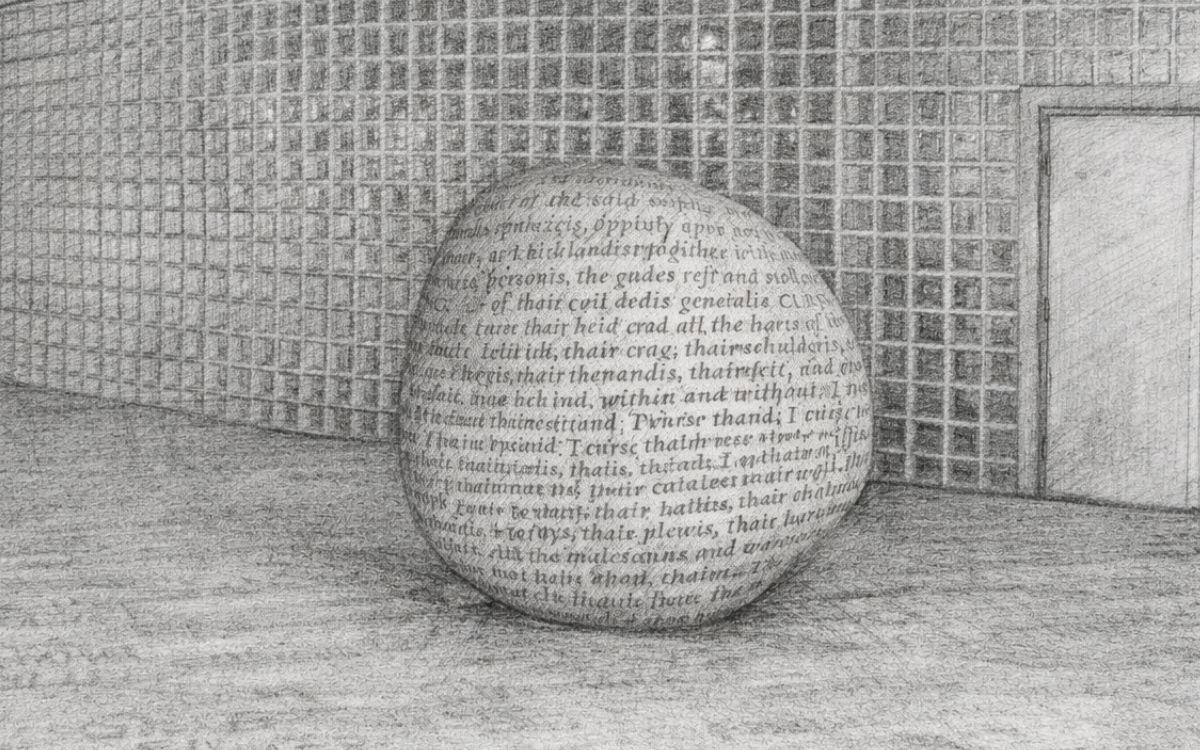
Beneath a gloomy underpass linking Tullie House Museum and Carlisle Castle stands the Cursing Stone, a polished granite monolith weighing around 10 tonnes (though estimates range between seven and 14 tonnes).
Part of Carlisle’s Millennium Gallery project, the stone was unveiled around 2001. It was designed by local artist Gordon Young—himself descended from ancient Border Reiver stock—and crafted by Andy Altman.
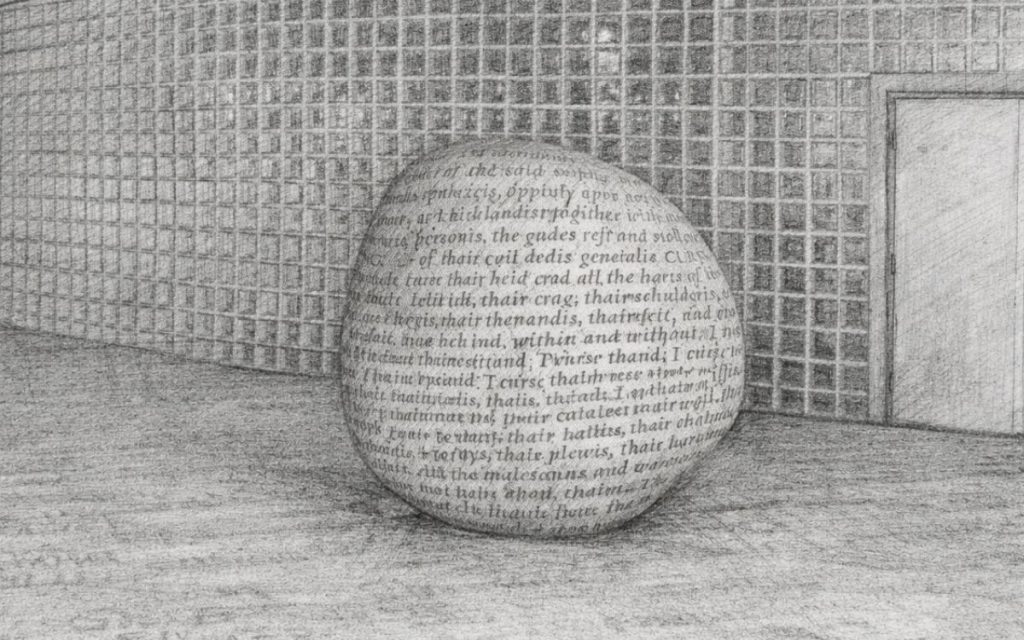
An 80-metre walkway leads to the stone, with the floor bearing the names of Reiver families. The path culminates at the ominous boulder, which is inscribed with around 300 words from a longer 1,069-word curse—The Monition of Cursing.
This curse was first proclaimed in 1525 by Archbishop Gavin Dunbar of Glasgow. It damned robbers, highwaymen, reivers and other scourges of the Anglo-Scottish borders.
The Curse and Its Consequences
This is no ordinary hex.
The curse spares nothing—from body parts and daily activities to livestock, tools, fields and homes. It invokes cataclysmic biblical punishments: fire, floods, darkness and even the fates of Pharaoh and Sodom and Gomorrah.
Since the stone’s installation, Carlisle has endured a string of misfortunes. These include the devastating 2005 floods that killed three people and inundated thousands of homes, an outbreak of foot-and-mouth disease, factory closures, job losses, fires, a bakery murder and even the relegation of Carlisle United FC.
Locals began to joke that the stone carried spiritual static for the city.
The Cursing Stone sparked debate. Local councillors considered removing it, while clergy and even a self-proclaimed “high priest of the British white witches” warned that destroying the stone could intensify its powers.
There is a New Testament bible quote from Philippians 4:6 embedded in the Cursing Stone artwork and is believed by some to act as a counter-spel. The quote says:
“Be anxious for nothing, but in everything by prayer and supplication, with thanksgiving, let your requests be made known to God.”
This verse is often interpreted as a message of peace and reassurance, which contrasts sharply with the dark and damning tone of the Monition of Cursing. Its inclusion in the artwork may have been intended to balance or soften the stone’s ominous inscription.
The Cursing Stone in Carlisle Today
Today, the Cursing Stone remains where it was placed—lodged in that shadowy passage, part public art installation, part historical marker, part urban legend.
Its presence prompts reflection. Is it a harbinger of misfortune or merely a convenient scapegoat when disaster strikes?
Visitors to the Millennium Gallery can walk the Reivers’ path, stop at the stone, and feel the gravity of centuries past. The curse is carved not only in granite but perhaps also in Carlisle’s collective consciousness.
Have you encountered the Cursing Stone in Carlisle? Share your thoughts or experiences in the comments below.