

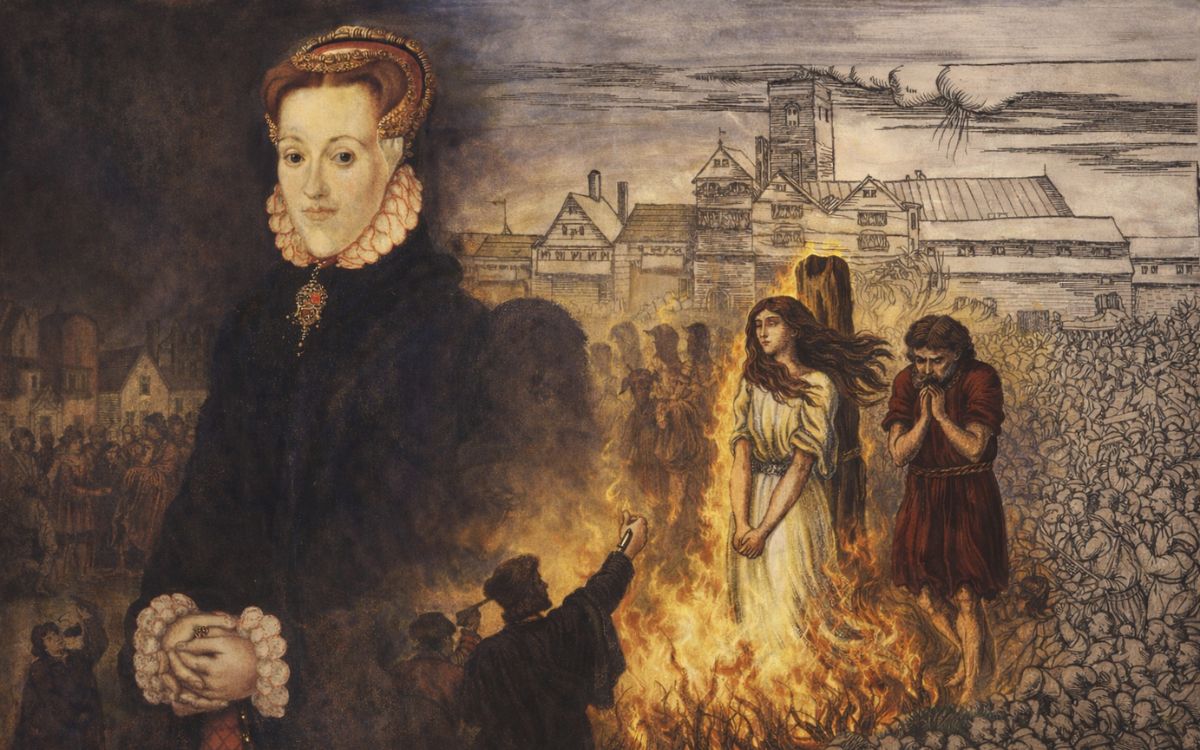
Today marks the 480th anniversary of one of the most gruesome executions ever carried out in London.
On 16 July 1546, a young woman was burned alive at Smithfield. She had been so badly tortured in the city beforehand that she could not even walk to her own execution.
Her name was Anne Askew.
She was born into a Lincolnshire gentry family around 1521 and grew up in relative comfort.
She married Thomas Kyme, a local landowner, but the marriage was strained by deep religious differences.
Anne embraced Protestant reformist ideas at a time of intense religious tension. According to later accounts, her husband forced her from the family home because of her beliefs.
She later travelled to London, where she moved within reformist circles and read the Bible in English.
Her willingness to discuss scripture openly, and to challenge established doctrine, brought her to the attention of the authorities.
She died during the reign of Henry VIII, when punishment was not hidden behind prison walls. It unfolded in full view of the capital. Londoners knew it. Londoners saw it. Londoners gathered for it.
What makes this case particularly disturbing is that the torture happened in London, under the authority of the Crown.
The arrest of Anne Askew
After her arrest, Anne was taken to the Tower of London. This was not a secret dungeon in a distant land. It was, and still is, one of the most recognisable buildings in the city. Within its walls stood the rack, a device designed to pull a body apart joint by joint.
Torture was rare in England. Women were rarely subjected to it. Yet Anne was stretched on the rack until her shoulders and hips were dislocated. Contemporary accounts describe her fainting from the pain. She was questioned again when she regained consciousness.
By the time officials had finished with her, she could no longer stand.
From that point on, she had to be carried. The damage done to her body inside the Tower was visible. This was not hidden brutality. Word spread quickly through London. The message was clear: if this could happen to her, it could happen to anyone.
Executed at Smithfield
Just days later, she was taken across the city to Smithfield, the established execution ground for heretics. Smithfield was not remote. It sat at the heart of London’s daily life, near markets and busy streets. Executions there were public events.
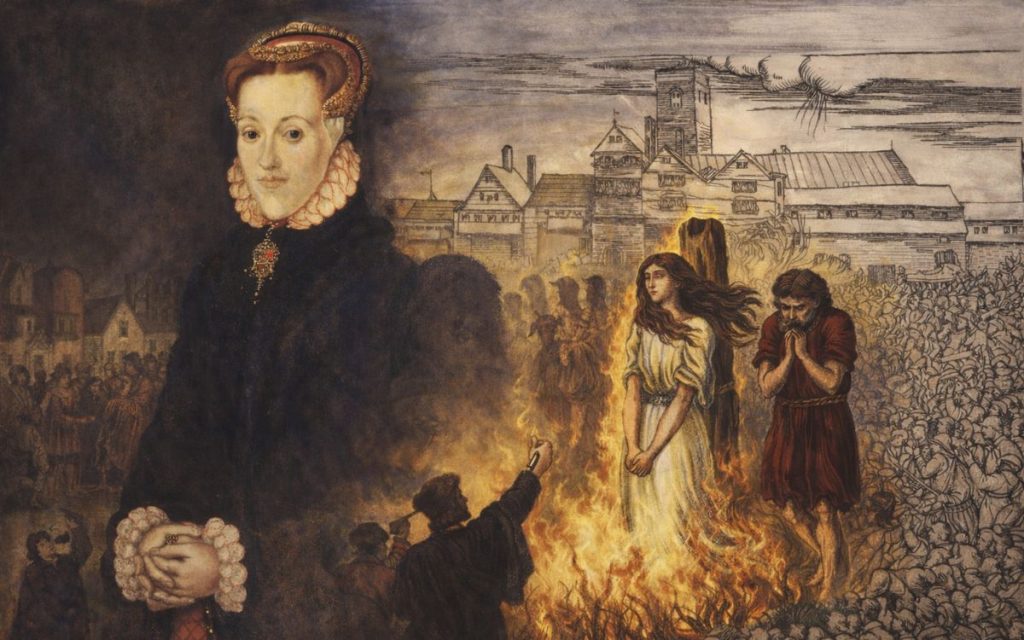
On this day in 1546, Anne Askew was carried in a chair to the stake because she was physically unable to walk. She was tied upright beside three men. Beneath them, the firewood was stacked high.
Burning alive was the harshest punishment Tudor law could impose. It was slow, deliberate and meant to be witnessed. Crowds gathered. Smoke filled the air. The flames climbed.
London watched.
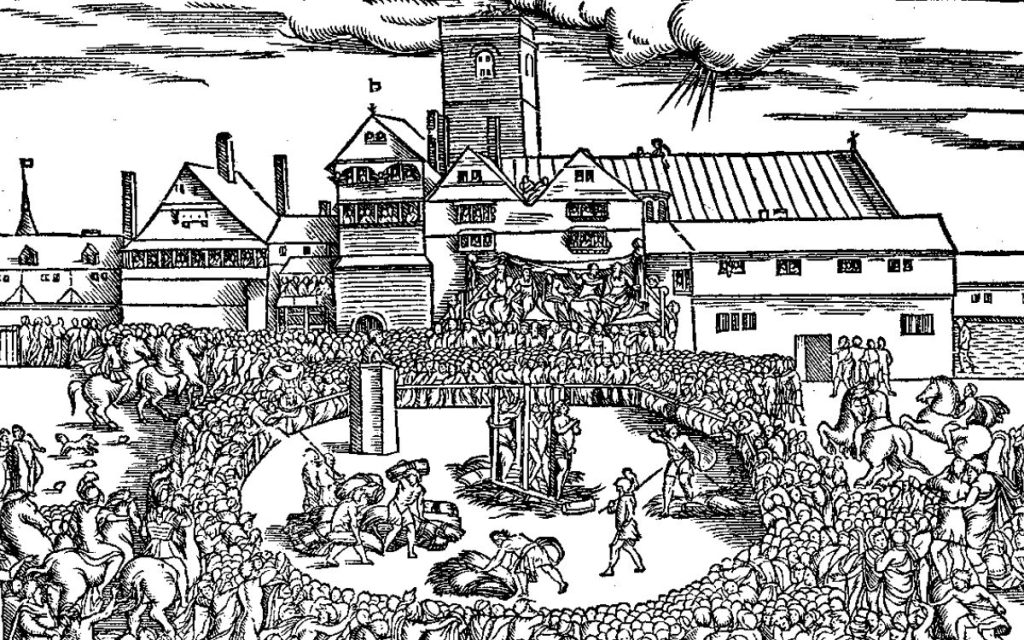
There were no secret proceedings. No private firing squad. Torture had taken place in the Tower. Execution followed in Smithfield. Both were part of the same system, carried out openly in the capital of England.
Today, the Tower of London is a tourist attraction. Smithfield is lined with offices and cafés. Few who pass through those streets pause to imagine that torture and burning once formed part of official justice there.
After her execution, Anne Askew was recorded as a Protestant martyr in John Foxe’s Book of Martyrs, where her torture and burning were described in detail.
She is commemorated in some Church of England calendars on 16 July.
Her prison writings remain one of the few surviving first-hand accounts of torture in Tudor England.
Anne Askew’s death stands as a stark reminder that in Tudor London, cruelty was not hidden. It happened in the city itself, authorised, witnessed and remembered.