
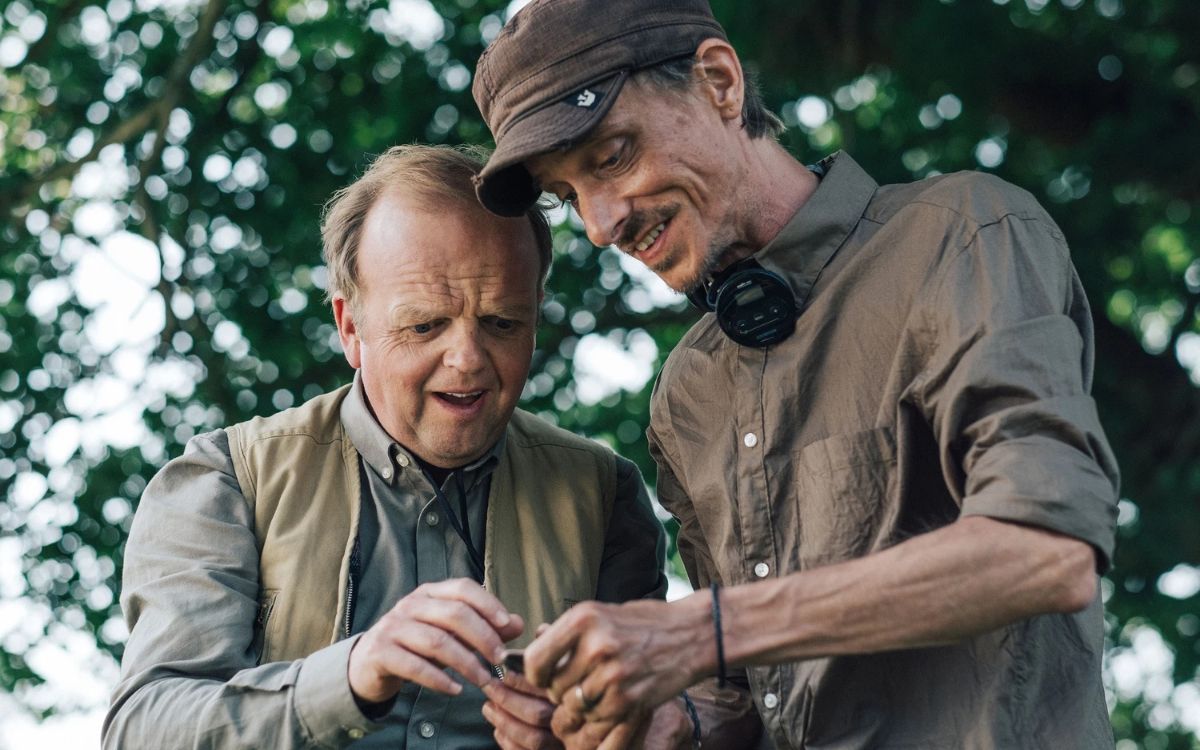
A fleeting supernatural moment in Detectorists TV series reveals how deeply the series believes the land itself remembers the past, writes DAVID SAUNDERSON
There is a moment in the BBC’s Detectorists series when the ghosts of the past seem to lead the heroes to a startling discovery of Saxon gold.
Without going too deep into spoilers, it is clear that something unseen nudges them towards one final look at a place they are about to leave behind.
A ghostly presence from another age.
It is brief, understated, and very much in keeping with the show’s tone – but it is unmistakable. The past reaches out, and it matters.
Detectorists is a series I should have watched years ago. For one reason or another, I passed it by. It was only this week, following the quiet brilliance of Small Prophets, that I found myself wanting to see more of Mackenzie Crook’s work. I am very glad I did.
The scene I am referring to comes in the final episode of the second series. By that point, the show has made its intentions very clear. This is not really about metal detecting. It is about searching for meaning. It is a gentle, folksy series where decency eventually wins out, patience is rewarded, and those who act badly tend to get their comeuppance without too much fuss.
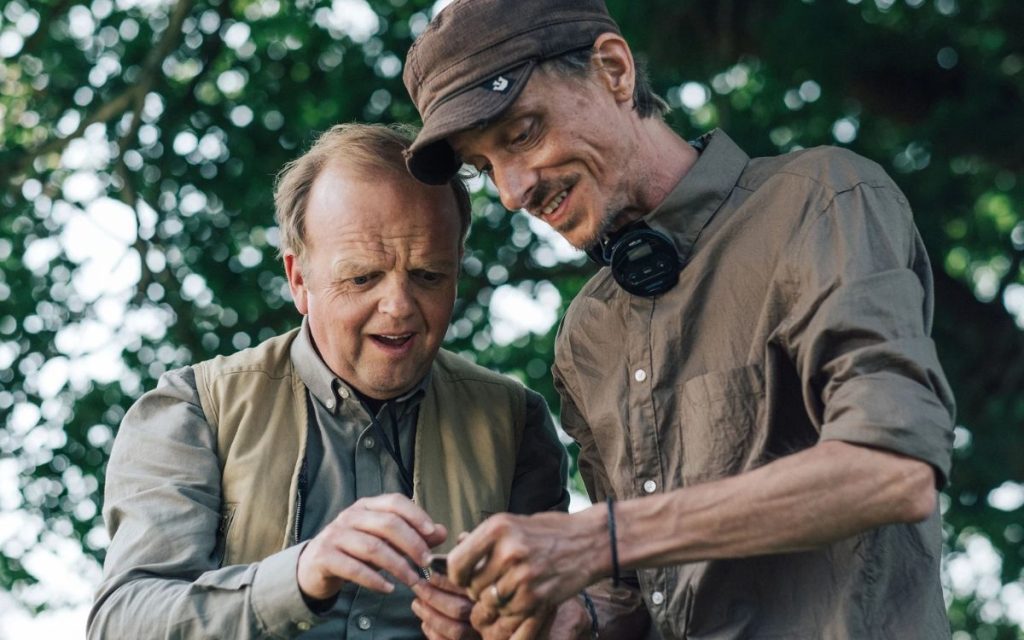
It is also a show deeply rooted in the landscape. Fields, hedgerows, footpaths, and scraps of farmland are not just backgrounds – they shape the characters.
The land carries memory. It affects how people behave, what they hope for, and what they are willing to wait for. That is why the moment of near-supernatural intervention does not feel out of place at all.
Detectorists is not a spooky show. It does not deal in hauntings, apparitions, or overt folklore in the way Worzel Gummidge or even Small Prophets sometimes does.
But that single moment, when the past briefly presses in on the present, fits perfectly with the story it is telling. The land remembers, even if the people walking across it do not always realise.
That idea sits comfortably alongside older British traditions, where history is never quite finished with us. It echoes the quiet unease found in the stories of M. R. James, where ordinary landscapes and everyday curiosity are enough to disturb something long buried.
Nothing dramatic has to happen. A sound, a feeling, or a wrong turn is enough.
It also brings to mind real-world traditions where discovery follows a nudge from the past. At Sutton Hoo, local folklore and Edith Pretty’s powerful intuitions preceded the 1939 excavation of a seventh-century ship burial, as if the mounds themselves were insisting on attention.
In North Yorkshire, the Sexhow tale tells of a ghostly woman directing a farmer to a hoard beneath a named tree. At Wroxeter, dreams and visions were once taken as invitations to dig among the Roman ruins.
In Lancashire lore, the outlaw Fox Robin’s ghost marks the very ground where his stolen gold lies buried, the haunting and the treasure inseparable.
All of these stories share a belief that the landscape can guide us – gently, subtly – if we are willing to listen.
That is why the moment works so well. Detectorists only steps into this supernatural tradition for a second.
Just long enough to make the field feel different. Just long enough to remind us that history is not dead or silent.
Then the show returns to cups of tea, quiet jokes, and the slow, patient business of searching.
And somehow, because it does not linger, it feels all the more real.