

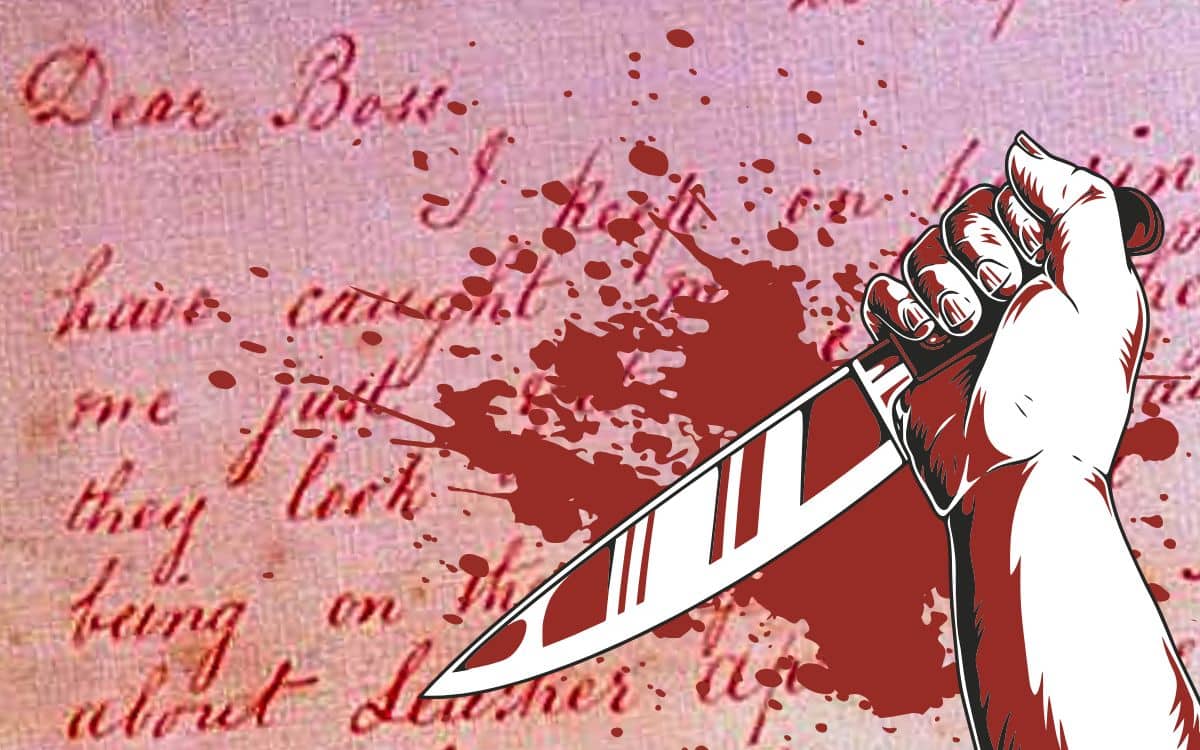
In September 1888, while London was gripped by panic over the brutal murders taking place in Whitechapel, a strange and unsettling letter arrived at the offices of the Central News Agency.
It began with the words “Dear Boss”, written in a confident tone that immediately caught attention.
The writer claimed to be the murderer terrorising the East End, mocking the police investigation and joking that the authorities would never succeed in catching him.
At the bottom of the letter he signed a name that had never appeared in any report about the crimes before: Jack the Ripper.
From that moment onwards, the unidentified killer responsible for the Whitechapel murders would be known by that chilling name.
However, there is a major problem with the story behind the letter.
Many historians and crime researchers now believe the murderer may never have written it at all.
What did the Dear Boss letter say?
Dear Boss,
I keep on hearing the police have caught me but they wont fix me just yet. I have laughed when they look so clever and talk about being on the right track. That joke about Leather Apron gave me real fits. I am down on whores and I shant quit ripping them till I do get buckled. Grand work the last job was. I gave the lady no time to squeal. How can they catch me now. I love my work and want to start again. You will soon hear of me with my funny little games. I saved some of the proper red stuff in a ginger beer bottle over the last job to write with but it went thick like glue and I cant use it. Red ink is fit enough I hope ha ha. The next job I do I shall clip the ladys ears off and send to the police officers just for jolly wouldnt you. Keep this letter back till I do a bit more work, then give it out straight. My knife’s so nice and sharp I want to get to work right away if I get a chance. Good Luck.
Yours truly
Jack the Ripper
Dont mind me giving the trade name
P.S. Wasnt good enough to post this before I got all the red ink off my hands curse it. No luck yet. They say I’m a doctor now. ha ha
Dear Boss, the letter that created a legend
The Dear Boss letter is dated 25 September 1888 and, interestingly, it was not sent directly to the police but instead delivered to the Central News Agency, which supplied news stories to newspapers across Britain.
In the letter, the writer mocked the police investigation and suggested that he took pleasure in the murders that had already shocked the city.
He also wrote that he might cut off a victim’s ears and send them to the police as proof of his crimes.
Only a few days later, on 30 September 1888, Catherine Eddowes was murdered in Mitre Square during what later became known as the “double event”.
During the attack, part of Eddowes’ ear was cut.
Because of this disturbing detail, some people believed the letter might have genuinely come from the killer.
The police took the possibility seriously enough to release copies of the letter to newspapers, hoping that someone might recognise the handwriting and help identify the person responsible.
Instead, the decision created an unexpected problem.
Hundreds of letters arrive
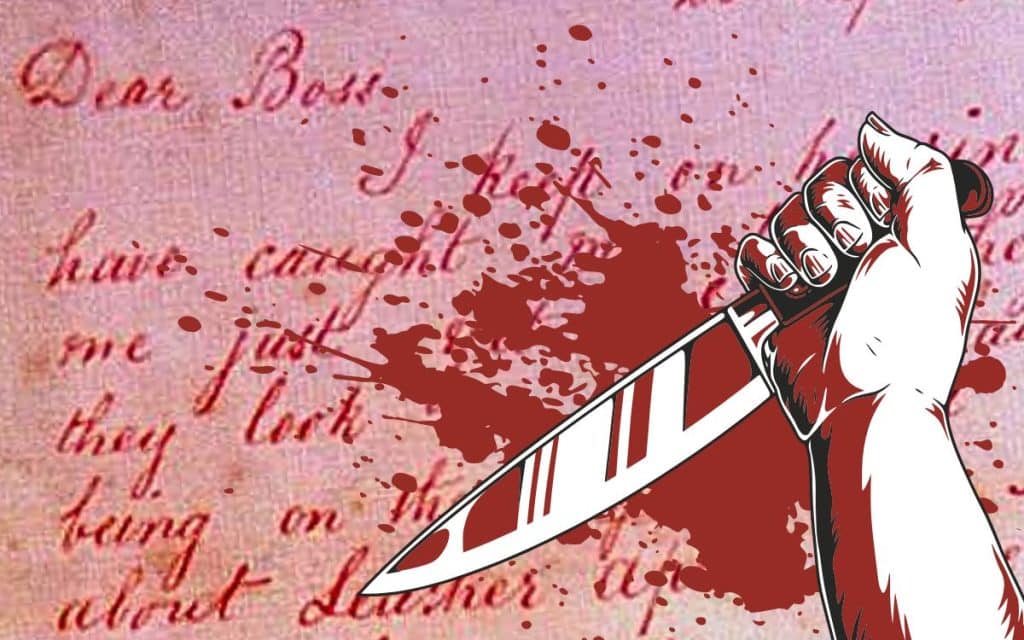
After newspapers published the Dear Boss letter, letters claiming to be from Jack the Ripper began arriving from across the country.
Some writers claimed to be the killer himself, while others insisted they knew the murderer’s identity.
Police investigators soon realised that many of these letters were jokes, pranks or deliberate hoaxes.
Some appeared to have been written by people simply seeking attention during one of the most sensational criminal investigations of the Victorian era.
Others may even have been written by journalists who understood that the more dramatic the story became, the more newspapers they would sell.
By the end of the investigation, hundreds of letters connected to the case had been received by the police and newspapers.
Some estimates suggest the number may have reached around 1,000.
Today, the vast majority of them are believed to be fake.
The three letters people still argue about
Despite the flood of hoaxes, historians still debate a small number of letters that might possibly be connected to the real killer.
Three in particular are discussed more than any others.
The first is the Dear Boss letter, which introduced the name Jack the Ripper to the public.
The second is the Saucy Jacky postcard, which was sent shortly after the murders of Elizabeth Stride and Catherine Eddowes and appeared to reference the so-called double event.
The third is the infamous From Hell letter, which was sent to George Lusk, the head of the Whitechapel Vigilance Committee.
This letter was accompanied by half of a human kidney preserved in a small box.
Unlike the Dear Boss letter, the From Hell message did not use the name Jack the Ripper and was written in rougher, less polished language.
The kidney sent with it may have come from one of the victims, although this has never been proven with certainty.
Even today, historians cannot say for sure whether the letter came from the murderer or from another hoaxer trying to frighten the public.
A journalist’s invention?
One of the most intriguing theories about the Dear Boss letter appeared decades after the murders had taken place.
In 1931, a journalist named Fred Best claimed that he and a colleague had actually written the letter themselves while working for the newspaper The Star.
According to Best, the pair created the letter simply to keep public interest in the Whitechapel murders alive and to ensure that newspapers continued selling large numbers of copies.
If this claim were true, it would mean that something extraordinary happened during the investigation.
The most famous name in the history of crime may have been invented not by a killer, but inside a newsroom.
What experts think today
Modern historians and researchers have carefully studied the language used in the various Ripper letters.
Some linguistic analyses suggest that the Dear Boss letter and the Saucy Jacky postcard were likely written by the same individual, which strengthens the theory that both were part of a hoax.
Many experts now believe that nearly all of the letters sent during the investigation were fake and had no real connection to the murderer.
Some researchers even suspect that the spelling mistakes found in the Dear Boss letter may have been deliberately added.
An educated writer, they argue, may have been attempting to imitate the voice of a poorly educated East End criminal in order to make the letter appear more believable.
The letter that changed history
Whether it was written by the real killer or by someone seeking attention, the Dear Boss letter had an enormous impact on the case and on how the murders were remembered.
Before the letter appeared, newspapers usually referred to the murderer using names such as “The Whitechapel Murderer”.
After the letter was published, however, journalists suddenly had something far more dramatic and memorable to use.
Jack the Ripper.
It was a name that captured the imagination of the public and quickly became part of popular culture.
Over time, that name transformed a series of horrific murders into one of the most enduring mysteries in criminal history.
If the letter was indeed a hoax, it may still be one of the most influential hoaxes ever written.
Because without that letter, the world might never have heard the name Jack the Ripper at all.