

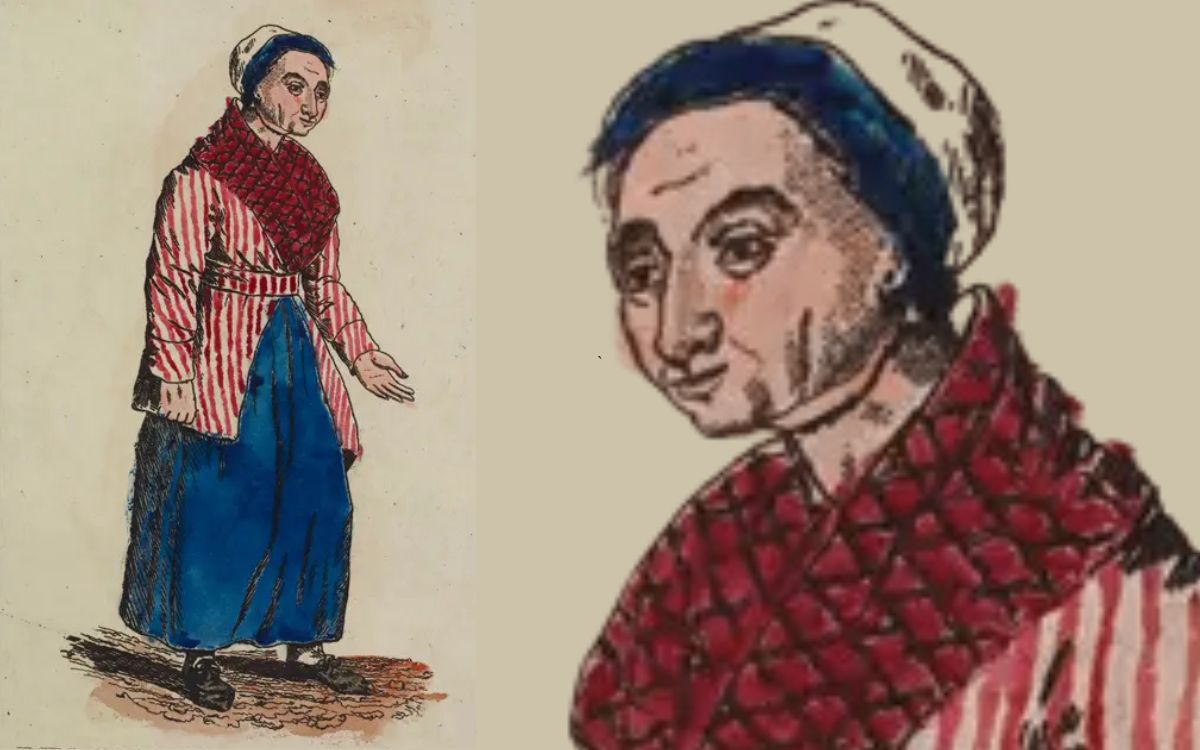
The murder of Margaret Docherty on 31 October 1828 brought Burke and Hare’s trade in human bodies to an end. They killed her in Edinburgh and sold her body for dissection.
But two lodgers found her remains before the killers could take them away. They refused a bribe and went to the police.
The discovery led officers to the premises of anatomist Dr Robert Knox, who bought bodies from the pair. It also supplied the case that sent William Burke to the gallows.
Docherty was their final known victim. Burke later confessed to 16 murders, while his accomplice, William Hare, escaped prosecution by giving evidence against him.
The woman whose death exposed them had accepted an offer of food and shelter. Within a day, her body was packed into a tea chest for delivery to Knox.

The body beneath the straw
Ann and James Gray had been staying in Burke’s lodgings in the West Port. On Halloween night, Burke arranged for them to sleep at Hare’s house.
When they returned on 1 November, Docherty was missing. Burke’s partner, Helen McDougal, said she had turned her out.
Ann went looking for her child’s stockings, but Burke warned her away from the straw beside the bed. His behaviour made her suspicious.
When the couple searched, they found Docherty’s body. Ann recognised the woman she had seen singing the night before.
James later told the court that McDougal offered him money to keep quiet. She said his silence could be worth £10 a week.
He refused, explaining: “my conscience would not allow it.”
The Grays reported the discovery, but Burke and Hare moved the body before officers arrived. They delivered it to Knox’s premises at Surgeons’ Square.
Burke and McDougal gave conflicting accounts of when Docherty had left, and police arrested them. Officers recovered her body from Knox’s premises on Sunday 2 November.
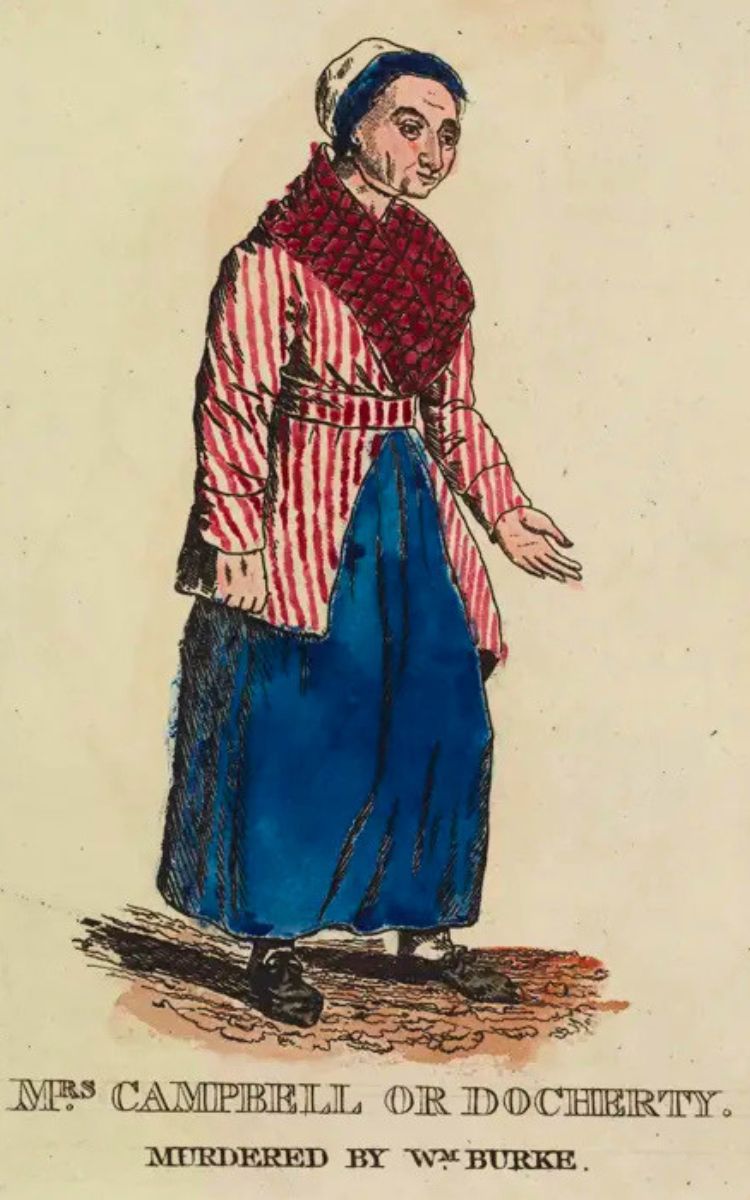
How Margaret Docherty was killed
Burke had met Docherty in a grocer’s shop on the morning of Friday 31 October. The contemporary account West Port Murders describes an Irish woman looking for her son.
He claimed his mother had shared her surname and invited her home. He gave her breakfast and offered her somewhere to stay.
After sending the Grays elsewhere, Burke and his companions continued drinking. The couple returned briefly at about 9pm for some of their child’s belongings.
Ann saw Burke and Hare dancing while Docherty sang. She and her husband then left the house.
Hare later testified that Docherty was knocked down during a struggle between the two men. He said Burke got on top of her and stopped her breathing.
According to Hare, Burke covered her nose and held her chin, keeping her breath stopped for 10 or 15 minutes. Hare claimed he watched without helping her.
This was the account of an accomplice who had secured immunity. It placed responsibility for the killing on Burke.
Docherty’s body was stripped and hidden beneath straw beside the bed. By the following evening, the men had delivered it for payment.

Burke faced the gallows, Hare gave evidence
Burke and McDougal’s trial began on Christmas Eve 1828. Although the indictment included other killings, the trial proceeded on the charge concerning Docherty.
The jury found Burke guilty. The charge against McDougal was found “not proven”, and she was released.
Hare’s agreement with the prosecution protected him from prosecution in return for his evidence. He later left Edinburgh, and his eventual fate remains uncertain.
Burke was hanged on 28 January 1829. His body was dissected, and his skeleton remains in the University of Edinburgh’s Anatomical Museum.
Knox was never tried over the murders, although the scandal damaged his reputation.
The trade had begun when a lodger in Hare’s house died owing him rent. Burke and Hare sold his body to Knox, then began killing to obtain more.
Edinburgh’s anatomy schools needed corpses, and the legal supply could not meet demand. Burke and Hare turned that demand into a business in murder.