
Edinburgh is often described as one of the most haunted cities in the world, its closes and kirkyards steeped in stories that blur history and legend.
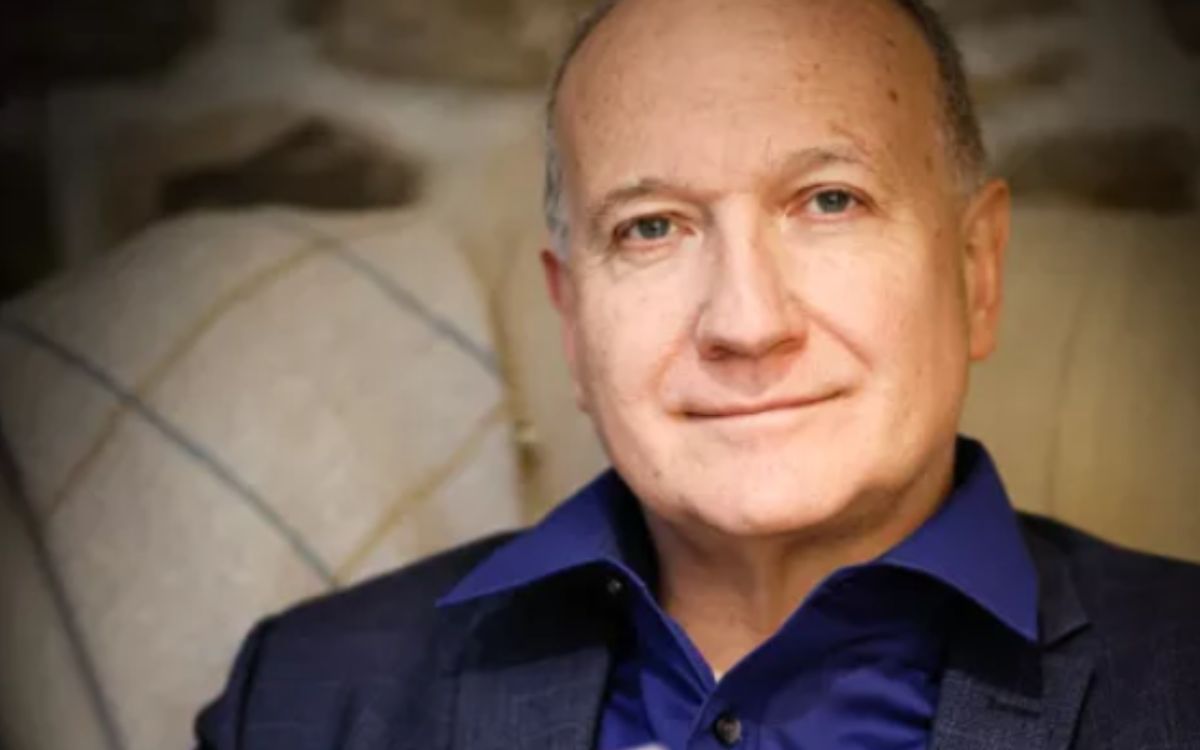
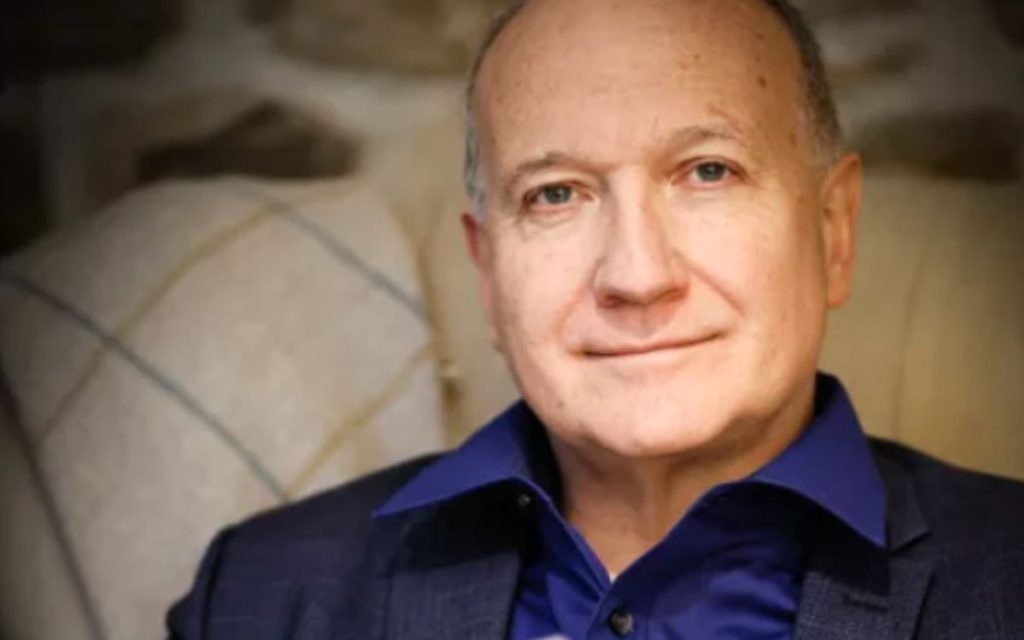
Few have explored those stories with the same level of care as Alan Murdie, a long-standing paranormal investigator and chairman of The Ghost Club. With decades of experience behind him, his work focuses less on spectacle and more on evidence, patterns and first-hand accounts.
In this interview with John Tantalon for Spooky Edinburgh, Murdie begins with the origins of his book Haunted Edinburgh, but the conversation quickly moves beyond the city itself. He reflects on how ghost stories are uncovered, how they should be handled, and why modern approaches to the paranormal do not always stand up to scrutiny.
What emerges is a thoughtful and measured view of a subject often dominated by noise.
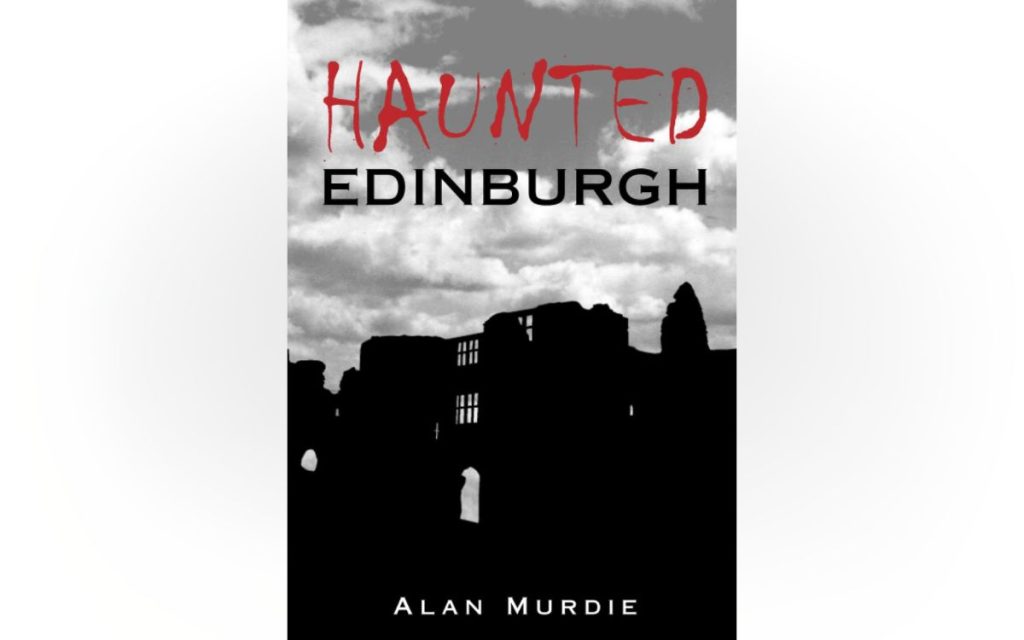
JOHN S TANTALON: In 2011, you released the excellent book Haunted Edinburgh. How did this come about?
ALAN MURDIE: Back at the beginning of the millennium, I was enjoying regular trips to Scotland and Edinburgh, a mixture of legal work and leisure, and I began to examine its ghost stories, as well as hearing about breathless claims of phenomena at Greyfriars Kirkyard.
I also attended several ghost tours in the Old Town and found that some scarcely mentioned ghosts in the first half hour at all.
It was rather more a collection of grim and gothic tales, some of which had been in circulation since Sir Walter Scott.
So I resolved to see if some new ghost cases could be found and if new light could be shed on any of the more familiar ones.
And so it proved, finding both historic archive material that had not been examined for up to a century or more, as well as making some site visits and learning new stories first-hand which would otherwise be lost unless someone made the effort to record them.
I am very glad you are continuing this work.
There is an interesting, detailed story in the book about Craigcrook Castle. I myself have had an unexplained encounter within its walls. How did you come to discover this lesser-known location?
I came across a brief reference to it in the long-defunct Journal of Paraphysics, issued by a long-gone parapsychology research laboratory based at Downton in Wiltshire from the 1960s to the early 1980s, run by a scientist called Benson Herbert.
I was then able to trace the original newspaper reports in the Daily Record for July 1970 at the now also closed British Newspaper Library at Colindale.
This, pre-2011, meant a physical visit, applying for the original archive volumes for 1970 to be brought to you and searching the pages directly.
It was a pleasure that probably only those who do real archival research appreciate these days.
Still, the newspaper collection now lives on, but online.
Many ghost stories come from private grief or personal experiences, as someone who’s written extensively about hauntings, where do you draw the line between documenting an event and protecting the privacy or dignity of people involved?
Well, each case will differ on the facts of the situation.
People vary enormously, as you know, with respect to the degree of exposure they are happy with or can tolerate.
Basically, you must respect the wishes of informants, especially regarding publication.
For weighing things up, you have a good starting point if you are already working in a profession or post with a code of ethics and guidance, such as medicine, law, nursing, teaching, social work, the church, counselling, fiduciary work of some kind, and so on.
You have an advantage, as this should impart some idea of the appropriate boundaries and when confidentiality should always be respected.
People have a basic right to privacy, and if information is not already published or in the public domain, then you should certainly hesitate over publicising personal information.
I generally lean against wider publication with individuals being identified.
If you can successfully anonymise or disguise key information and basically follow the person’s wishes, all well and good, and in most cases you can.
Unless there is some overriding legal reason or an overriding public interest in making something known, which will be rare but not impossible.
Even then, you have to be careful, since what is interesting to the public frequently does not equate with what is in the public interest.
At the same time, public records may tell you a lot that you can quote from.
Obviously, it is much less important when someone has later died, but it is at the very least a courtesy to think about surviving relatives, and certain medical information may remain confidential even after death.
Many hauntings seem to attach to locations rather than people. From your perspective, do you think a building’s history is enough to sustain a haunting, or does it require a living “observer” to keep it alive?
I think, based upon experiments with automated monitoring equipment, that a human presence, or possibly a mammalian one, is usually necessary for manifestations.
For many years, Tony Cornell and Alan Gauld of the Society for Psychical Research used a multi-sensor device dubbed ‘SPIDER’ (Spontaneous Psychophysical Incident Data Electronic Recorder).
This combined a video camera, sound sensors, and vibration and temperature recording apparatus.
It was deployed at over a hundred haunted sites in 20 years, including aboard the ship the Queen Mary, docked in California in 1988.
Results were negligible, suggesting that either ghosts did not show up if no one was around, that they could evade detection, or that they existed at a deeper level of reality than the material world that can be monitored by technology.
With CCTV around so much, we ought to be getting more pictures of interest, but personally I do not think any more that ghosts can be photographed.
Do you think social media/influencers has or is destroying credibility in paranormal research?
Well, it is not just paranormal research that is suffering in this regard.
Sadly, social media is far from conducive to encouraging a thoughtful, critical and even sane approach, though in the past there was also plenty of silliness and sensation about.
It is also making attention spans shorter, and at last legislators are waking up to the more pernicious effects.
There are plenty of what appear to be beginners in the paranormal who, judging by their utterances, portray themselves as experts and gurus online, and some are self-deluded or charlatans.
So rather than be influenced by these individuals, or anyone, I would recommend people make their own independent and open-minded enquiries and explore the subject from many different angles.
The problem has also affected serious news reporting, where I think social media uptake has done a lot of harm.
In the past, really pre-2000, national and local news coverage of paranormal events and hauntings was often far superior, with some significant cases emerging from it, for example Borley and the Enfield poltergeist.
Look at old press reports, the sensible ones from upwards of 20 years ago, and you will find they are full of interesting details and information about places and what witnesses experienced.
Ghost hunters in those days also generally had a greater understanding of science and parapsychology, and they still were reading books.
Sadly, in the last two decades, the sort of detail that once interested the media has declined dramatically.
Press coverage has become increasingly about an individual or group going off somewhere, rather than what led to the investigation in the first place or hearing from actual witnesses.
Nowadays, and all too often, stories revolve around the antics of rather over-imaginative individuals and groups celebrating themselves online rather than revealing anything useful about what they find, if anything.
This is not all the fault of groups, whose enthusiasm I do not knock, but also reflects changes in news reporting, a decline in local journalism, and its replacement by ‘news gatherers’ who do not leave their desks.
A third aspect is some of the ideas that circulate all too widely.
Many items of equipment deployed by today’s ghost hunters have either zero or a wholly unproven value to paranormal study.
Much promoted on social media is pure conjecture and supposition, but nowadays often innocently or gullibly accepted as gospel.
With every piece of equipment, it is of crucial importance that one knows how to operate it and also understands both the capabilities and the limitations of the device or instrument concerned, and sources of error.
This is particularly true with cameras of all varieties.
The photographic evidence for ghosts is nowhere near as strong as was once considered.
Indeed, as I say, I do not think apparitions can be photographed, and investigators need to be aware of how digital cameras and camera phones can generate peculiar images which are wrongly labelled as ‘ghosts’.
However, I do not despair, since there are one or two excellent exceptions that have made it into the media, even the popular media, such as Danny Robbins with his Uncanny series.
I am pleased to say I helped shape the first series of that by bringing to his attention the otherwise largely forgotten Battersea Poltergeist case of 1956 to 1968, which led to their first series.
Fortunately, Danny, with the BBC, had sufficient resources to commit to it and give it a fine measure of the attention it richly deserved.
And it may be that many people nowadays first come to think about the paranormal via social media and then decide to look into it further, which would be a good thing.
Have you ever experienced anything yourself you would describe as paranormal?
Yes, on a number of occasions.
I believe I have seen one apparition, that of a lady known to me in 2011, of the crisis variety, on the same day as she died.
I thought she was in France at the time, but in fact she died in Charing Cross Hospital that same day, a fact unknown to me for two weeks afterwards.
I have also witnessed what I believe to be poltergeist phenomena on several occasions in circumstances that precluded fraud, and on two occasions in 2004 I believe I have heard ghostly sounds.
However, it is not really my own experiences that convince me, but the similarities inherent in them with so many other reports from around the globe.
Which researcher from the past do you most admire?
In terms of field researchers, there are a number, so it is difficult to choose, even if I do not agree with them on everything.
Nor do I criticise their methodologies. They were doing the best they could at the time and within the limitations of the time.
But the fact the world learns more as it rolls along does not mean it was stupid before.
There have been a number of post-World War II important ghost hunters after Harry Price who deserve to be appreciated a bit more.
As to ones I was fortunate enough to know, I think of people like Dennis Bardens, Tony Cornell, Alan Gauld, Mary Rose Barrington, Maurice Grosse, Philip Paul and Guy Playfair.
If I had to choose one, the researcher who most influenced me was Andrew Green (1927–2004).
Andrew emphasised a scientific and objective approach so far as is possible.
He emphasised that common sense and rational thinking must be applied to the whole subject, and one of his key pieces of advice was, “The true investigator should question everything”.
You did some research on poltergeists while in Latin America, what were the similarities and differences between the phenomena there and in English-speaking countries?
Effectively, we are talking about the same patterns of phenomenon, even though the word ‘poltergeist’ is unknown in Spanish.
Instead, they use ‘duende’, which means elf or goblin.
The phenomena are strikingly similar, stone throwing, causing domestic disorder by breaking crockery and upsetting ornaments, strange raps and knocks and voices, right down to knotting the tails of horses.
Guy Playfair found the same in Brazil, with detailed reports showing the same features years apart and many miles apart.
Doing some archival research in Colombia, I found accounts stretching back into the 1830s, when the term ‘poltergeist’ had not even entered the English language.
The poltergeist is truly the citizen of the world.
Weirdest or most disturbing cases?
Not so much weird or disturbing cases of phenomena, although in one instance I did come across what might well have been classed as an example of possession in the past.
It is not that the phenomena are necessarily distressing or disturbing in themselves once one has got over the initial surprise, but rather the circumstances and the medical or psychological background of some individuals and households which report phenomena that may prove concerning.
Where medical or psychiatric symptoms appear or are disclosed and become an issue, I always re-direct the individuals to qualified practitioners and conventional health care and treatment as a matter of course, even if it limits further investigations or means study cannot be conducted at all.
You have inherited a lot of files from older researchers, any interesting insight to cases from these?
Yes, there are plenty of insights to be found, not least how widespread paranormal experiences are in society and how they fall into similar patterns.
It is also possible to identify similarities in the context of experiences themselves with what is being reported today.
Visual experiences are much more common when people are absorbed in ordinary activities and routine tasks.
One notes with many sightings it is often usual for the witness to be thinking of nothing in particular.
The witness is alert but not concentrating on anything and certainly not thinking about ghosts.
In such a condition, the mind may relax and be prone to idling, just the state which appears conducive to apparitional experiences.
Ghosts also frequently appear in bedrooms, which suggests a link with dreaming, except we are talking of dream-like figures that apparently are seen by more than one person at once, by mammals such as dogs and cats, and which recur at the same location.
Ultimately, we are probing the mysteries of consciousness on many levels, including its possible survival in a hereafter.
You can find out more about Alan Murdie and his work at his excellent website: www.alanmurdie.com