
After being in production for many years, the epic historical fantasy adventure film Seruta is now available for all to see, as it is included as an extra on the new Blu-ray release of Lucio Fulci’s Conquest, which is distributed by Cauldron Films.
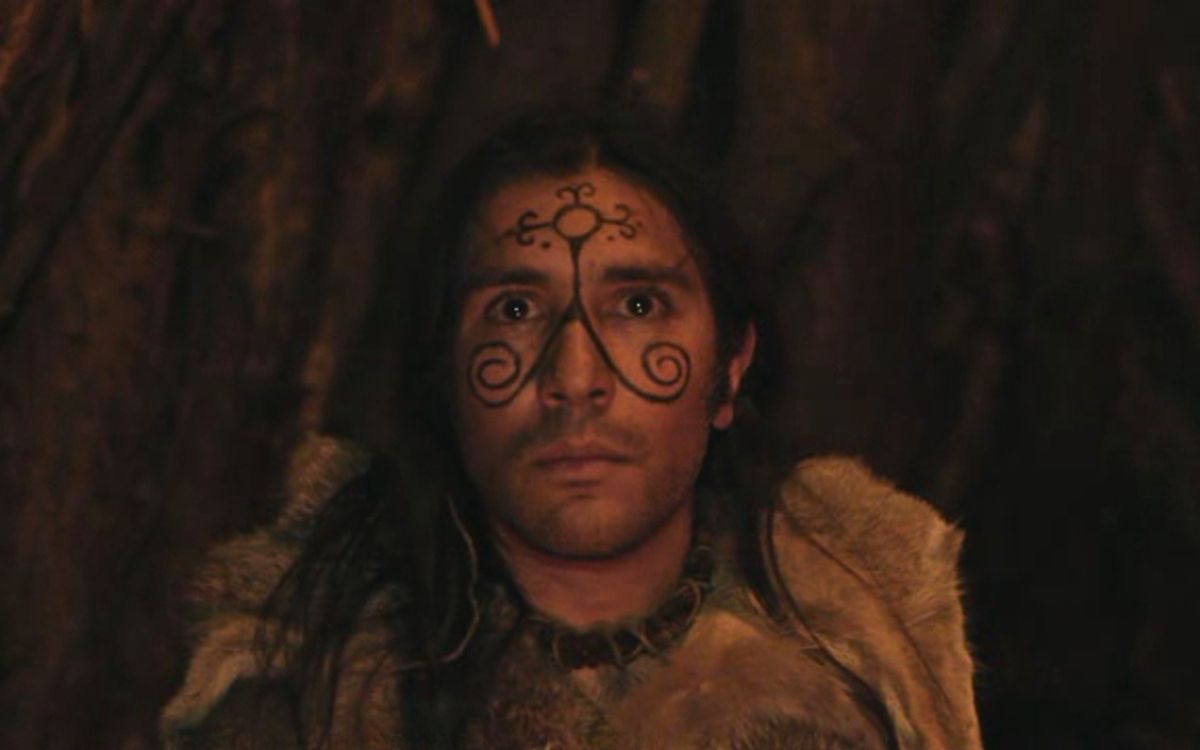
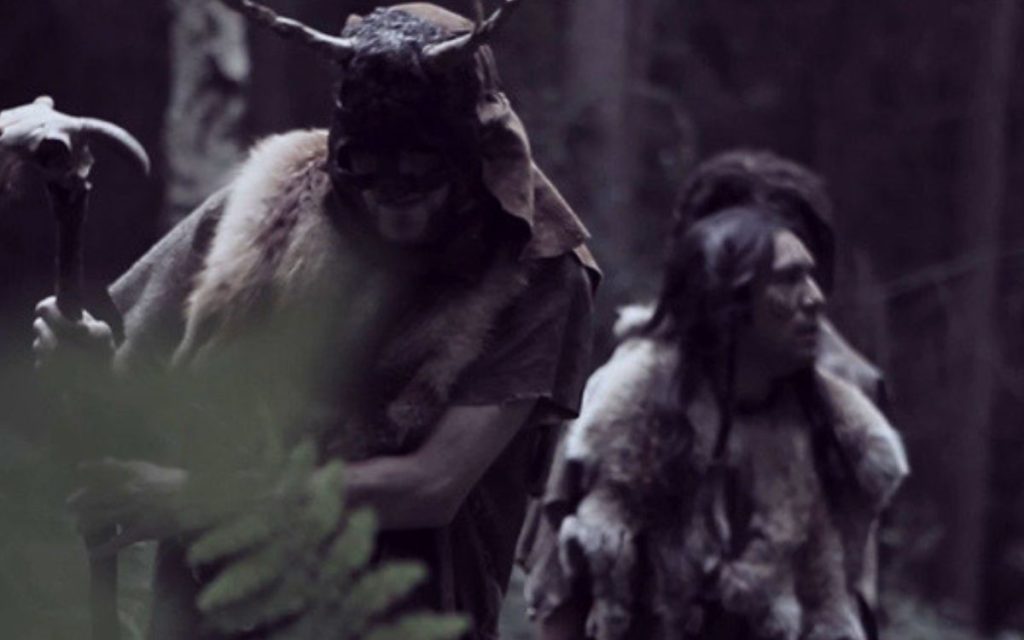
Seruta is set in ancient Britain, at a time before even the Romans had arrived on the British Isles, and it follows a young man named On‑ta‑hil, who must undergo a sacred journey to prove his worthiness to lead his tribe. And his rite of passage serves as the plot’s central focus.
Along his journey, On‑ta‑hil is stalked by fearsome tribesmen, and the film is filled with gruesome violence and supernatural elements against the backdrop of the stunning natural British scenery.
The film was co-written and co-directed by Merlyn Roberts and Steven Lyons, and it was shot in various locations across England over the last few years.
Roberts and Lyons also served as the producers, with Roberts playing the lead role of On‑ta‑hil.
Roberts granted the following in-depth interview about Seruta to Spooky Isles, in which he discussed every element of the film’s production, with the interview offering a fascinating insight into the production of this very unique short film.
And if you would like to see Seruta for yourself, you can purchase a copy of Conquest on Blu-ray and find it on the bonus features.
Interview with Merlyn Roberts on Seruta
DAVID GELMINI: How did you come up with the concept for Seruta? I understand you wanted to tell a story about the ancient Britons, as there are not many stories set in Britain around this time period.
MERLYN ROBERTS: The concept grew out of a question based on an aborted script set in Roman Britain. Myself and Serurta co‑creator Steven Lyons had been working on a high‑adventure action horror that pitched a unit of Roman soldiers against vengeful druids around the time Centurion and The Eagle came out.
We felt our script was too similar in theme and setting and decided to abandon the project but stay in ancient Britain, as we have a mutual love of the ancient mysteries and archaeology that Britain is packed with.
The question we had was: what were the stories of Britain before the Romans? What really sparked the momentum of the project was the fact that no filmmaker had set a story in Britain further back in time than the Roman period.
The challenge was that we wanted to tell a story that was entirely fictional but grounded in reality, even though the original cultures’ legends and mythology are almost completely lost.
All we really have today is archaeology and a few paragraphs written by the Roman conquerors.
Our story is set around 1,000 years before the Roman conquest and flips the narrative by presenting incoming Celtic tribes as the invading terror.
In terms of style, we both love fantasy and history, and I have always loved horror and the gruesome, so those elements are primarily fed into Seruta.
Can you give a brief overview of the plot?
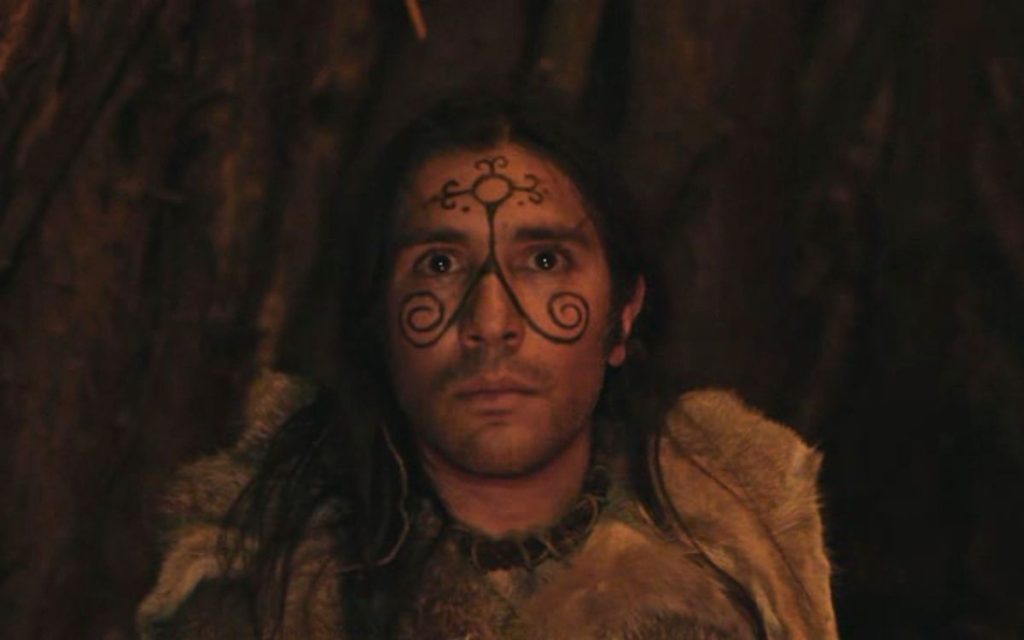
The plot itself is fairly simple. On‑ta‑hil is the untested potential leader of his tribe who must pass the Seruta initiation on the sacred Isle of the Dead.
He is the last of his line, and failure would mean the failure of his people against technologically advanced Celtic invaders. His journey takes him into the underworld.
How long was Seruta in production?
The film had a very long, staggered production: approximately six years from the original proof of concept and an aborted 15‑minute short, which eventually morphed into the current 44‑minute version.
This was followed by several years of post‑production, as everything was done in our own time and was self‑funded.
Part of the delay was due to plans to complete a second film and weld the two together to form an epic story.
Unfortunately, the ideas we had were perhaps a little too grand for our modest means.
The second story still waits, and perhaps one day we can finish it, potentially even in another medium such as a graphic novel.
Can you talk about the cast and the characters they play?
The cast was a mix of professional actors, amateurs, and friends who joined us for the adventure.
Will Lord, who plays the leader of the cannibal tribe that On‑ta‑hil encounters, is a full‑time teacher and a historical re‑enactor of Palaeolithic life and technology.
He lent his skills to help build authenticity in the film and is also one of the leading experts in the UK on the ancient technique of flint knapping.
Carey Thring, who plays one of the druids in the film, is an established actor known for appearances in UK independent horror films and From Hell.
I understand you created a detailed lore to supplement the story, including the rituals and gods the characters worship?
As the world we created lacked historical data, we based our ideas on other known mystical and spiritual belief systems and let our imaginations run free.
We wrote far more about the pantheon of gods, superstitions, and rites than actually features in the film, but this process helped both the cast and ourselves attach more believability to the story.
It meant we were always able to explain why a character might feel or act in a certain way, with a sense of certainty.
Why did you decide to film in black and white?
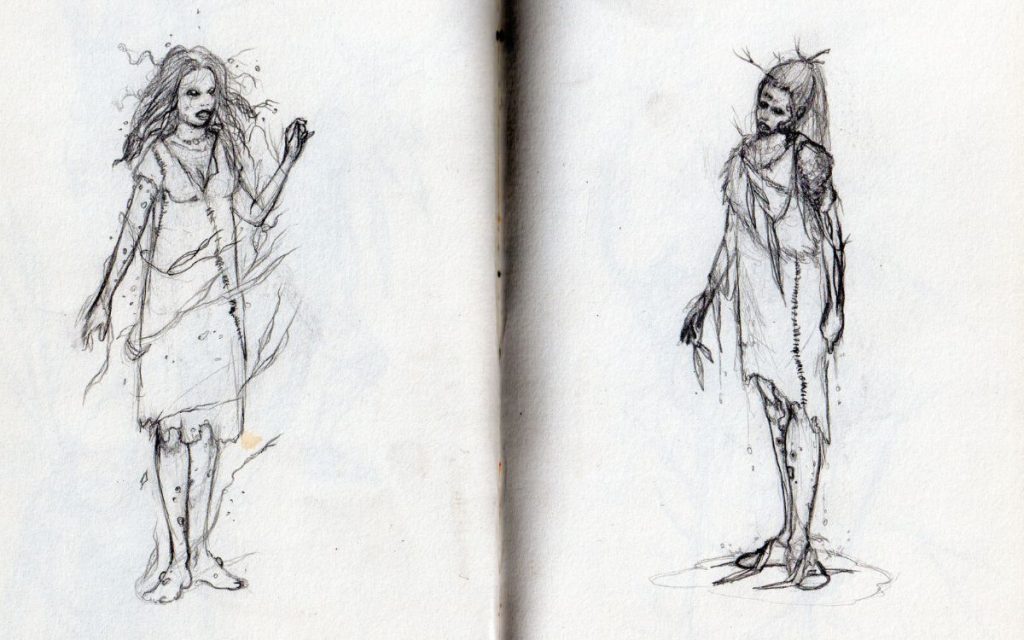
The film was actually shot in colour, and many of the shoots resulted in stunning visuals across the natural locations.
However, the fact that we were filming entirely on location using natural light, across many years and seasons, made continuity a nightmare.
We initially experimented with heavy desaturation to resolve this, before eventually solving many issues and arriving at the final release, which retains much of the original colour.
I am really happy with the result.
Where did you film, and how did filming go?
Filming took place in Hertfordshire and South Wales, including Bannau Brycheiniog (the Brecon Beacons National Park).
Filming was a real adventure, as we essentially had no crew.
Our cast and make‑up team had to help carry equipment up and down mountainsides while enduring constant midge attacks, freezing temperatures, storms, and our madness in getting the shots we wanted.
Locations would drastically change in appearance and sometimes disappear altogether.
We lost props and lenses in rivers, and actors had to be written in or out as circumstances changed over time.
Our greatest tragedy and personal loss, was that of our friend and mentor Philip Burnham, who passed away suddenly just as we committed fully to the project.
Phil, aside from being a talented art director and producer, was famous worldwide as a Viking re‑enactment chief and was another key contributor to the art department.
Given the limited budget, was authenticity a challenge?
We spent a great deal of time researching the archaeology, botany, and biology of the period, with help from Will Lord and Philip Burnham.
I personally made the majority of the props, alongside the extremely talented Olivia Whitaker.
Throughout production I always had mud, slime, rope, and sacks of bones on hand.
PVA glue and liquid latex were indispensable, along with tonnes of recycled junk crammed into every corner of my home.
Were the fight scenes challenging to shoot?
The fight scenes were no more challenging than anything else we filmed, although some action sequences didn’t work for various reasons.
Sand, water, and wind are always problematic when shooting, especially without the comfort of trailers or high‑end equipment.
Can you discuss the soundtrack?
The soundtrack is one aspect of the film that I am extremely satisfied with and wouldn’t change at all.
After experimenting with different composers and sound designers, we settled on Max Phillips, a Bristol‑based video game composer and sound engineer.
Max was quite young when we met but had the appearance of an ancient wizard, so he fit in immediately.
Ideally, post‑production would have involved a larger team, but like most of the process it came down to just Steve, Max, and myself.
Max composed the music using broken‑down, ancient‑sounding versions of modern instruments.
He also created all sound effects and ambient audio, often venturing into the woods late at night to avoid modern noise.
What do you hope audiences take away from Seruta?
Our ambition was to transport audiences into a multi-layered, realistic yet fantastical world and allow them to enjoy the experience. Nothing deeper than that, really.
You must feel honoured that Seruta was included as a bonus feature on the Conquest Blu‑ray release from Cauldron Films?
Absolutely. I’m thrilled that the film is now available on physical media, especially alongside Conquest, a hugely fun and beautiful fantasy film by Lucio Fulci, one of my favourite directors.
The release itself is epic and handled by one of the very best boutique labels out there. I hear it’s doing incredibly well, and I can’t wait to crack open my own copy.
Seruta is included as an extra on the new Blu-ray release of Lucio Fulci’s Conquest, which is distributed by Cauldron Films.