
A quietly unsettling BBC series, Small Prophets brings ancient alchemy and homunculi into modern Britain with warmth, humour and an undercurrent of unease
Small Prophets, created, written and directed by Mackenzie Crook, has done something quietly brilliant by bringing old-school alchemy to the BBC without turning it into a big fantasy spectacle.
There are no blazing spell battles, no dark lords, and no complicated rule books about how magic works. Instead, the half-hour situation comedy series slips strange ideas into normal life and lets them sit there gently, like something slightly off but strangely comforting.
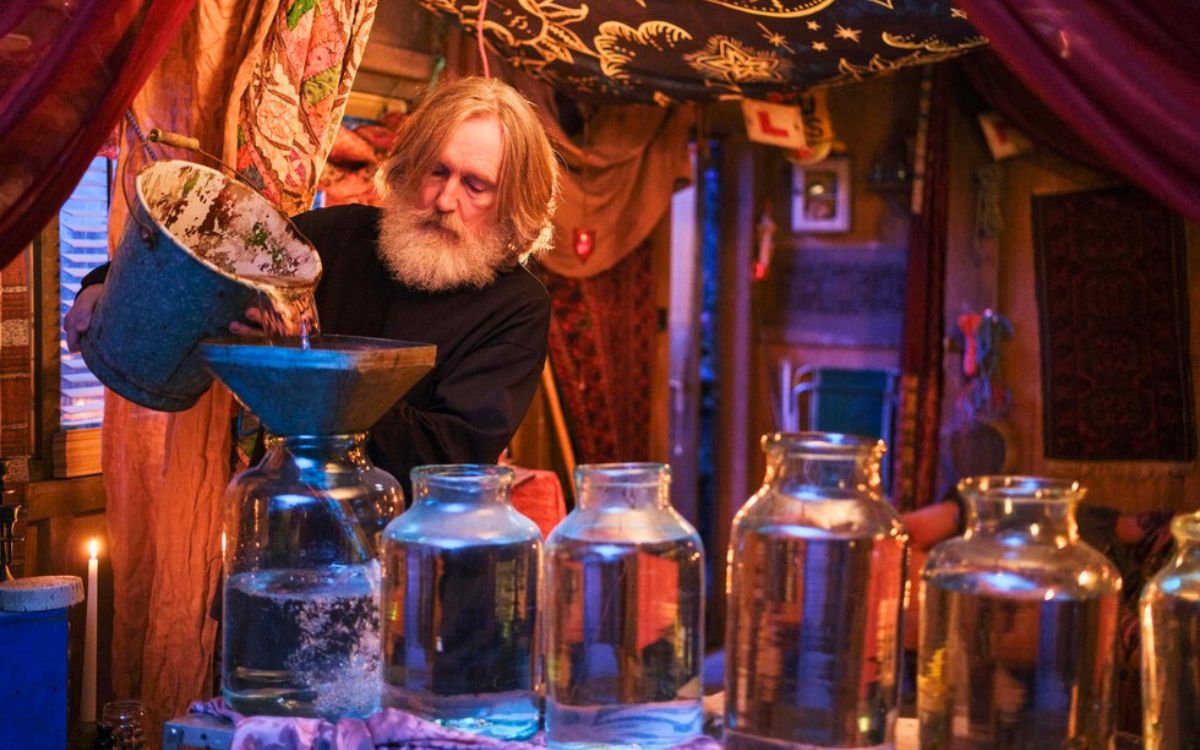
The series follows eccentric Michael Sleep, played by Pearce Quigley, who has never recovered from the disappearance of his beloved partner Clea seven years ago.
His father, portrayed by Michael Palin, is living with dementia in a nursing home, yet it is he who first introduces Michael to the Homunculi, insisting they are not fantasy at all but something entirely real.
Driven by grief and a refusal to let go, Michael sets out to create the strange prophesying beings said to glimpse the future from within their glass confines.
The show moves slowly and focuses on conversations, awkward moments, and small emotional changes rather than big dramatic shocks.
There are mysteries at the centre of it, but the real heart of the story is about how people cope when they don’t have answers.
What makes it perfect for Spooky Isles is the tone. It is not scary, but there is an underlying darkness humming away beneath the warmth. It is often funny when you expect it to be sad, and unexpectedly kind when you think it might turn bleak.
Magic is present, but it is quiet and personal rather than loud and flashy.
Homunculi: Tiny Humans from Old Alchemy
One of the strangest parts of the show is the appearance of homunculi. A homunculus simply means “little human”, and in old alchemy people believed it might be possible to grow a miniature person inside a sealed glass jar. (You can see them in Bride of Frankenstein 1935, if you’re interested!)
This idea was written about seriously hundreds of years ago by thinkers like Paracelsus, who described artificial humans created through mysterious processes.
The old texts never clearly explained how to make one. They hinted at it, suggested it, and then stopped short. That mystery was part of the point. Creating life was seen as crossing a line, and the details were treated as dangerous knowledge.
Small Prophets follows that same tradition. We see jars. We see the tiny beings inside them. What we never see is exactly how they were made. The show avoids anything graphic or crude, and that makes it feel smarter and more thoughtful. The magic is not about shock value. It is about curiosity and need.
In the series, the homunculi can speak and offer small bits of truth. They are not grand prophets predicting world disasters. They give partial answers, awkward insights, and sometimes uncomfortable honesty. That makes them feel strangely human.
Why Small Prophets Makes Magic Feel Real
The magic in Small Prophets works because it feels emotional rather than technical. Nobody waves a wand or shouts Latin spells. There are no magic schools or training montages. Instead, magic appears because someone is lonely, searching, or desperate for meaning.
This puts the show closer in spirit to Jonathan Strange & Mr Norrell, where magic is slow, uncertain, and woven into everyday life.
It also shares a quiet humour with Norsemen, where big mythic ideas are treated with awkward realism and dry wit.
What it does not do is “Harry Potter” the concept with neat systems and tidy explanations.
The warmth of the show is what makes it special. The homunculi are not monsters. They are fragile, slightly sad, and sometimes oddly sweet.
They feel like thoughts that should probably have stayed inside someone’s head but have somehow stepped into the room.
In the end, Small Prophets is not about fear. It is about people wanting answers and not always getting the ones they hoped for.
The alchemy is a way of exploring that feeling, not a way of building a fantasy world.
It proves that you can bring ancient magic to modern television without fireworks or horror.
Sometimes all you need is a jar, a little hope, and the courage to ask questions you might not like the answers to.