

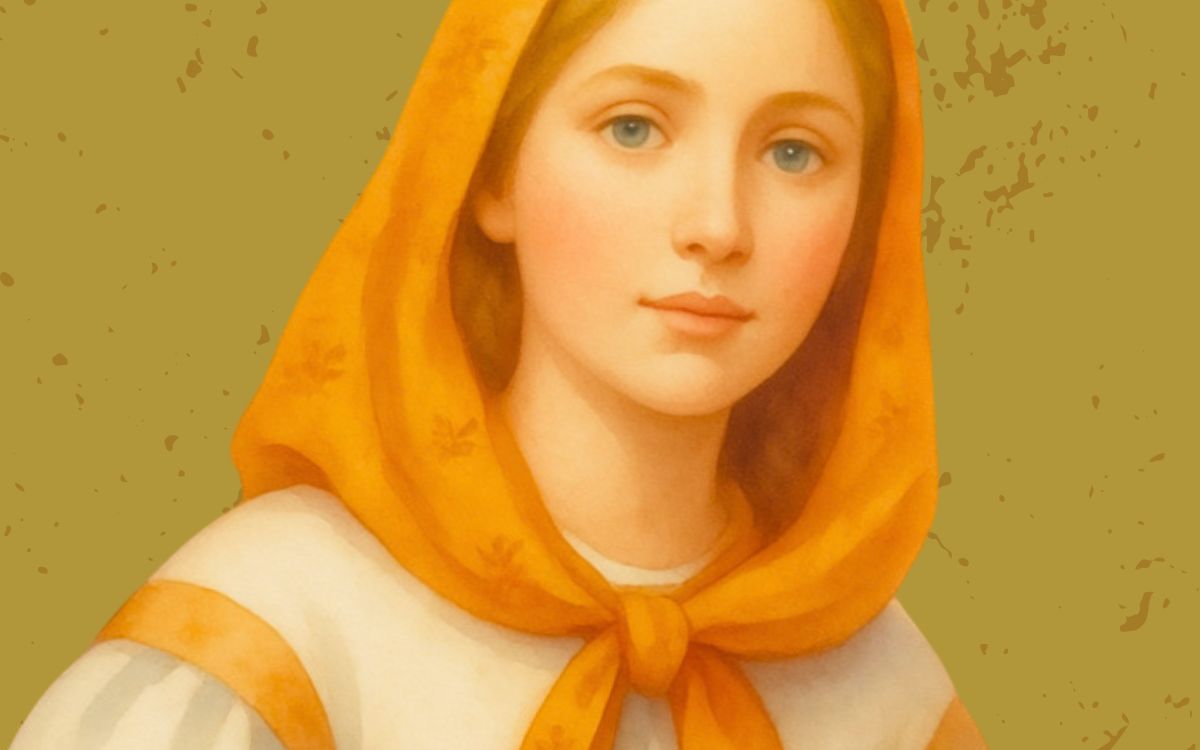
Every year on 15 May, the feast day of St Dymphna is marked by churches and pilgrims around the world.
She is remembered as the patron saint of those suffering from mental illness and emotional distress.
Yet behind this peaceful image lies a story that is unexpectedly dark.
The legend of St Dymphna contains elements that would not feel out of place in a gothic folk tale: a grieving king who loses his reason, a teenage girl fleeing across the sea, and a violent death in a lonely woodland clearing far from home.
For readers encountering the story for the first time, it is worth saying plainly that parts of the legend are disturbing.
But it is precisely this mixture of tragedy, mystery and miracle that has allowed the story to endure for more than a thousand years.
Who was St Dymphna?
Dymphna is believed to have been born in 7th-century Ireland and is most often associated with the ancient kingdom of Oriel (Airgíalla), in what is now the Armagh and Monaghan region.
According to tradition, her father was a pagan king, while her mother was a devout Christian who raised her daughter in the new faith spreading across Ireland during the early medieval period.
From a young age, Dymphna is said to have shown strong religious devotion.
Later accounts claim she took a vow of chastity while still very young.
Her life might have passed quietly enough had tragedy not struck the royal household.
When Dymphna’s mother died, the king was overcome with grief.
In the versions of the story passed down through the centuries, that grief gradually becomes something darker.
Unable to accept the loss of his wife, the king began searching for a woman who resembled her closely enough to replace her.
None could be found.
Except one.
The king became convinced that his own daughter was the only person who truly resembled the queen he had lost.
In early Irish storytelling, kings sometimes fall into madness after grief or trauma, and their loss of judgement brings disaster upon their families and kingdoms.
In Dymphna’s legend, that collapse of reason becomes horrifyingly personal.
According to the medieval account of the story, the king’s advisers suggested he marry the only woman who resembled the queen: Dymphna herself.
When the young princess realised what her father intended, she knew she had to escape.
Flight across the sea
Dymphna fled Ireland secretly, accompanied by a small group that included a priest named Gerebernus, two servants and the court jester.
Together they travelled across the sea and made their way deep into mainland Europe, eventually settling in the quiet woodland town of Geel, in what is now Belgium.
In many Irish legends, crossing the sea represents a form of exile.
It symbolises a departure from the familiar world into uncertainty.
Dymphna’s journey carries that same sense of being cut off from everything she once knew.
For a time, the fugitives lived quietly in Geel.
Some traditions say Dymphna used her royal wealth to help the poor and sick of the town.
Other accounts suggest she lived simply, devoting herself to prayer and hoping her father would never find her.
But the king had not abandoned his search.
According to the legend, the group’s presence was eventually betrayed by the distinctive Irish coins they used in the town’s markets.
The king’s agents followed this trail until they discovered where the princess was hiding.
Before long, the king himself arrived in Geel.
A violent end in a quiet place
The final confrontation took place outside the town.
The king demanded that Dymphna return to Ireland and agree to marry him.
She refused.
Furious at the priest who had helped her escape, the king ordered that Gerebernus be killed.
He was executed on the spot.
Then the king turned his anger on his daughter.
In a nearby field or woodland clearing, he drew his sword and beheaded the fifteen-year-old princess.
The townspeople later buried Dymphna and her companions close to the place where they had died.
What might have been remembered simply as a tragic murder soon became something stranger.
The strange reputation of Geel
Not long after Dymphna’s death, stories began to circulate that people suffering from severe mental distress were finding relief at the place where she had died.
In medieval Europe, conditions such as mental illness, emotional torment or confusion were often described simply as madness.
They were sometimes believed to have spiritual causes.
Pilgrims began travelling to Geel, hoping that the young Irish martyr might intercede for them.
Some prayed at her grave.
Others slept near the site of her death, believing they might receive healing through dreams or divine intervention.
According to tradition, several people were said to have recovered their clarity of mind after visiting the site.
Whether these stories were miracles, hopeful coincidence, or the natural comfort of compassion and care, they spread quickly through medieval Europe.
Over time, Geel became known for something unique.
Instead of building large institutions to house the mentally ill, families in the town began welcoming pilgrims into their homes and caring for them as part of everyday life.
The tradition became so deeply rooted that Geel is still known today for its community-based approach to mental health care.
The Irish saint remembered each May
St Dymphna is often shown in religious art holding the sword that killed her.
The image symbolises triumph over despair and suffering.
Over the centuries she became widely recognised as the patron saint of those struggling with mental illness, emotional trauma and victims of abuse.
Each year on 15 May, her feast day is marked in many parts of the world.
Yet the legend behind that commemoration remains strikingly eerie.
It tells of a young Irish princess fleeing across the sea from a king whose grief had turned into madness, and of a quiet town where people came to believe that peace of mind could be found at the place where she died.