
EDDIE BRAZIL returns to uncover more ghostly sounds and stories from Buckinghamshire after dark
In Part 1 of this article, I touched upon other night-time sounds which have the power of forming pictures in the brain and folklore tales to be told.
Namely, the sound of the night wind, prop plane engines far away in the night sky, and the daddy of all night-time terrors—at least for children—the bogeyman.
The Night Wind
The simple thermodynamic process of air rushing from high pressure to low pressure to create the wind is something we barely take notice of during the day.
However, come the small hours, the sound of its moaning and wailing outside the bedroom window is another matter. As if something unnatural is outside, searching for the thinnest cracks and fissures to find its way in.
The wind has also become, almost by default, the soundtrack to the backdrop of desolation, ominosity, despair, emptiness, post-apocalyptic landscapes, and, of course, supernatural eeriness.
Even seemingly innocent winter countryside, or empty inner-city streets late at night, all have their ambiance and mood changed by the sound of the wind. A threatening, almost alive unseen force.
There is a Buckinghamshire tradition which says that it is unwise to whistle for the wind because, on its unseen breath, will come the souls of the unquiet dead, crying and moaning to be given entrance.
If the wind is accompanied by rain, then the squally gusts thrust against the windowpane can sound like sharp talons tapping on the glass.
Many authors have used the unsettling sound of the wind as themes in their work.
In Ray Bradbury’s great short story The Wind, one of the characters is driven to near insanity by its eerie call, which he believes is a supernatural power come to claim him.
In M. R. James’s great ghost story Oh, Whistle, and I’ll Come to You, My Lad, the main protagonist finds a whistle and, in blowing it, inadvertently summons its supernatural guardian. Yet, also with the guardian comes the wind. James describes how Professor Parkin hears the night wind as he lays in bed, unnerved and unable to sleep because of its moaning cry.
In Charles Dickens’s short Christmas story The Chimes, the author brilliantly describes the sound of the wind threading and slithering its way through the vaults of a City of London church. Dickens paints the wind as if it were a living, breathing entity. He concludes the description with the words: It has an awful sound, the wind at midnight, singing in a church.
The Phantom Bomber
A much more subtle nocturnal sound, but one which is no less eerie, is that of a prop plane engine far away in the night sky.
Its ominous drone comes imperceptibly to the ears, gradually gaining in volume, while all the time descending in tone as it approaches its airfield.
Gently, it carries on unseen across the moonlit sky, gradually fading and fading until, just as subtly as it came, it disappears into silence.
To the rational person, it is just an ordinary plane on a night-time flight. But to the imaginatively minded, it becomes a phantom World War Two bomber and its ghostly crew, returning from a failed mission to an airfield which no longer exists.
The many former World War Two airfields dotted around the country have their own traditions of ghosts and hauntings.
They range from ghostly airmen, haunted hangars and watchtowers, to phantom planes landing on cracked and weed-strewn runways.
East Kirkby in Lincolnshire and Bircham Newton in Norfolk both have accounts of paranormal incidents involving ghostly airmen and haunted buildings.
The ghost stories are well founded when one considers that, during World War Two, the RAF lost nearly 50,000 personnel.
The Bogeyman
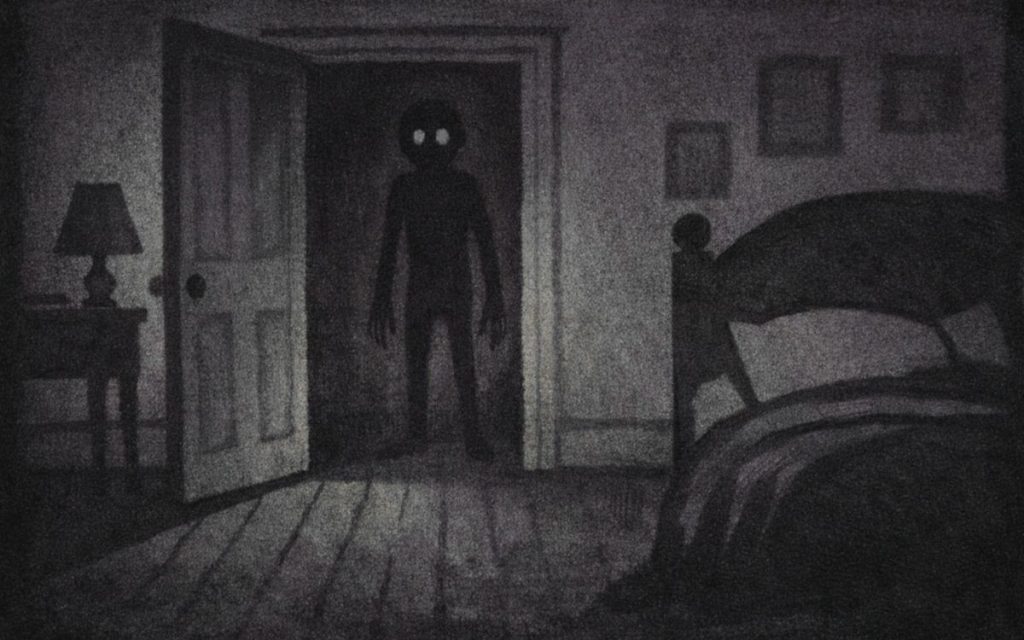
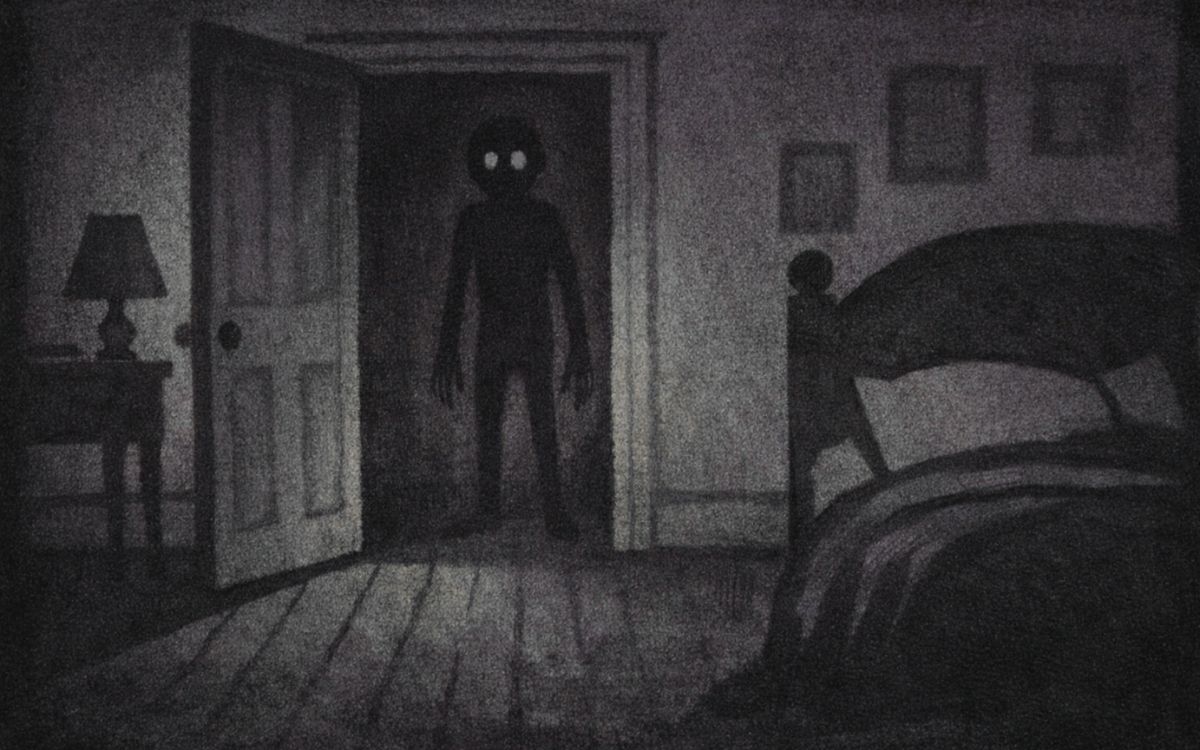
Of course, the most familiar of all night-time folklore terrors is categorised under one single personification—but one with many guises.
Namely, the bogeyman: the universally acknowledged terror for all children at bedtime.
The origin of the word “bogeyman” comes from the Middle English word bug-bog, meaning frightening, spectre or scarecrow.
It was first used in the 15th century to describe a monster used to scare children into good behaviour.
The bogeyman was different from other defined night-time terrors in that it manifested itself as the deepest fear of a child’s imagination. This could be a vampire, monster, spectre, or simply a fear of the dark—or in this case, the Buckinghamshire creaky stair man.
It is a pity children don’t know the thermal characteristics of wood. Their night-time fears wouldn’t be half as dreadful.
As we all know, during a hot day the wood of a house will expand. Yet come the cold of evening, it starts to contract. Out of this contraction come creaks and cracks and groans.
To an adult, it’s just the house settling after the hot day. But to an imaginative child, it is the creaky stair man. A bony, skeletal ogre with claws and teeth.
And he doesn’t just stop on the stairs. He can be heard on the landing and even against the bedroom door. Sometimes even inside the bedroom.
For a child shivering and hiding under the bedsheets, the sounds of the night are not only folklore but real, tangible terrors come to spirit them away for being naughty.
The bogeyman is an internationally recognised idea, yet many countries have their own take on how the ogre manifests itself, based on the nation’s folklore.
However, across the pond, the US bogeyman, by comparison, has evolved into something slightly different. An amalgam of modern American movie culture, urban legend, insane serial killer and supernatural entity.
It is normally a tall, hooded black figure which haunts closets, attics, basements and remote lakeside shacks frequented by groups of dumb, sex-obsessed teenagers.
No matter how many times it is apparently killed, it always seems to come back.
They are not born of folklore but, more alarmingly, real events—especially serial killers who have been imbued with paranormal powers.
The American bogeyman is, at present, urban myth, but as the nation grows older, will find its way into the nation’s folklore.
At the end of the day—or night—one may ask: are any of these night-time sounds and their associated folklore demons or ghosts real?
It is said even the most unlikely folk tale has at its root a seed of truth.
Who knows?
Then again, the next time you hear the distant bark of a dog, or the night wind howling around the house, or the footsteps on the stairs—can you be really sure it is just the sounds of the night?
Or perhaps something else which will have you diving under the covers.