

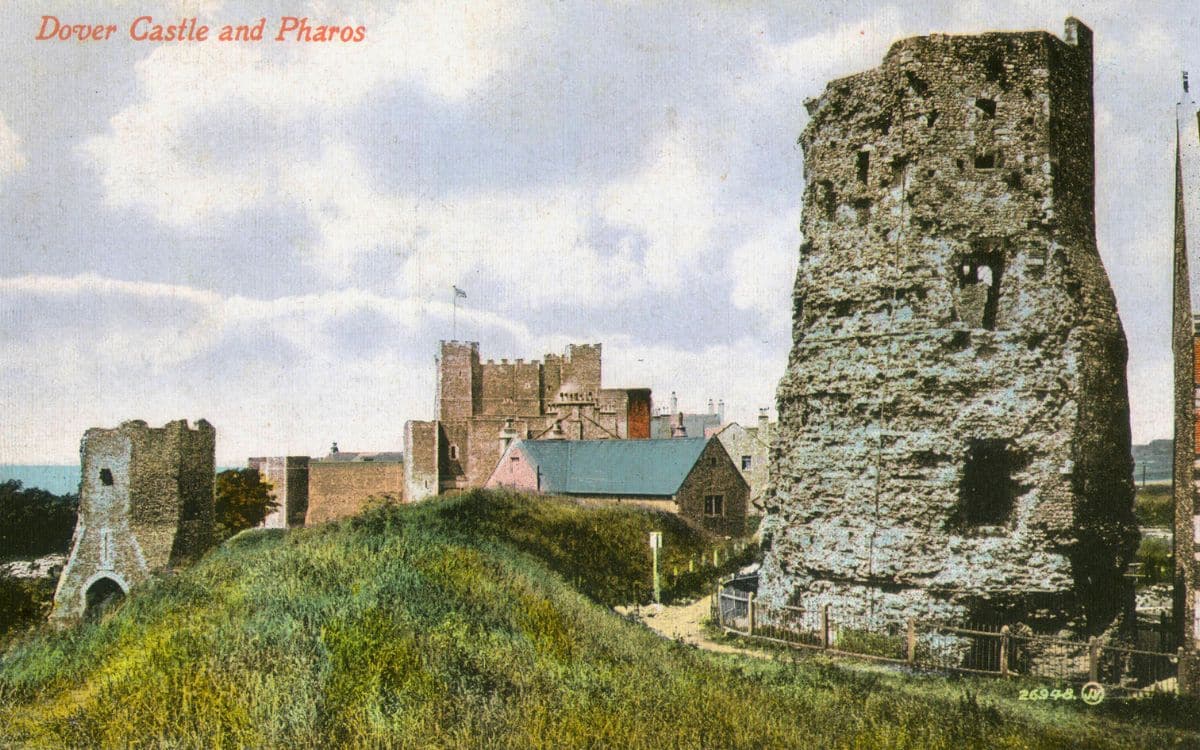
High on the cliffs of Dover stands one of England’s oldest surviving structures – a Roman lighthouse, or pharos, built nearly 2,000 years ago.
Time and ruin have not dimmed its presence.
Today, it looms above the Channel as part of Dover Castle, a silent relic of empire and faith.
But for some, the pharos is not entirely silent.
Visitors speak of strange presences that haunt the tower – a hooded monk from the Middle Ages, and a Roman soldier still keeping watch long after his garrison has gone.
History of the Roman Lighthouse
The Dover Pharos was built in the 2nd century AD to guide ships into the Roman port.
Together with a twin tower across the harbour (long since lost), it would have served as a vital beacon for trade and defence.
In the Saxon and medieval periods, a church – St Mary in Castro – rose beside the lighthouse, weaving Christianity into the Roman stonework.
Later, the whole complex became part of Dover Castle, the “key to England”.
What remains today is one of the best-preserved Roman lighthouses north of the Alps – a rare fragment of antiquity standing amid centuries of fortifications.
Ghostly Legends of the Pharos
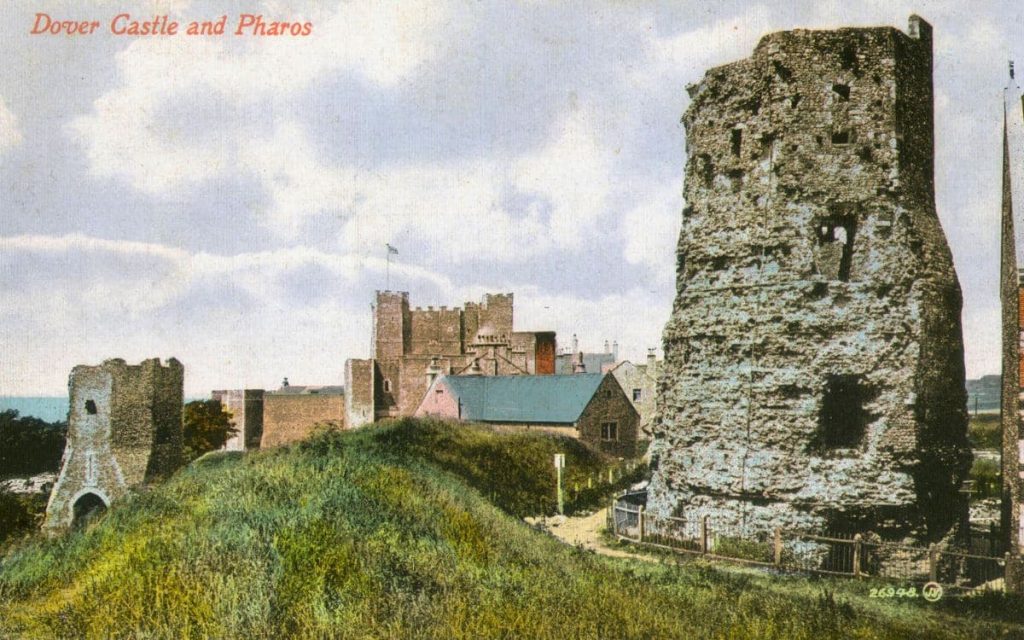
The pharos has long been tied to ghostly sightings.
One story tells of a hooded monk who glides through the ruins in silence, his face hidden.
Some believe he was a monk who broke his vows and now walks in penance, forever bound to the church and tower.
Others claim to see a Roman soldier on guard.
Dressed in ancient armour, he is said to pace the walls at night or appear briefly on the tower before fading into nothing.
Guides sometimes joke that he is still scanning the Channel for enemy galleys, nearly two millennia after his watch began.
Visitors often report sudden chills near the tower, or the sense of being observed.
Some describe faint chanting on the wind – as though Roman and monkish voices have mingled over the centuries, echoing in stone.
Visiting the Dover Pharos
The pharos stands within Dover Castle and is open to visitors as part of the castle grounds.
Climb the hill and you’ll find the Roman tower beside the Saxon church – a rare glimpse into Britain’s layered history.
The view across the Channel is spectacular.
But it’s at dusk that the atmosphere deepens.
The ruined tower casts long shadows, and the centuries feel very close.
Whether you believe in ghosts or not, standing by the pharos is like standing on the threshold of different worlds.
The Roman Pharos of Dover is a monument that has seen empire, faith, and war – and perhaps still keeps its old guardians.
The monk and the soldier are echoes of the people who once lived and worshipped here, their stories woven into the very stones.
So if you pause by the tower on a quiet evening, listen closely.
That whisper in the wind may not just be the sea.
Have you ever felt something strange at Dover Castle, or glimpsed the monk or soldier near the pharos? Share your story in the comments below!