

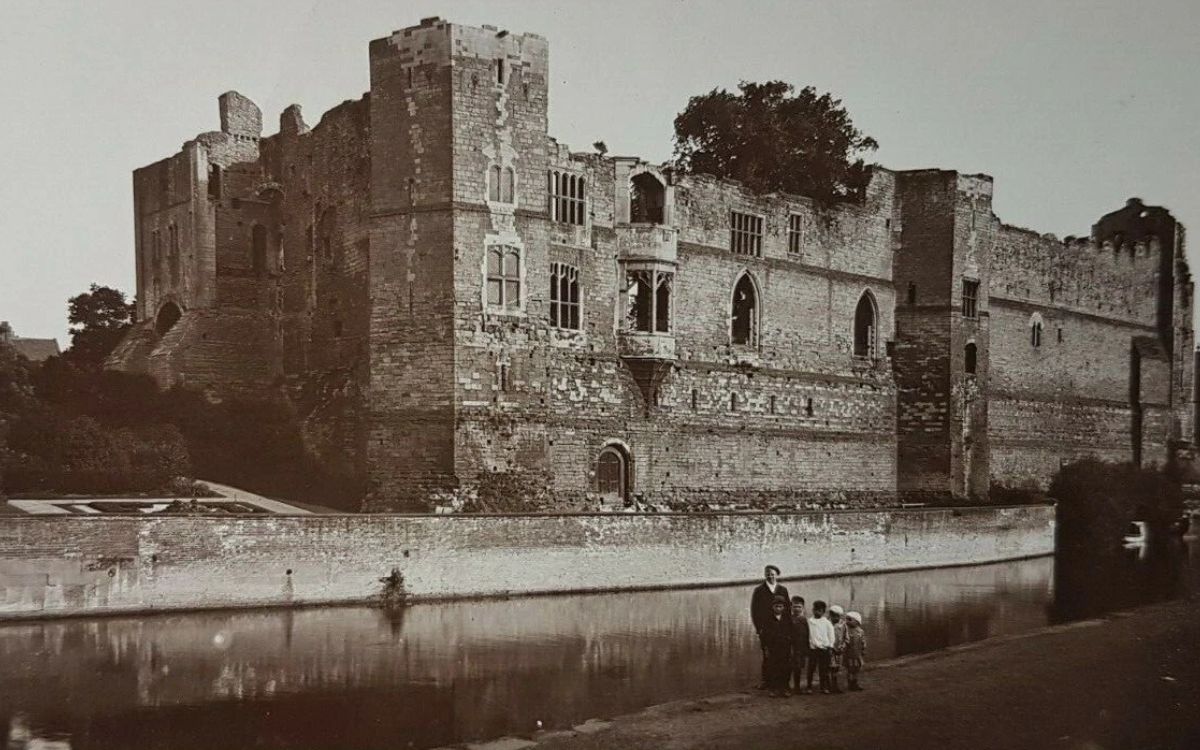
If you are looking for haunted places in Newark-on-Trent that combine real history with local ghost lore, Newark Castle is an obvious starting point.
The castle stands beside the River Trent, just a short walk from the town centre of Newark-on-Trent. What visitors see today is a roofless ruin, with thick stone walls, empty window frames and open chambers where floors once stood.
It is easy to explore, free to visit and impressive even before you hear a single ghost story.
Newark Castle, Built for Power
Newark Castle was built in the 12th century by the Bishops of Lincoln. Its position beside the Trent was no accident.
In medieval England, rivers were vital transport routes. Controlling a river crossing meant controlling trade and movement.
The castle was both a residence and a fortress, designed to show authority as much as provide defence.
One of the most important moments in its history came in October 1216. King John arrived in Newark seriously ill after a difficult military campaign.
He died shortly afterwards in the town. His death changed the course of English history and firmly placed Newark on the national map.
Centuries later, during the English Civil War, Newark was a key Royalist stronghold. The town endured several sieges before finally surrendering to Parliament in 1646.
Soon after, Parliament ordered the castle to be ‘slighted’, deliberately damaged so it could never again be used as a military base. Walls were broken, floors removed and towers weakened.
The dramatic ruin visitors see today is largely the result of that destruction. This turbulent past forms the backbone of the dark history of Newark Castle.
Newark Castle’s Most Famous Ghost Story
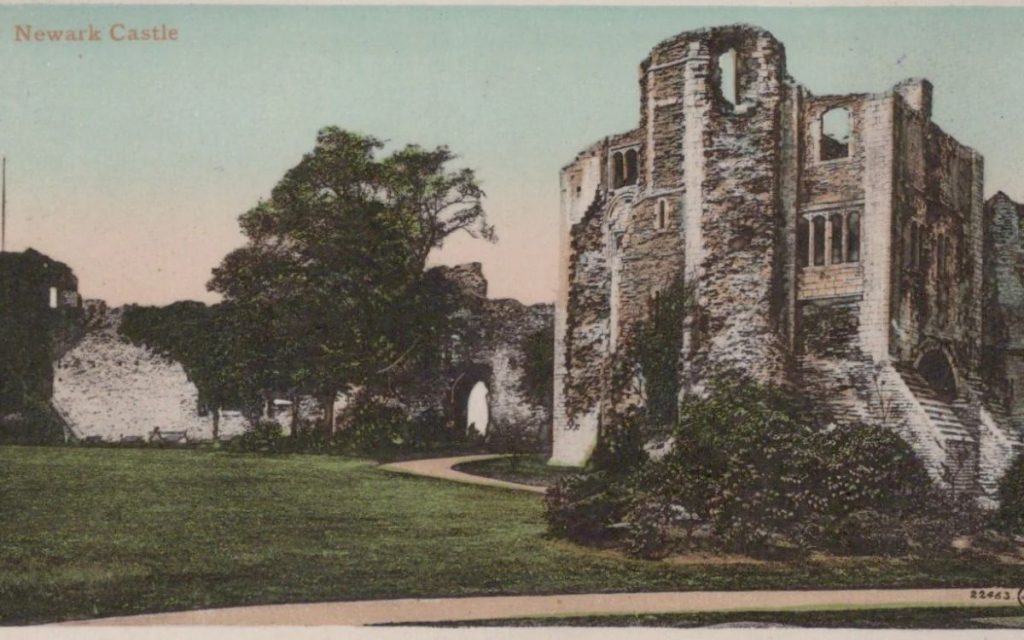
The best-known tale connected to the site involves what is often called the King’s Bedroom, an upper chamber within the ruins.
According to local legend, a castle ranger was found hanged there in the early twentieth century. Since then, there have been reports of a hanging figure seen in the same area.
Some visitors claim to have glimpsed a shape suspended in shadow. Others describe a brief impression of something that disappears when looked at directly.
There is no confirmed official record of the ranger’s death, but the story has been repeated for decades and remains central to reports of ghost sightings at Newark Castle.
It is worth noting that the structure itself can play tricks on the eye. Broken beams, sharp angles and shifting light create strong shadows, particularly late in the day.
Even so, the legend persists and is still mentioned in local ghost lore.
Modern Paranormal Reports
Beyond the hanging figure, there have been other claims of unexplained events at Newark Castle.
Entries on The Paranormal Database include reports from early 2000s investigations. Witnesses described stones apparently thrown without anyone visible nearby, along with unexplained flashes of light during organised paranormal vigils.
These are recorded as witness statements rather than proven phenomena, but they contribute to the castle’s reputation for paranormal activity in Nottinghamshire.
More common are personal experiences from casual visitors. Some report sudden cold patches in sheltered parts of the ruin.
Others mention the feeling of being watched, especially along the riverside wall. Strange noises are sometimes heard, though in fairness, wind through open stonework and the constant movement of the river can easily distort sound.
Whether natural or supernatural, the setting certainly helps the stories endure.
Visiting Newark Castle
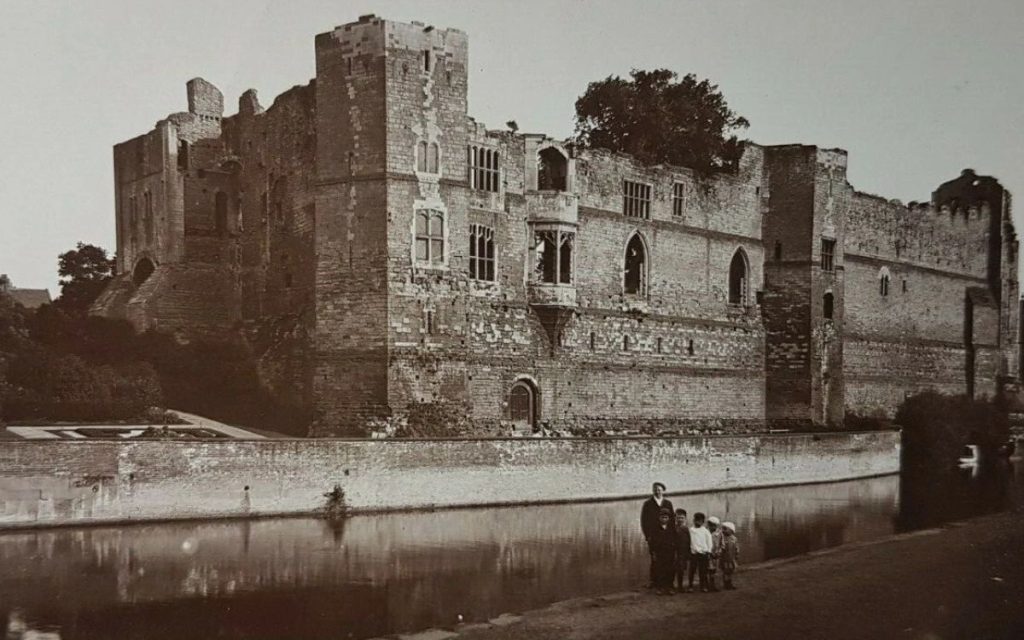
Newark Castle is managed as a public heritage site. Entry to the grounds is free, and the ruins are open during daylight hours.
Clear pathways allow visitors to walk around the surviving gatehouse, towers and riverside edge.
There is no admission building or formal haunted attraction. It is simply a historic site that happens to carry a strong ghostly reputation.
If you are hoping for atmosphere, late afternoon is ideal. As the sun lowers, shadows stretch across the stone walls and the sound of the River Trent becomes more noticeable.
The open structure means wind moves freely through the chambers, which can make the place feel cooler than the surrounding parkland.
Visitors should take care. Surfaces are uneven, and some areas have open drops or steep steps.
The castle is intentionally preserved as a ruin, so it has not been fully restored or modernised.
For history enthusiasts, it offers a clear link to medieval England and the Civil War. For paranormal fans, it provides a setting with long-standing stories and a steady trickle of modern reports.