


Four hundred years on, the Pendle Witch Trial of 1612 is one of the most famous examples of the English legal system trying and executing “witches”.
It’s also currently attracting appreciative audiences to theatres for a play written by the acclaimed Richard Shannon.
Performed at theatres “in the round” – no real stage, audience members on all four sides, minimal props and a heavy reliance on writing, acting and lighting – Sabbat effectively and convincingly uses its cast of four actors to explore how gossip, superstition and wild accusations could lead to nine women and two men being hung for witchcraft.
READ: Mr Fox’s Mendle – based on Pendle Witches!
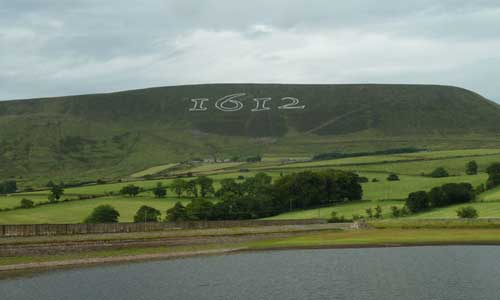
Centred on the Pendle Hill area – near Lancaster – the trials took place against a backdrop of official efforts to root out secret Catholics and began when the family of a pedlar complained to Magistrate Nowell that their relative had been cursed and injured by local witch Alizon Device.
The pedlar, John Law, appears to have suffered a stroke but given the widespread belief in the potency of witchcraft at the time, this was unsurprisingly ascribed to “Devilish and wicked arts”.
Investigating, Nowell and another magistrate heard testimony and confessions that implicated several more, including other members of Alizon’s family. Not long after, word reached Nowell of a Good Friday gathering at which several of the suspects alongside healers, beggars and others who were essentially ‘known’ witches had met.
This Sabbat (secret, midnight meeting of witches) provoked further investigation and, in August of that year, a trial at Lancaster Assizes. One attendee, Jennet Preston, who is portrayed in Sabbat as a deeply confused young woman, was tried and hung at York a month earlier.
Some of the accused, whether through genuine belief in their own powers as witches, or harsh interrogation tactics, or what we would today call mental health issues, confessed to their crimes.
Others maintained their innocence but in the end, just one of the accused was found not guilty and another died in prison.
Alice Nutter who in Sabbat, nurses Howell’s wife through an ultimately tragic pregnancy (plenty of dramatic interpretation here) made no confession but on stage, and in the eyes of many historians, was simply a wealthy Catholic widow who dabbled in healing and herbs whose understandable secretiveness about her religion made her an easy target for malicious lies and accusations.
While it seems incredible today that people were executed for witchcraft on the most preposterous or flimsy of evidence (the testimony of a frightened nine-year-old, making a few clay effigies or having simply been accused of attending a late night gathering) 17th century England was in many ways still a very brutish, primitive place.
And thanks to its superstitions, religious turmoil and basic human frailty, the 12 Pendle “witches”, and many more like them, were dragged through the courts and strung up for their curious, so-called crimes.
Thomas Potts’ account of the trial, The Wonderfull Discoverie of Witches in the County of Lancaster, is available through Project Gutenberg.