


A Belgian beautician, adrift in mid-1960s London, slowly loses her mind with violent and brutal results. RICHARD PHILLIPS-JONES revisits Repulsion (1965)
Review of Repulsion (1965)
Carol, a withdrawn Belgian manicurist living in London, shares a Kensington flat with her sister Helen.
Uneasy around men and increasingly disconnected from everyday life, Carol finds herself alone when Helen leaves for a holiday, and the isolation begins to take its toll.
Shut away in the increasingly claustrophobic apartment, Carol’s fragile mental state steadily deteriorates. As reality and hallucination become indistinguishable, the ordinary domestic setting becomes the stage for a disturbing descent into obsession, violence and tragedy…
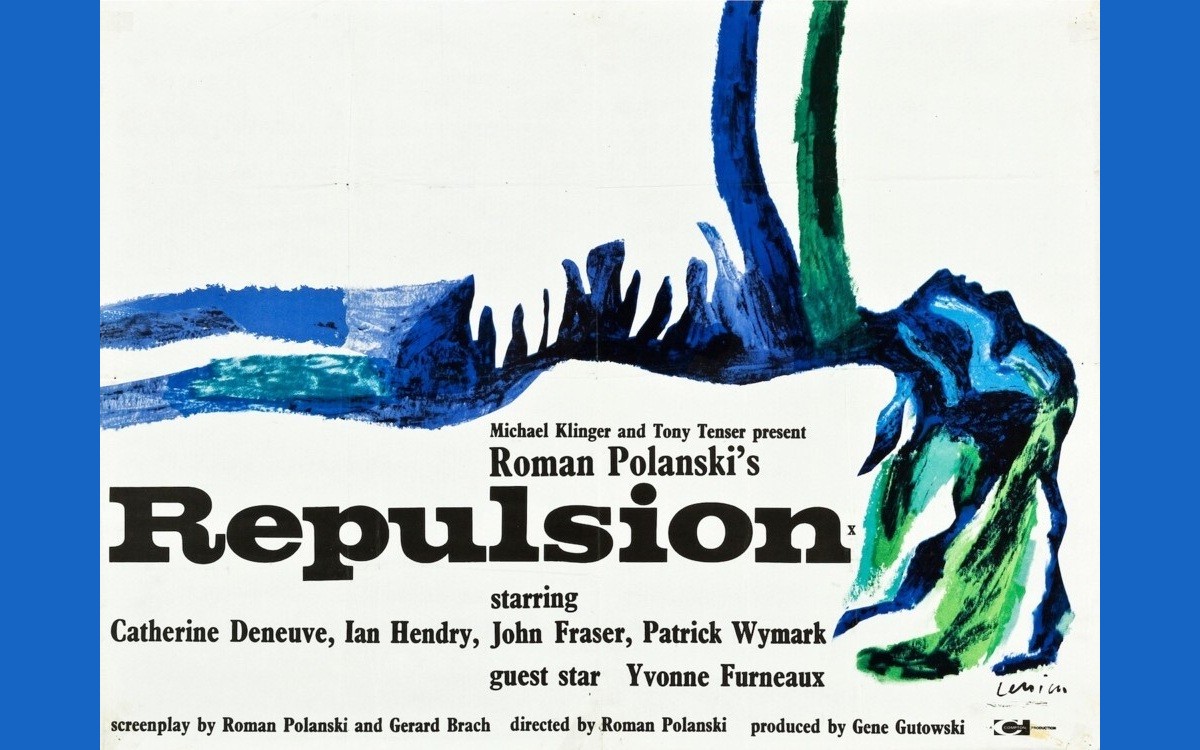
I first saw Repulsion many years ago, in the early hours on a Channel 4 screening. It was one of those films that quietly sat on the “you should probably watch this” list, and when I finally did, I remember thinking: yes, I can see why people talk about it… but also, really? This is the one?
Revisiting it now, with a few more decades of film‑watching behind me, I had almost exactly the same reaction, albeit with a bit more sympathy for what the film is actually trying to do.
Repulsion is still an impressive piece of work in many ways. Catherine Deneuve, still very young but already carrying herself like someone who knows she’s going to be important, gives a performance built almost entirely on withdrawal. Carol barely speaks, barely reacts, barely seems present, and Deneuve’s restrained portrayal somehow makes that absence feel like the whole point. You watch her recede from the world inch by inch, and the apartment closes in around her like a bad dream. It’s not a showy performance, but it’s quietly unsettling, and you can see the beginnings of the actor she’d become.
Polanski’s direction is similarly in its development stage, testing out ideas he’d later refine. The set which poses as the London flat is brilliant: cramped, ordinary, slightly shabby, the kind of place you can imagine smelling faintly of stale cooking odours. The hallucination sequences still have a certain sting. The hands coming out of the walls, the cracks in the floor, the sudden noises that feel like someone knocking inside your skull… They’re all effective, even if you can sense the mechanics behind them. And the black‑and‑white cinematography gives everything a brittle, slightly haunted quality.
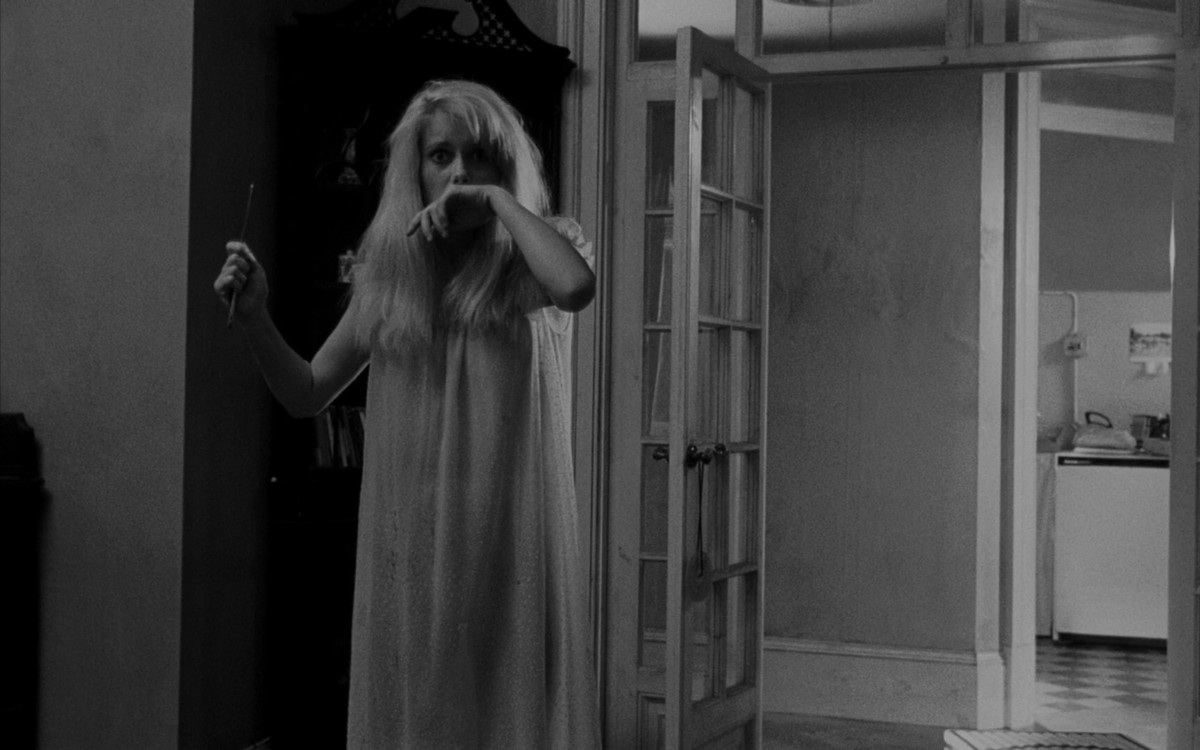
But — and this is the part where the film’s reputation starts to wobble a little — Repulsion also feels like a rough sketch at times. A sketch by a talented artist, clearly, but still a sketch. The middle section drifts in that way that directors’ early films sometimes do, where the filmmaker knows the mood they want but hasn’t quite worked out how to sustain it. Scenes linger not because tension is building but because Repulsion has committed to a slow rhythm that doesn’t always earn the viewer’s patience. You can see what the film is aiming for, but you can also see it reaching.
And some of the symbolism, especially around Carol’s fear of male sexuality, feels a little jarring today, reducing complex psychological trauma to the level of cod-Freudian shorthand and sitting at odds with the film’s more noble ambitions.
It’s impossible to watch the film now without the shadow of Polanski’s later life hovering somewhere in the background. You don’t need to labour the point — the context is widely known, and it inevitably complicates how the film is approached today.
But acknowledging that feels honest. It doesn’t erase the film’s historical importance, nor does it mean the film can’t be discussed on its own terms. It does, however, mean that the experience of watching Repulsion today isn’t quite the same as watching it in 1965, or even 1992, when I first saw it.
What struck me most on this revisit is how clearly Repulsion sits as an early step rather than a pinnacle. Everyone involved would go on to do better work. Polanski would refine these ideas into far richer films, Rosemary’s Baby and The Tenant especially. Deneuve would find roles that allowed her to stretch far beyond the brittle opacity she plays here, and the form of psychological horror would itself evolve into something more layered and intellectually complex.
So yes: Repulsion is good. Sometimes very good. It’s atmospheric, influential, and intermittently brilliant, never more so than in a scene where Colin tries to reason with Carol in the hallway of the flat, whilst a nosy neighbour observes and eavesdrops in the background, seen through the open doorway.
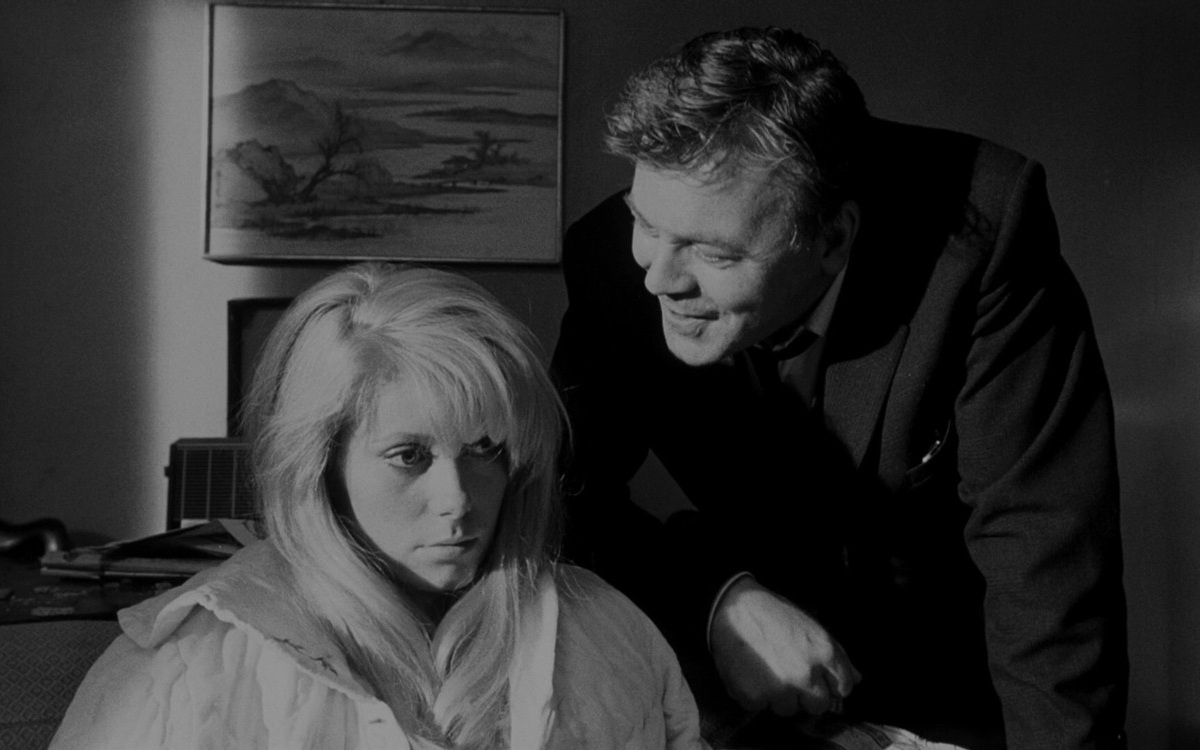
It’s a moment that brilliantly sets up the film’s effective final act, and those final twenty minutes show exactly why the film became so influential. The problem is that they’re carrying rather more of the film’s reputation than they should have to.
Still, if Repulsion’s reputation slightly outpaces its actual achievements, it remains a film worth revisiting, especially if you’re interested in the evolution of its species, and as long as you’re not expecting the towering masterpiece its legend suggests.
Repulsion is more modest than that, and perhaps more interesting for it.
TRIVIA POINTS: After being turned down by pretty much every UK production outfit, Repulsion found a backer in Compton Films, better known for adult and nudist films, and headed by Tony Tenser and Michael Klinger. When the partnership split, Tenser of course founded Tigon, the home of Witchfinder General, Blood On Satan’s Claw and other titles beloved by Brit-horror fans.