

In the murky history of England’s witch trials, the names of Alice Molland and the three Bideford witches linger with a chilling ambiguity.
Who was truly the last person to be executed for witchcraft in England?
The answer isn’t as clear-cut as one might think, with some citing Alice Molland and others pointing to the infamous trio from Bideford. Let’s delve into the facts and explore the tragic stories that continue to haunt Devon’s past.
The Shadow of Alice Molland
Alice Molland’s fate is shrouded in mystery. Official records suggest she was condemned to death for witchcraft in 1685, with Exeter cited as the location of her trial and Heavitree the site of her intended execution.
Yet, there are whispers of doubt about whether she ever met her end at the gallows. No definitive account or confirmation of her execution has ever been discovered, leaving her fate tantalisingly unclear.
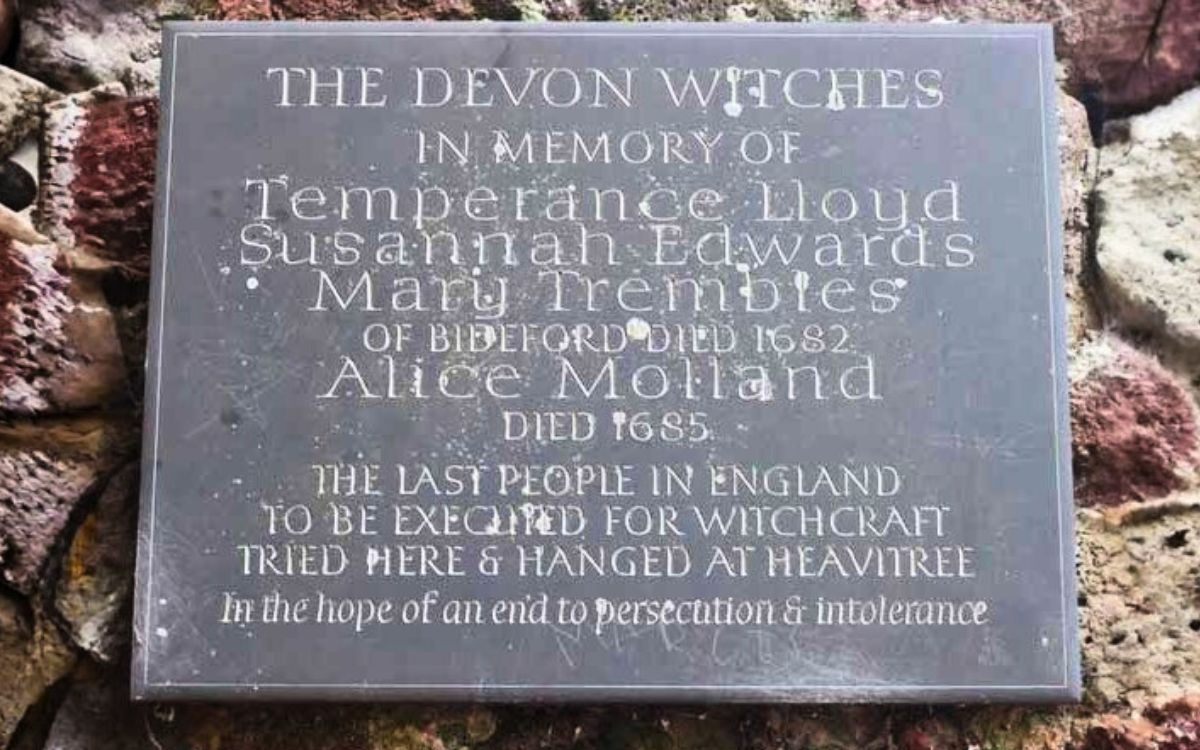
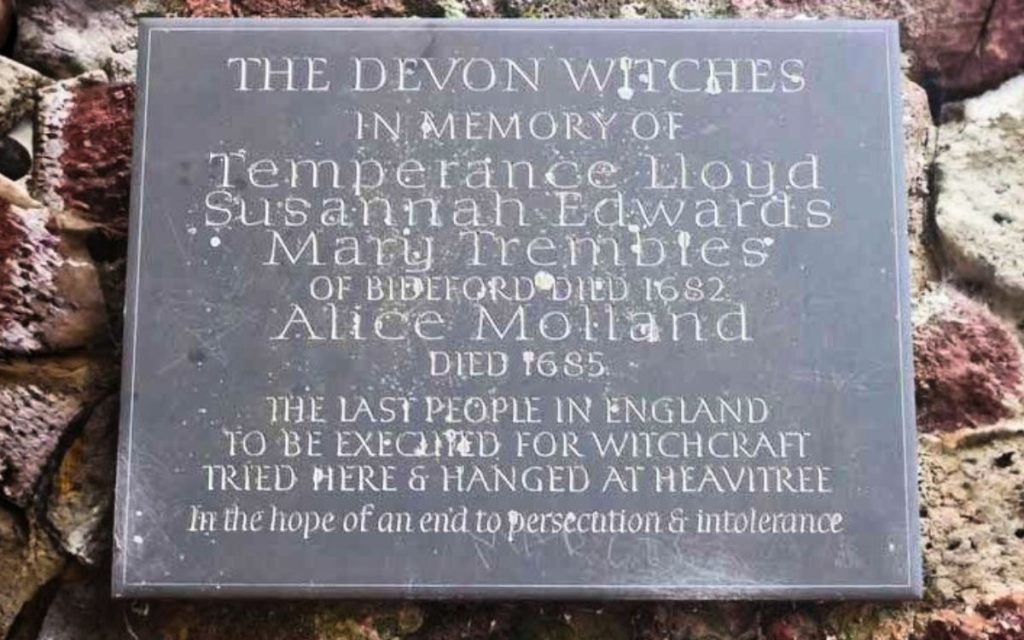
A plaque at Rougemont Castle in Exeter lists Alice Molland alongside the Bideford witches as “the last people in England to be executed for witchcraft.”
However, the absence of concrete evidence regarding her death has led some historians to speculate that her sentence may have been commuted or simply never carried out.
Could Molland have escaped the noose, or was she quietly executed, her death slipping into the shadows of history?
The Bideford Witches: A Tragic Tale of Fear and Hysteria
While Alice Molland’s story remains uncertain, the fate of the three women from Bideford is grimly documented. Temperance Lloyd, Mary Trembles, and Susannah Edwards were executed on 25 August 1682 at Heavitree, near Exeter, making them the last documented witches to be hanged in England.
Their trial was a stark reminder of the hysteria that gripped England in the late 17th century, a period when fear and superstition often outweighed reason and justice.
The accusation against these women began with nothing more substantial than rumours and hearsay. Temperance Lloyd, the first to be arrested, was accused of causing the illness of a local woman named Grace Thomas through witchcraft.
Thomas had suffered a mysterious affliction, and Temperance Lloyd, described by locals as an elderly and impoverished woman, was an easy scapegoat. Witnesses claimed she had confessed to meeting the Devil in the form of a black man and causing harm to Thomas by pinching and pricking her with pins.
Not long after Lloyd’s arrest, her friends Mary Trembles and Susannah Edwards, who were also elderly and destitute, found themselves entangled in the accusations.
The case against them was similarly weak, relying heavily on the confessions of Lloyd and supposed admissions overheard by various townsfolk. Mary Trembles was accused after Grace Barnes, another local woman, fell ill, and her husband blamed witchcraft.
Susannah Edwards, who was often seen begging with Trembles, was pulled into the hysteria, accused of having “carnal knowledge” of the Devil and practising dark arts.
A Hazy Distinction: Who Truly Was the Last?
The question of who was the last witch executed in England largely depends on how one defines “execution.”
If one takes the documented executions at face value, then the Bideford witches hold that sorrowful title, having been hanged in August 1682.
Their deaths marked the end of an era of intense witch hunts in England, an era largely brought to a close by growing scepticism and legal reform, notably by Sir John Holt, a jurist who frequently dismissed witchcraft cases in the years following.
Alice Molland’s place in this history is less certain. With no records to confirm her death, she remains a spectral figure on the margins, a name etched in stone but not necessarily in fate.
It is possible that she was the last to be sentenced, but without proof of her execution, the Bideford Three retain the grim distinction of being the last verifiable victims of England’s witch hunts.
The stories of Alice Molland and the Bideford witches are more than historical curiosities.
They serve as poignant reminders of the dangers of mass hysteria, superstition, and the perils of a legal system that could condemn on the flimsiest of evidence.
In an age when reason was often overshadowed by fear, these women, largely poor, elderly, and vulnerable, were easy targets for a society desperate to find and punish supposed evil.
Today, the plaque at Rougemont Castle stands not only as a memorial to those who were wrongfully accused and executed but also as a call for reason, tolerance, and understanding in the face of ignorance and fear.
Modern gatherings, where witches and pagans lay wreaths and hold vigils, remind us that these tragic stories continue to resonate, inviting us to reflect on how far we’ve come—and how vigilant we must remain.