

In the centre of Ayr, where shops and cafés now line the High Street, a darker story clings to the stones beneath our feet.
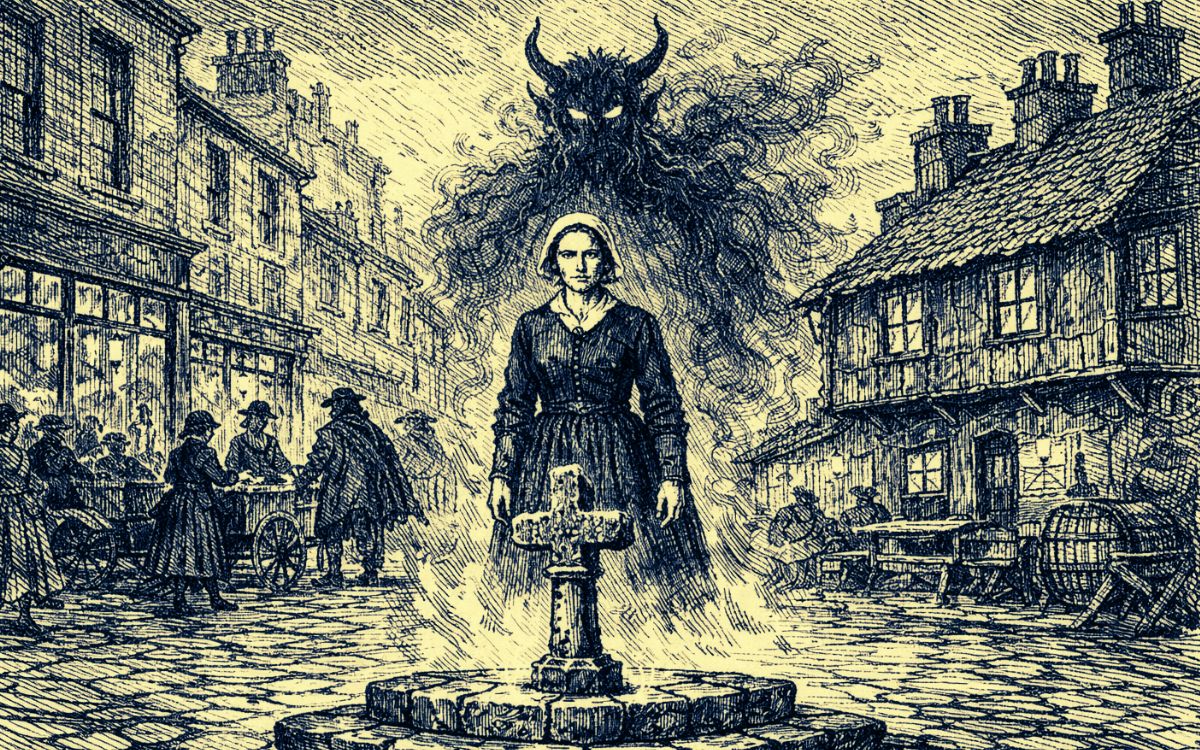
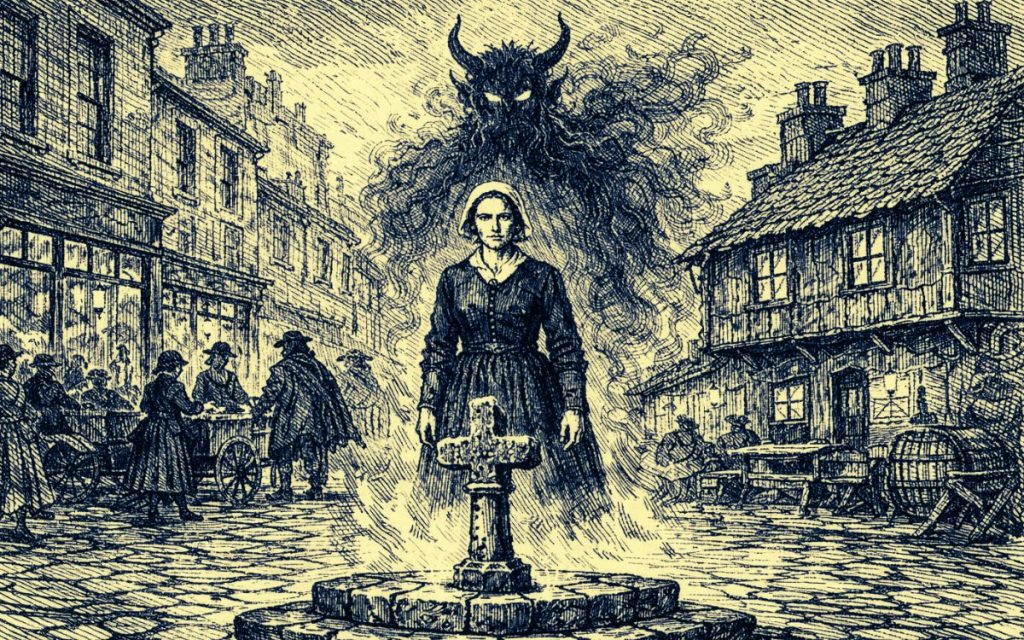
Among the bright signs and familiar brands, there once stood a building known locally as “Maggie Osborne’s House”, said to have been raised overnight with the Devil’s help.
Today, the name survives mostly in legend, but her tale—rooted in fear and folklore—is among the most enduring ghost stories in South Ayrshire.
Scotland’s national bard, Robert Burns, is undoubtedly Ayr’s most famous son.
Born in nearby Alloway in 1759, Burns grew up in the same streets where stories of witches still circulated, their ashes barely settled.
While his poetic genius would go on to define a nation’s cultural identity, Maggie Osborne’s legacy is of a different kind—a symbol of how fear and superstition gripped even the most seemingly enlightened corners of Scotland.
Maggie Osbourne, The Witch That Wasn’t?
Unlike many women accused of witchcraft in the 16th and 17th centuries, Maggie Osborne’s name does not appear in Scotland’s grim catalogue of witch trial records.
Her story survives in oral tradition and local legend.
Said to be a fearsome figure with the power to shape-shift, fly using pewter plates, and take vengeance on her enemies, Maggie became Ayr’s folk embodiment of the witch archetype.
She was supposedly burned at the Malt Cross, Ayr’s execution site, after being captured during a failed supernatural escape.
Whether such an event ever happened is doubtful, but the stories have lived on.
The location, now marked by a cross of paving stones, still draws curious visitors who tread unknowingly over the shadows of a darker time.
A Nation Caught in the Fire
The Scotland of Maggie Osborne’s legend was a place consumed by religious turmoil and political paranoia.
No part of the country was untouched by the witch-hunting frenzy that swept through Europe from the late 1500s into the early 1700s.
Ayrshire, with its tight-knit rural communities and Calvinist zeal, was particularly vulnerable.
Ministers preached about the Devil’s works, neighbours became informants, and any woman seen as different, outspoken or unfortunate could become a target.
In these years, Scotland executed more accused witches per capita than any other country in Europe.
In Ayrshire, women like Margaret Dunbar and Agnes Kennedy faced sleep deprivation, public shaming and barbaric torture.
Accusations were based on little more than local gossip, weather patterns or misfortunes blamed on malice.
Trials were brief.
Confessions, often extracted through horrific means, sealed their fate.
The justice system of the time offered little mercy.
Witch-prickers, self-proclaimed experts in identifying witches, would jab needles into accused women, searching for insensitive “devil’s marks”.
Once condemned, women were strangled and their bodies burned—an act seen not as cruelty, but as piety.
A Town Haunted by Memory
Today, Ayr’s High Street is a far cry from the fear-filled lanes of the 17th century.
Yet the past lingers.
While Robert Burns gave the world his verse, the women accused of witchcraft—like the legendary Maggie Osborne—are now beginning to receive recognition.
The Malt Cross remains a quiet reminder, a modest scar in the stone that whispers of justice denied.
As part of South Ayrshire’s “Shadows of the Past” trail, visitors can now explore these darker stories alongside the town’s more celebrated history.
The tale of Maggie Osborne, though likely fictional, stands in for the many whose names were lost to fire and silence.
In dark tourism, where folklore meets historical memory, Maggie’s legend offers a sobering reminder: even the towns that gave us poets were not immune to panic, persecution and the deadly consequences of fear.