

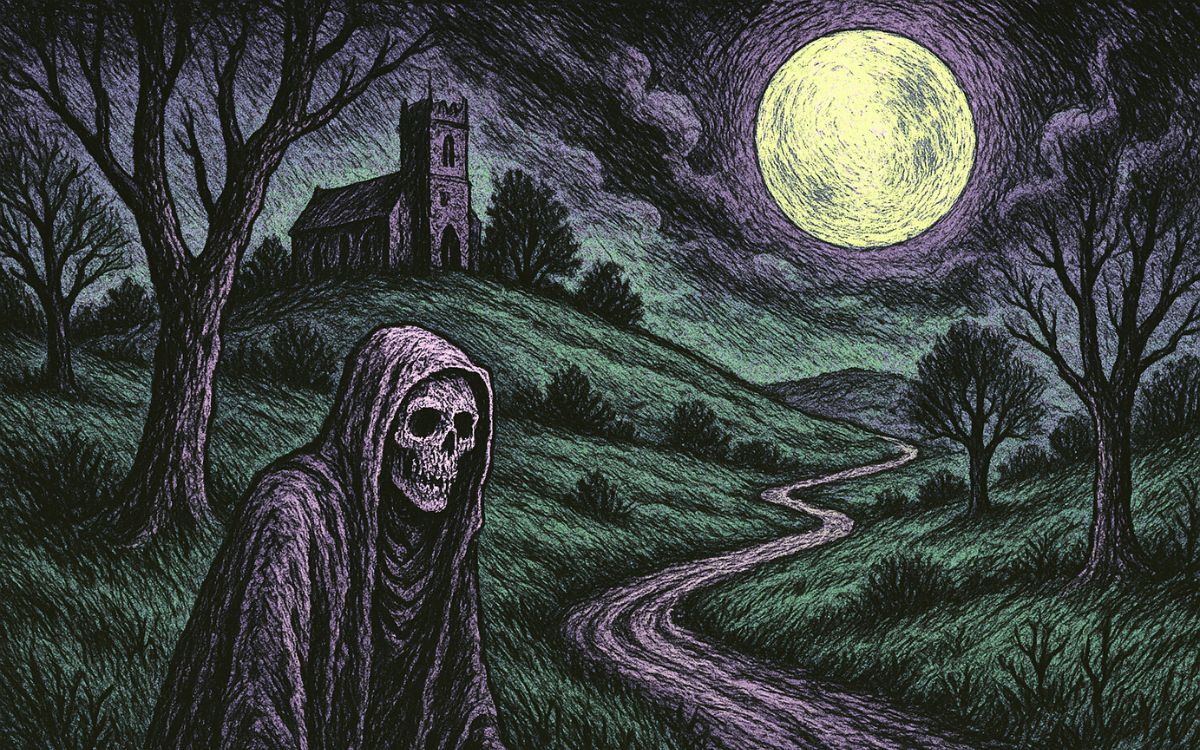

Across England’s rural landscapes, winding footpaths have long linked village to church, hamlet to hill. But some of these routes carry more than just scenic views — they carry stories of the dead.
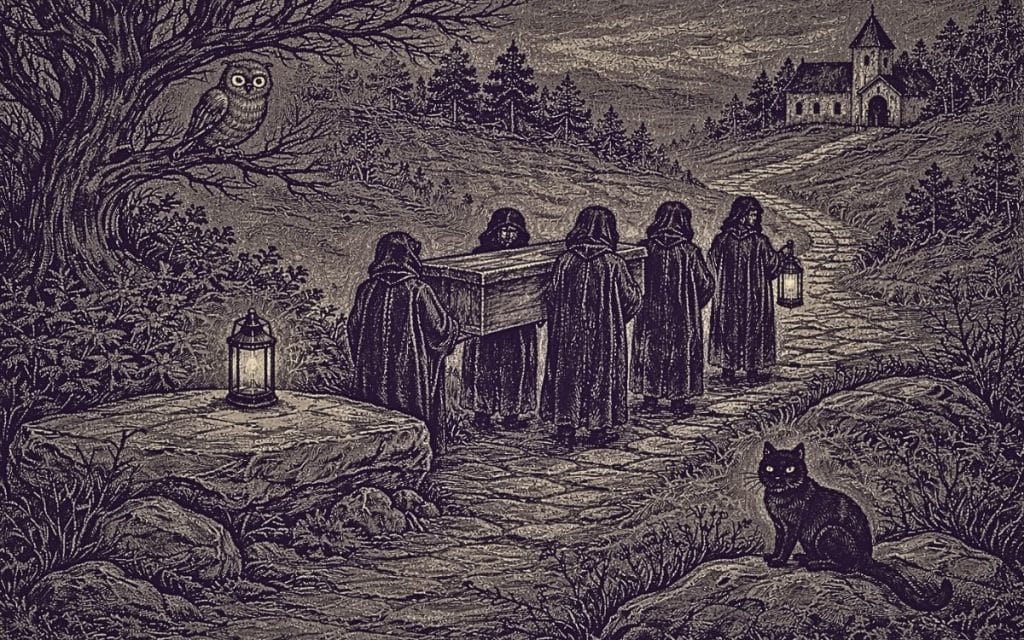
Known as corpse roads, these ancient trails were once trodden by funeral processions, carrying coffins across moor and mountain to distant parish churches.
Today, they survive as walking paths, often shrouded in eerie legend and chilling folklore.
What Were Corpse Roads?
Corpse roads — also called coffin roads, bier ways or lych ways — were routes used in past centuries to carry the dead from remote communities to burial grounds.
In medieval England, not every village had its own church. This meant that when someone died, neighbours had to carry the body, often over long distances, to a “mother church” with consecrated ground.
The journeys could stretch for miles, with pallbearers walking across moors, hills, rivers and fields. In Yorkshire and Cumbria, some routes ran more than 10 miles. Coffins were sometimes made of wicker to lighten the load, and “coffin stones” along the way offered places to rest — large flat rocks on which the coffin could be safely placed without touching the ground.
These were not roads in the modern sense but narrow tracks crossing rugged countryside. Many were arrow-straight, ignoring easier detours. In folklore, this was no accident — straight paths were thought to speed the soul’s journey or prevent ghosts from wandering back.
Why Are They Associated with Ghosts?
Corpse roads have long inspired supernatural tales. In A Midsummer Night’s Dream, the character Puck refers to spirits wandering along “church-way paths”.
The belief was that spirits followed the same routes as their bodies — turning these trails into liminal zones between life and death.
Over time, the roads gained names like spirit ways and ghost walks. Stories grew of phantom funeral processions, will-o’-the-wisps, and ghostly animals such as headless dogs or spectral horses.
Villagers avoided corpse roads at night. Even by daylight, some paths were feared.
Folklore added rituals to these journeys:
- The dead must be carried feet first, to prevent the soul from looking back.
- No one could turn around mid-journey, for fear of inviting misfortune or haunting.
- Routes often crossed running water, believed to block spirits from returning home.
- Coffins couldn’t touch bare earth, lest the soul escape — hence the importance of coffin stones.
Mysterious lights seen along the paths — now likely explained as swamp gas or distant lanterns — were interpreted as corpse candles, thought to predict death and retrace the route a funeral would soon follow.
Corpse Roads in Yorkshire
One of the most famous examples is the Swaledale Corpse Way, a 16-mile path in the Yorkshire Dales. It connected the village of Keld to St Andrew’s Church in Grinton — once dubbed the “Cathedral of the Dales”.
The dead had to be carried there until the 1800s, when local churches gained burial rights. A coffin stone still stands near Ivelet Bridge, where bearers would pause.
Local legend says a phantom black dog, sometimes headless, haunts the bridge — an omen of death echoing the “black shuck” of English folklore.
Other corpse roads in Yorkshire have vanished or been repurposed. The Lyke Wake Walk across the North York Moors takes its name from an old funeral chant, although the route itself is modern.
But the Swaledale path remains rich in both scenery and superstition.
Tip: Walk a section from Keld to Muker or Grinton, and stop at the coffin stone — if you dare. Maps and signs are available locally.
Ghost Roads of the Lake District
The Lake District’s rugged terrain once made funeral journeys especially arduous. In Wasdale Head, bodies had to be carried over the mountains to Eskdale via Burnmoor Tarn.
One ghost story tells of a young man whose coffin vanished when the pony bolted. Months later, his grieving mother died — and her coffin vanished too, only for the son’s coffin to be found in its place.
Her spirit, they say, still haunts the moors, seen as a ghostly horse and cart galloping across the fells.
Another haunting walk is the Old Corpse Road from Mardale (now beneath Haweswater Reservoir) to Swindale. This lonely track, marked by a wooden signpost, passes bogs and desolate ridges.
Some walkers report strange lights or eerie sensations.
For a gentler outing, the Coffin Route between Rydal and Grasmere offers a three-mile stroll with views of Rydal Water.
Once used to carry the dead to St Oswald’s Church, this path is now peaceful — but at twilight, beneath bare trees, the past seems close.
Dartmoor’s Lych Way
Outside the north, The Lych Way in Dartmoor is another notable corpse road. It runs 12 miles across wild moorland to Lydford Church.
The path crosses numerous streams and open ground where few now live. Known for sudden fog and harsh weather, Dartmoor is rich in ghost stories of its own — and walking the Lych Way can feel like moving through time.
Folklore and Superstition
Corpse road traditions were shaped by fear — not of death itself, but of spirits lingering where they shouldn’t.
- Turning back was taboo. Once a funeral began, it had to continue in one direction.
- Water crossings and crossroads were seen as barriers to restless souls.
- Coffin stones had sacred status — placing the body on bare ground risked letting the spirit escape.
- Ghost lights and phantom animals became common tales, reflecting both natural phenomena and cultural anxiety.
- Some communities went further, sweeping the path after a funeral to clear any spiritual residue.
- Witch balls — glass charms — were hung in windows along the route to ward off spirits or malicious forces.
These beliefs reveal how corpse roads were seen not just as physical paths, but as spiritual thresholds — places where the dead crossed into peace, and the living kept their distance.
Where You Can Walk Today
Many corpse roads are now safe, waymarked walking routes, ideal for those seeking scenic hikes with a touch of ghostly history.
Recommended Walks:
- Swaledale Corpse Way (Yorkshire Dales): Keld to Grinton. Moorland and meadow, with historic markers.
- Rydal–Grasmere Coffin Route (Lake District): Easy three-mile walk, wooded and well-signed.
- Old Corpse Road (Haweswater): Rugged five-mile trek to Swindale. Requires good boots and a map.
- The Lych Way (Dartmoor): 12 miles across open moor. Remote and atmospheric.
Most of these trails are part of England’s public right-of-way network.
Some have interpretive signs or leaflet guides. Respect the land, stay on marked routes — and perhaps avoid walking them after dark.
Have you ever walked one of England’s corpse roads? Share your experience or favourite trail in the comments below!