

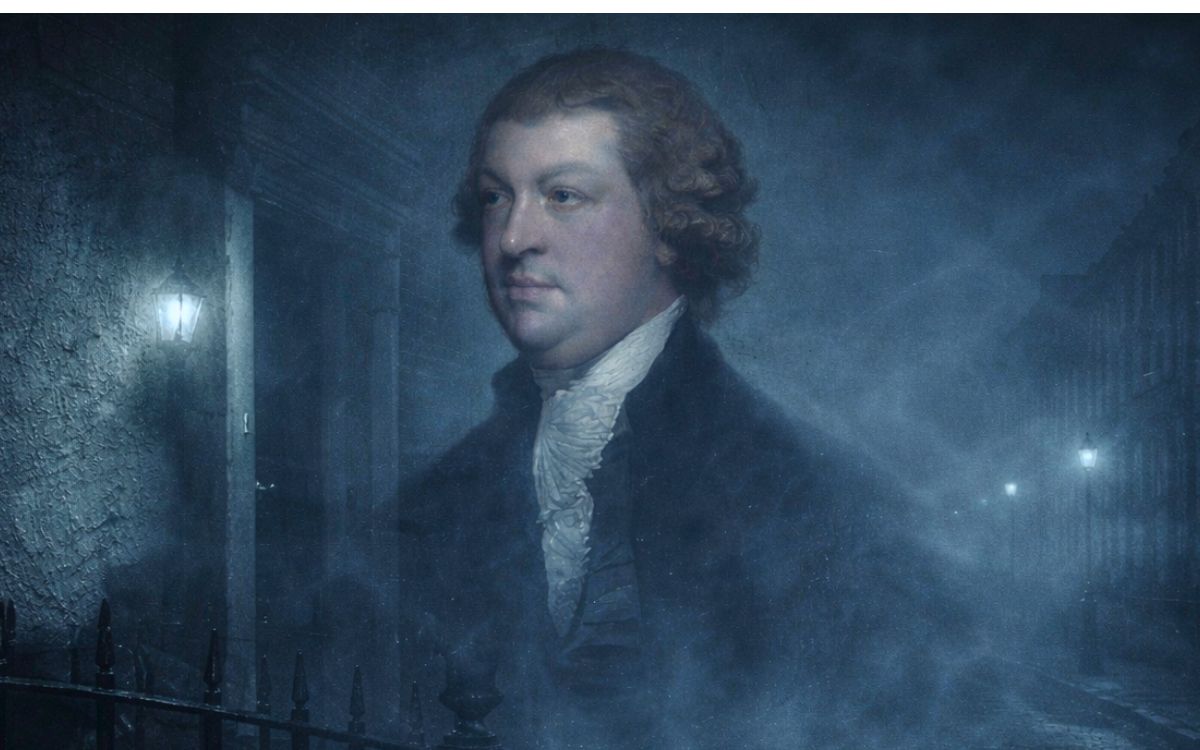
Dublin is a city that remembers its past, its dead. Walk its streets long enough and you begin to feel it.
Beneath the laughter and music spilling from the pubs, clubs, and late night doorways, the old stories linger like mist rolling along the River Liffey.
Among those lingering stories is one belonging to a man whose name still echoes through the city’s nightlife.
The man behind the name was John Scott, born in County Tipperary in 1739. Ambitious and fiercely intelligent, Scott rose quickly through Ireland’s legal world.
By 1784, he had become Lord Chief Justice of the King’s Bench, one of the most powerful judicial roles in the country.
Scott was brilliant, ruthless, and widely feared. Contemporaries described him as sharp tongued, sarcastic, and merciless when dealing with the lawyers and defendants who stood before him.
Courtrooms in the 18th century were unforgiving places, and execution by hanging was a common sentence. Scott presided over trials in which many men faced the gallows.
As the years passed, his reputation hardened into legend. Dubliners whispered of him as a hanging judge, a man with little sympathy for the condemned.
And so a nickname was born, a name that would outlive his titles and outlast his century.
The name ‘Copper Face Jack’ came from his complexion, a ruddy, copper coloured face that deepened with age and with drink. In the gossip and humour of Georgian Dublin, the nickname clung to him more tightly than Lord Clonmel ever did.
A Powerful and Dangerous Man
Scott lived as boldly as he judged. He was enormously wealthy for his time, earning around £20,000 a year, a staggering income in 18th century Ireland.
He fought duels and endorsed the practice publicly. He also indulged in a lifestyle that even Dublin’s high society found excessive.
His personality was fierce and volatile. His own writings revealed a man obsessed with ambition and quick to curse rivals and enemies.
Historians later suggested that his character often seemed at odds with the ideals of justice itself.
Yet in the Ireland of his era he held immense authority. When John Scott spoke from the bench, lives could end.
His power was absolute, and he wielded it without apology.
Harcourt Street and the Birth of a Name
Scott built a grand residence on Harcourt Street, a place that would remain linked to him long after his death.
He died in 1798 at the age of 57, worn down by excess and years of relentless intensity.
Centuries later, on that same street, a nightclub opened inside the Jackson Court Hotel. The owners chose a name drawn from Dublin’s history.
Copper Face Jacks, or simply known by locals as ‘Coppers’.
The Ghost of the Judge
Dublin’s folklore has a way of settling into old buildings, and on Harcourt Street the stories seem to cling to the walls themselves.
Over the years, staff and late night workers have spoken quietly about the things they notice once the music stops and the doors are finally locked.
These are not dramatic sightings or formal accounts. They are only the small, uneasy observations of people who have spent long hours alone after closing.
Some describe a faint sense of being watched in an empty corridor.
Cleaning staff have paused mid step, certain someone stood just out of sight.
Footsteps have echoed through quiet hallways where no one should be walking.
In a few corners of the building an unexplained heaviness lingers. A stillness that makes the air feel suddenly colder.
Taken together, these quiet moments form a single suggestion, that the judge whose name hangs above the door may never have left Harcourt Street.
That he still moves through the building with the same deliberate presence he once carried into court, watching the living with a gaze shaped by a lifetime of verdicts.
And so the question rises in the hush that follows the last song of the night.
Does Copper Face Jack still watch the crowds that pass through his old domain, measuring them as he once measured the accused?
Does he hold on to the harsh judgments he delivered in life, reluctant to surrender the authority that defined him?
Or is he caught in something older and lonelier, a kind of purgatory shaped by his own severity, bound to the halls of Harcourt Street because he cannot, or will not, face the final judgment waiting beyond the veil?