
When people think of vampires, Count Dracula usually comes first. But Ireland already had its own bloodsucking legends long before Bram Stoker put pen to paper.
From the terrifying Dearg Due of folklore to Sheridan Le Fanu’s sensual novella Carmilla, Irish stories paved the way for the world’s most famous vampire.
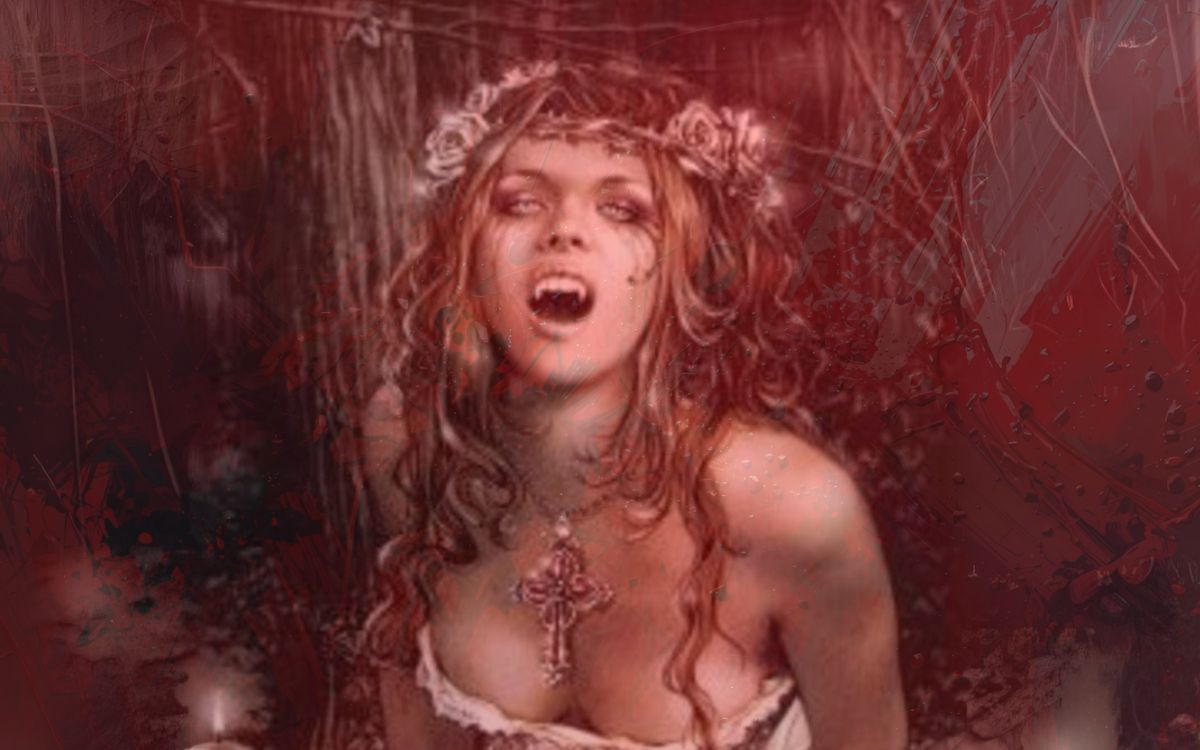
Dearg Due: Ireland’s First Vampire
Irish folklore is full of revenants — restless dead who return to torment the living. Among them is the Dearg Due, or “Red Bloodsucker”, a spirit said to rise from her grave each year to prey on men.
Tales of her vengeance were whispered across Waterford and Munster, warning that lust and betrayal could lead to death at the hands of the undead.
The Dearg Due was not a suave count or a cloaked nobleman. She was a local ghost-story villain, a grim reminder of Ireland’s darker supernatural traditions.

Le Fanu’s Carmilla and Bram’s Dublin Connection
In 1872, Joseph Sheridan Le Fanu, one of Dublin’s leading Gothic writers, published Carmilla. The novella told the tale of a female vampire haunting the forests of Styria, Austria — more than two decades before Dracula.
Its influence is unmistakable. Bram Stoker’s notes show that he originally set his novel in Styria and called his vampire “Count Wampyr”, using the Austrian word for vampire.
It was only after discovering William Wilkinson’s book in Whitby — where he learned the name “Dracula” — that he shifted the setting to Transylvania.
Dacre Stoker explains: “In his notes, Bram was planning to set the novel in Styria, which is a province of Austria. In Austria, they called vampires Vampyr. Joseph Sheridan Le Fanu wrote Carmilla, based in Austria… Bram wrote articles, theatre reviews for Liffey News newspaper in Ireland.”
That’s more than coincidence. The Liffey News was one of Le Fanu’s own publications.
So, while Le Fanu was bringing vampires into literature, Bram was writing for his newspaper, moving in the same Dublin literary circles.

This overlap places Stoker not just as a reader of Carmilla, but as a younger writer influenced by — and working under — Le Fanu’s editorial shadow.
Bram Stoker and the Irish Gothic Tradition
Stoker grew up in Dublin immersed in Irish folklore — banshees, ghosts, tales of premature burial.
His mother and nannies filled his sickbed childhood with horror stories, which later blended with literary influences like Le Fanu.
As Dacre Stoker explains: “The stories told to him by his mother and nanny were steeped in dark Irish folklore and horrifying accounts of premature burials.”
That fusion of folklore and fiction is what gave Dracula its lasting power: the Irish Gothic meeting the European vampire myth.
Ireland’s Vampire Legacy
From the graveyards of Munster to the pages of Carmilla, Ireland’s vampire tradition was thriving long before Stoker created his Count.
Dracula may have lived in Transylvania, but his roots — like his author’s — run deep into Irish soil.
Want to explore Bram Stoker’s world for yourself? Join Dacre Stoker’s Halloween Transylvania Tour and Vampire Ball inside Bran Castle.
Have you encountered any Irish vampire legends or read Carmilla? Share your thoughts in the comments below!