

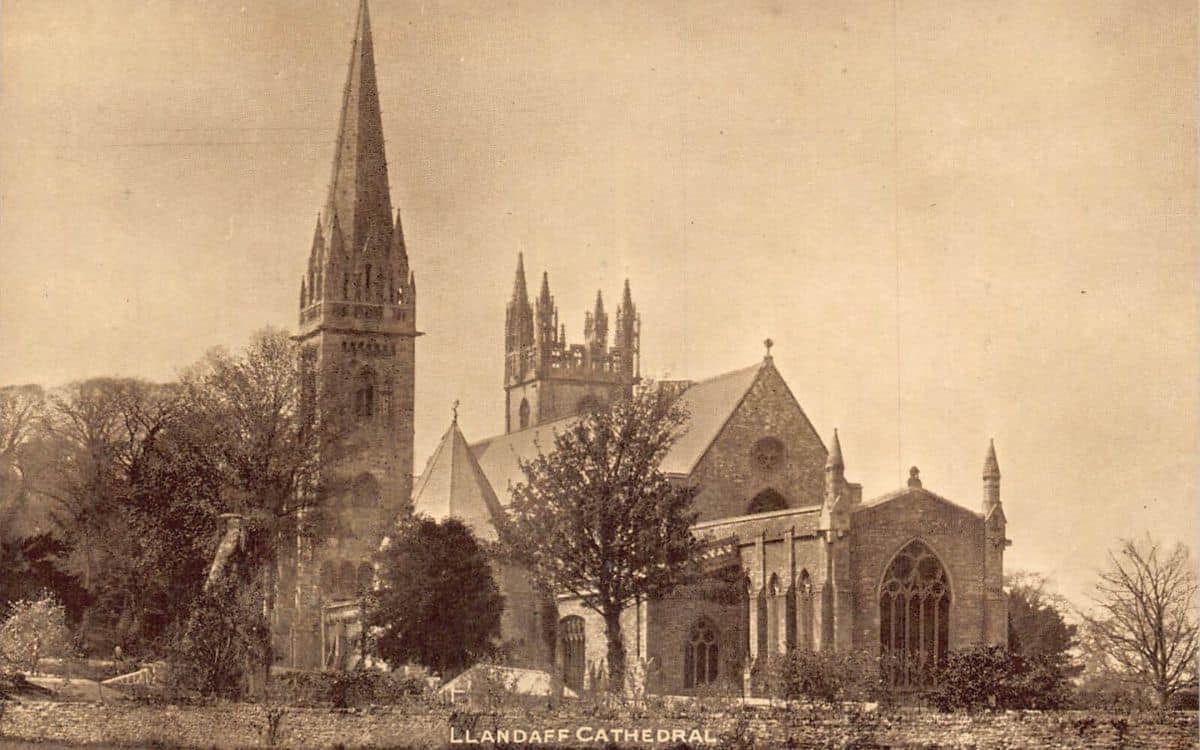
Llandaff, a quiet district on Cardiff’s green western edge, feels like a place forgotten by time.
With its quaint village green, cobbled paths and imposing cathedral rising beside the River Taff, Llandaff is steeped in ecclesiastical heritage.
But behind the serenity lies something far older – and more unsettling.
Llandaff Cathedral is not just one of the oldest Christian sites in Wales. It is also, by many accounts, one of the most haunted.
History of Llandaff Cathedral
The story of Llandaff Cathedral begins in the sixth century, when Christian worship first took root here.
The current structure dates to 1120, commissioned by Bishop Urban on a site once dedicated to Celtic saints.
Its Norman architecture has endured Viking raids, rebellions and reformations.
During Owain Glyndŵr’s uprising in the early 1400s, the cathedral was left badly damaged, and centuries of neglect followed.
The English Civil War brought further ruin – some say its sanctity was broken when soldiers turned its chapels into stables and a beer hall.
Then came the Cardiff Blitz in 1941. A parachute mine exploded near the cathedral, shattering its windows and bringing the nave’s roof crashing down.
Today, the restored cathedral bears the scars of survival—and perhaps it is that survival that draws the spirits.
Visitors to Llandaff often report a deep sense of stillness here.
But some have felt more than peace.
Wandering the churchyard after dark, people have seen cloaked figures moving silently between gravestones.
These are not modern pranksters or parishioners.
Witnesses describe them as faceless, hooded, and oddly indistinct, as if not fully part of this world.
This cemetery was the final resting place for generations of Llandaff’s dead.
And it is here, along the ancient footpath once used for funeral processions – known locally as the “Road of the Dead” – that many say the haunting is strongest.
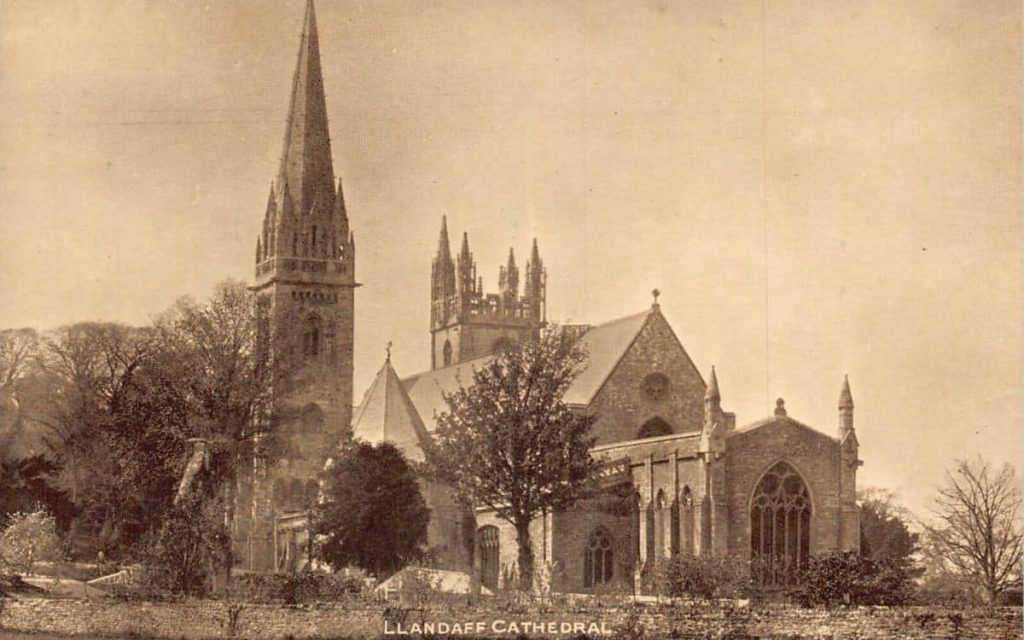
Ghost Sightings at Llandaff Cathedral
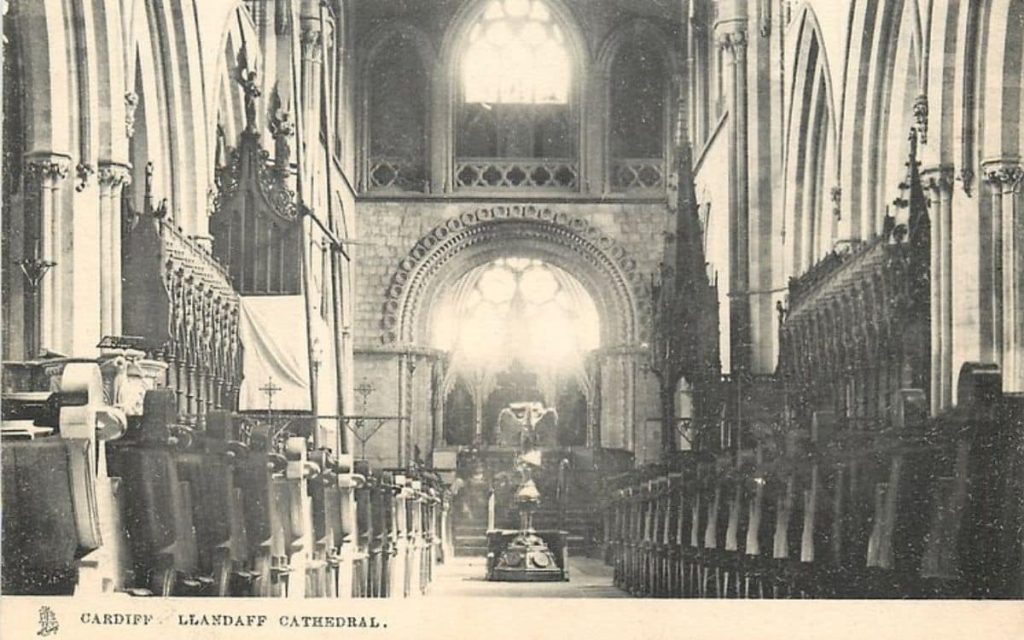
Inside the cathedral, the atmosphere changes.
The chill is not just physical, it is historical.
Whispers echo in empty chapels.
The sound of footsteps follows visitors, only to vanish.
Some have reported seeing monks gliding silently through the aisles.
Others speak of a wartime spirit: the ghost of a young boy killed during the 1941 bombing, heard laughing or calling out when no child is near.
Tour guides recount stories of a nun, possibly from the Reformation era, who hid in the cathedral during the dissolution of the monasteries.
Her betrayal led to execution, and her spirit, mournful and veiled, is said to walk the south transept.
Eerie Legends of Llandaff Village
The cathedral is not the only haunted place in the area.
Llandaff’s surrounding streets hold their own eerie legends.
The ghost of Isabella Leonard, a 19th-century innkeeper’s wife who drowned under mysterious circumstances, is said to linger near the river path.
A winged, green-skinned witch, seen crawling along Ffordd y Meirw, haunts local folklore.
Even sceptics admit Llandaff feels different at night.
The village’s layered history – Roman road, Celtic burial site, Norman cathedral – makes it fertile ground for lingering spirits.
As one visitor put it after joining the Llandaff Ghost Walk, “There’s something in the air here. You don’t see it, but it sees you.”
Visiting Llandaff’s Spooky Historical Sites
Llandaff is accessible from central Cardiff by bus, bike or foot.
By day, it is a peaceful place for a wander – do not miss the Bishop’s Palace ruins or the nearby river trails.
But if you come seeking ghosts, consider joining a guided ghost walk or downloading a self-guided audio tour.
Local historians share tales of haunted landmarks, dark histories and unexplained events that make Llandaff one of Wales’ most atmospheric haunts.
The cathedral itself remains a working place of worship, but respectful visitors are welcome.
Stand beneath the great organ, walk the cloisters, and see if you too feel that strange pull—the sense that you are never truly alone in Llandaff.
Have you seen or experienced the haunted Llandaff Cathedral for yourself? Tell us about it in the comments section below.