
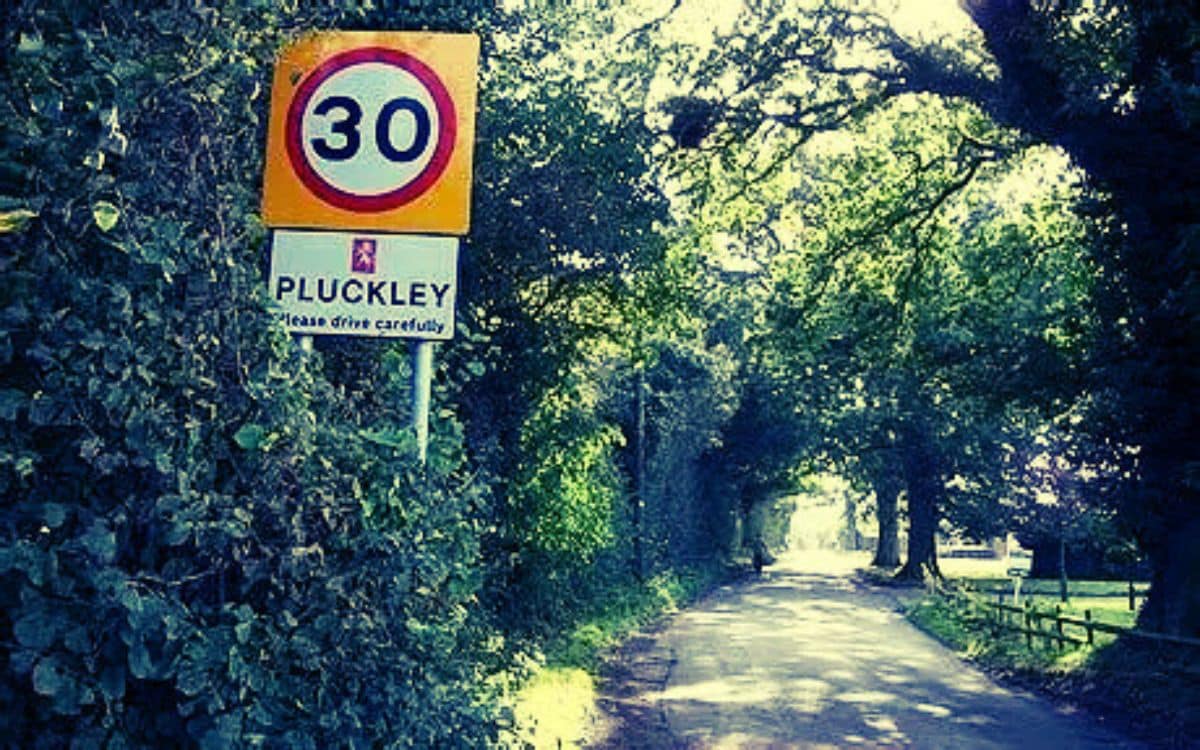
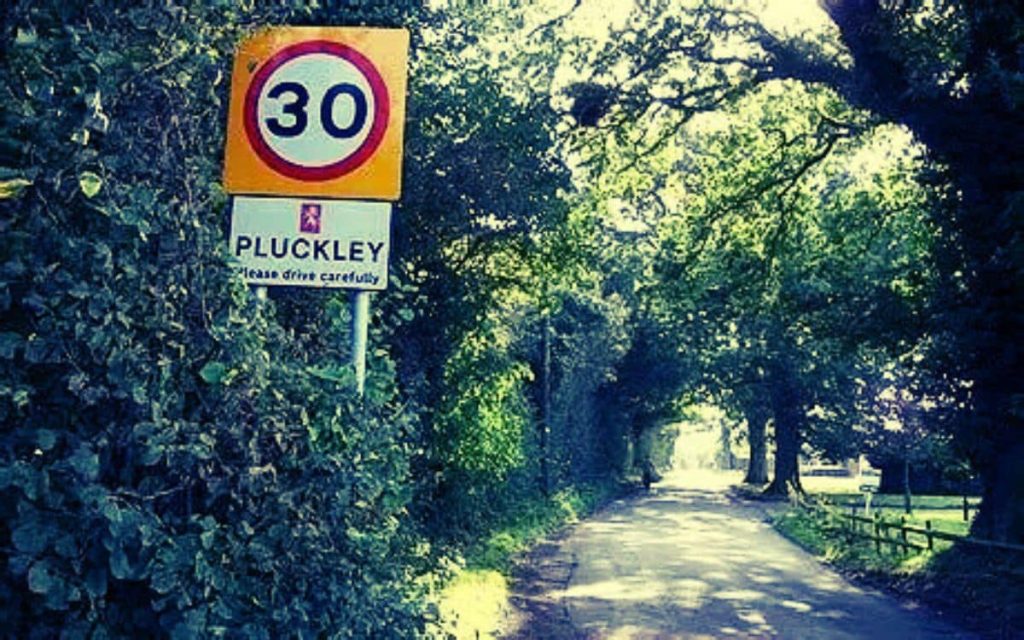
Spooky Isles is already well supplied with ghostly tales from Kent’s most ghostly corner.
Pluckley’s full-on menagerie of phantoms are so good for local business that many residents in the area have come to dread Halloween with its annual influx of encounter seekers. It certainly sells pints in the local pub, though.
Recently, research by Simon Moreton – Associate Professor of Creative Economies at the University of the West of England – has tackled the origins of the best-known stories and discovered two individuals who, collectively, popularised most of the tales known and loved today.
Perhaps the unlikeliest of the pair is the late Desmond Carrington, an actor and broadcaster who died in 2017 and is probably best remembered as a radio presenter who continued his popular and nostalgic trawl of sounds – The Music Goes Round – until long after his 90th birthday.
In 1962 Carrington was a popular fixture elsewhere, specifically playing Dr Chris Anderson in ITV’s massively popular Emergency Ward 10. Carrington was also a Pluckley resident and, in an interview in the Christmas edition of the TV Times, Carrington held forth on his knowledge of ghosts in the village.
Years later Carrington would confess that the ghost stories were an “angle” to liven up the TV Times feature and concocted between himself and journalist Bill Evans. Whatever the truth about the claim, Carrington’s contribution to popularising the strange stories can’t be underestimated.
In 1962 television listings were controlled to the point weekly schedules weren’t allowed in the daily press and the circulation of the listings magazines – Radio Times and TV Times – put them at the top of magazine sales with each shipping millions of each edition. The Christmas editions were monster sellers.
Carrington certainly didn’t establish Pluckley’s claims to ghostly grandeur on his own, many ghost stories preceded his meeting with Bill Evans.
Simon Moreton’s study also credits the prolific and inconsistent Frederick Sanders (1908–1996) with fleshing out and establishing the main stories surrounding the local ghosts today.
Sanders’ working life included employment at the dockyards in Chatham, and he was brought up in the village, an experience he continually drew on during a part-time literary career that saw an impressive output of local history.
Sanders was a self-styled ghost hunter already active in seeking his quarry in St Nicholas Church, Pluckley in 1939. His efforts drew the attention of the Daily Herald and by 1946 Sanders was the self-published author of Psychical Research; Haunted Kent, an account of 14 ghost hunts he had undertaken.
Sanders would have thrived in the social media era, his self-publicising antics at the time included regular correspondence with the local press and a gradual move to a descriptive and lurid presentation of ghost stories.

If one piece of writing truly established Pluckley’s stable of supernatural talent it may well have been a 1950 piece by Sanders for the Kentish Express that identified nine different ghosts and threw in claims of a Pluckley appearance by Satan himself.
By 1955 Sanders’ memoir Pluckley Was My Playground was in print, and he was also extending his talents to paranormal fiction.
At this distance from his writing the thing that remains relevant is that Sanders worked like many of today’s best-known proponents of all things paranormal by standing in front of his subject and acting as our guide.
Whatever the truth of the original stories and the sources he had used, Sanders wanted to put the liveliest spin on the tale.
Today he would have all manner of social media at his disposal, back then his self-publishing put his books in the hands of family and friends, and – crucially – local libraries.
He might not have been a celebrity, but his versions of the tales got round, and they encouraged belief in Pluckley’s plethora of the undead and their reasons for remaining.
Between Carrington’s brief blitz of publicising Pluckley to the nation and Sanders’ slow burn of spinning the same content in the local area a series of legends were established that remain at the core the village’s standing as a paradise for paranormal hunters. In the crudest terms many – particularly the local Black Horse pub – owe part of their profits to the efforts of this unlikely pair.
Read more about Pluckley’s ghost stories.
What did you think of this article about Pluckley ghost stories? Share your thoughts in the comments!