

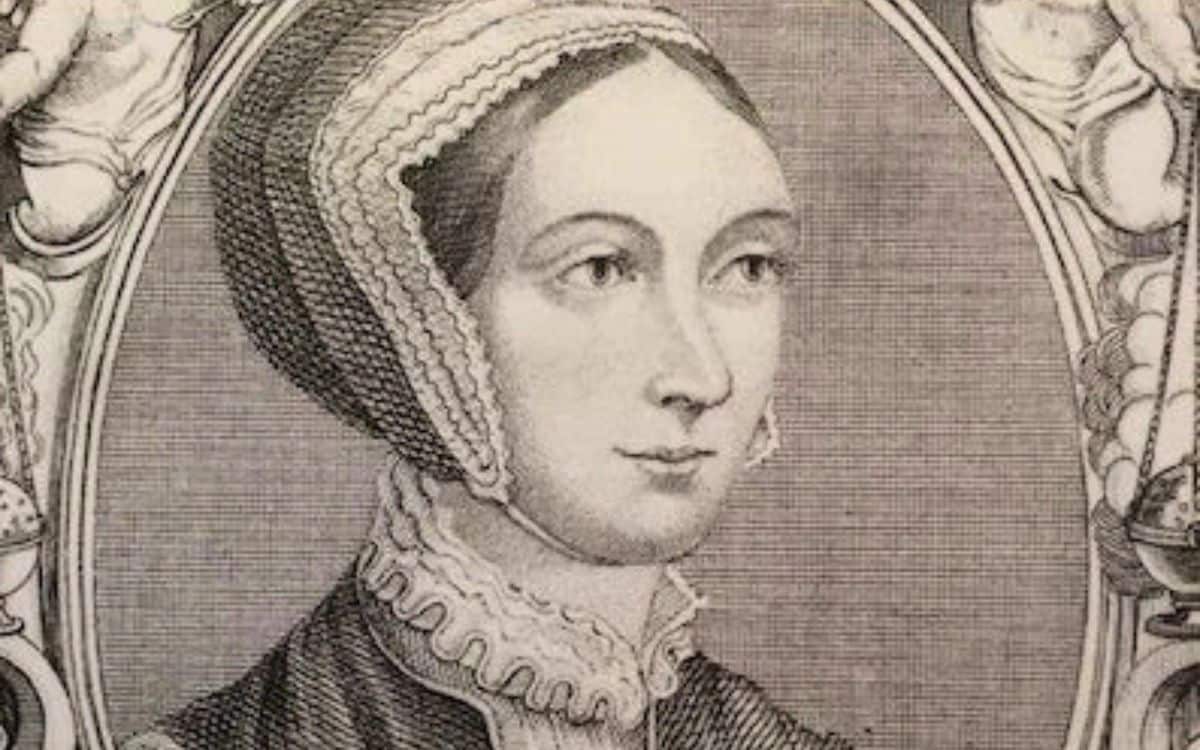
Most people cross Ouse Bridge without a second thought. They glance at the river, hurry towards the shops, or weave through the traffic of modern York, unaware the bridge was once the scene of one of the city’s most brutal executions.
It was here, in March 1586, that Margaret Clitherow was pressed to death beneath stone and iron, killed in public as a warning to others.
More than four centuries later, her story still lingers in York’s streets and narrow lanes.
Margaret Clitherow was made a saint in 1970 when Pope Paul VI canonised her as one of the Forty Martyrs of England and Wales.
St Margaret Clitherow, The Pearl of York
Margaret was born in York around 1556 into a respected family. She later married John Clitherow, a prosperous butcher, and the couple lived in The Shambles.
Today, The Shambles is lined with gift shops and visitors. In Margaret’s day, it was a working street of hanging meat, shouted prices, barking dogs and open gutters. The upper floors leaned so close together that daylight barely reached the ground.
It was there that Margaret began living a dangerous double life.
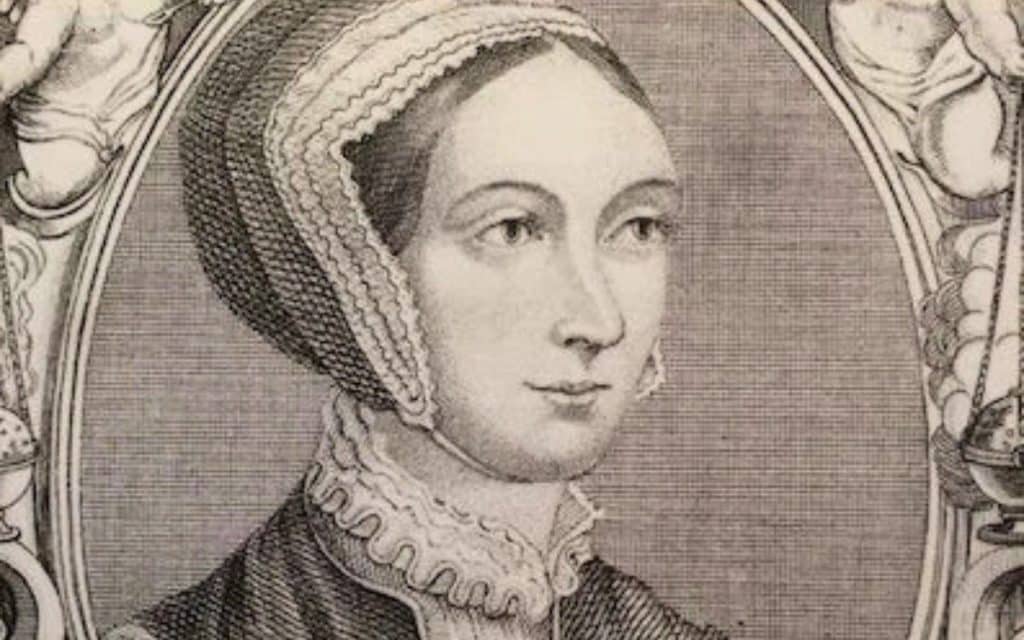
She converted to Catholicism at a time when England’s religious divisions had hardened into fear and punishment. Priests were hunted, neighbours informed on each other, and homes could be searched without warning. Margaret chose to resist.
She hid priests in secret chambers, arranged Mass in private rooms, and turned her home into a refuge for persecuted Catholics in the north of England.
The Raid
In March 1586, the authorities arrived.
The Clitherow house was searched, and a frightened child revealed the location of a priest hole. Spaces that had offered safety became evidence.
Margaret was arrested and brought before the York assizes, charged with harbouring Catholic priests.
She refused to enter a plea.
It was a deliberate decision. By remaining silent, she prevented a trial in which her children could have been forced to testify against her.
She knew the punishment that silence might bring.
Crushed on Ouse Bridge
On 25 March 1586, Margaret was taken to the Toll Booth on Ouse Bridge, then one of the busiest crossings in York.
She was laid on the ground. A sharp stone was placed beneath her back. A heavy door was set over her body. Stones and iron weights were then piled on top, one by one.
The method was meant to do more than kill. It was meant to break the will.
Crowds gathered, as they often did for public executions. Some watched. Some prayed. Some looked away.
Margaret Clitherow died soon afterwards.
Even in an age used to violence, her death shocked many.
Today, buses cross the bridge and tourists stop to photograph the river. Few realise they are standing where a woman was once killed in full public view.
The Shambles and the Quiet Figure
The Shambles remains one of York’s most atmospheric streets, especially early in the morning or after dark, when the crowds thin and the timbered buildings seem to close in.
Some visitors and locals claim to have seen a silent female figure between the buildings, or someone standing in a doorway who vanishes when looked at again.
Many connect such stories to Margaret Clitherow.
Whether ghost tale or imagination, it is easy to see why her name still survives here.
Places to Visit in Margaret Clitherow’s York
The Shrine in The Shambles
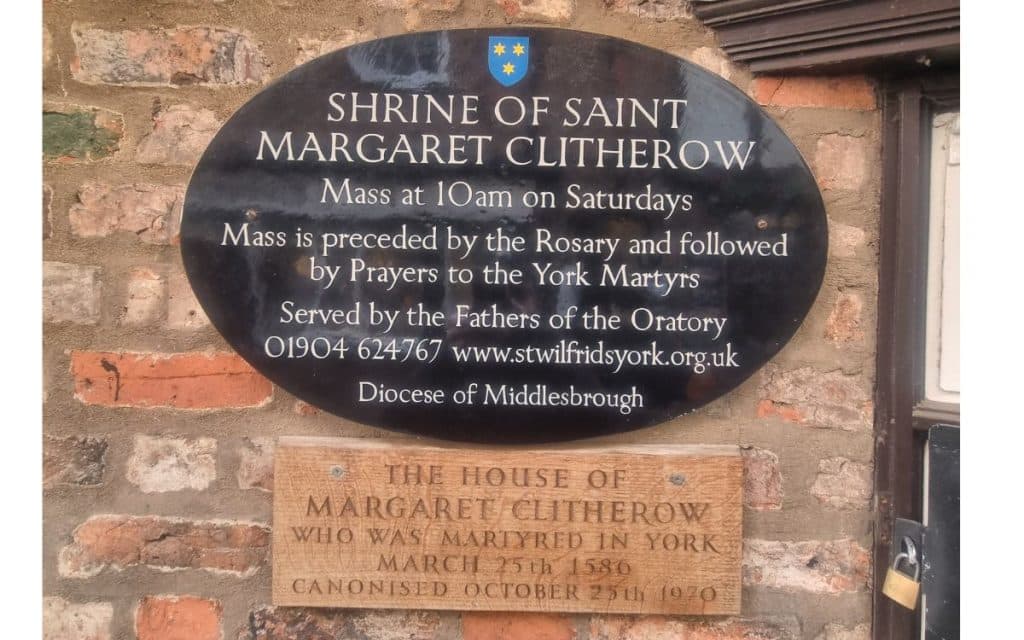
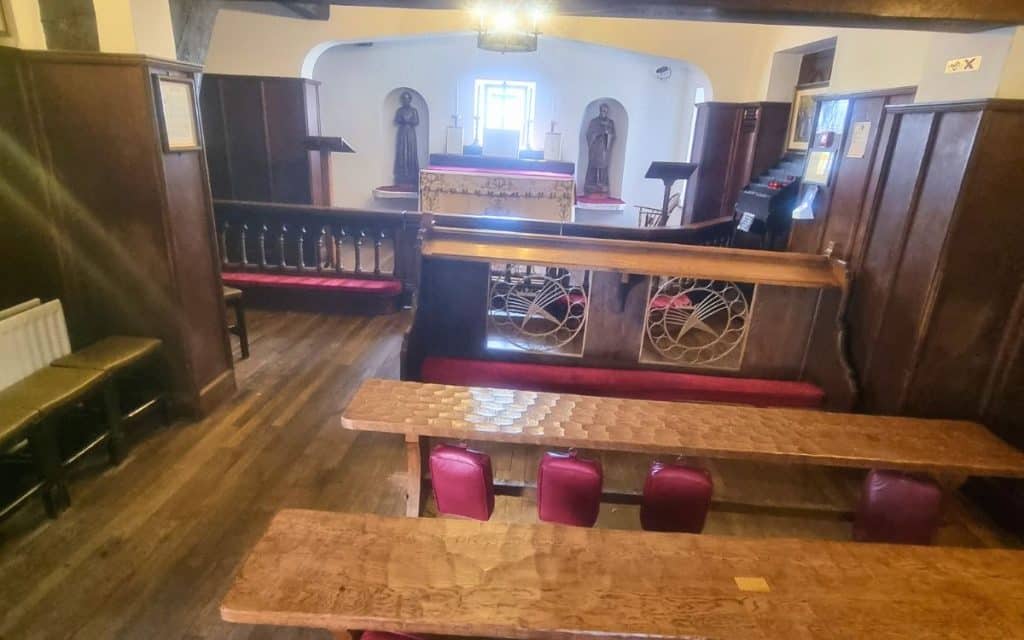
At 35–36 The Shambles stands a small shrine dedicated to Margaret Clitherow.
Inside, the noise of the street fades. Candles burn quietly, and visitors often lower their voices as they enter.
Whatever your beliefs, it is a place where York still remembers.
The Plaque on Ouse Bridge
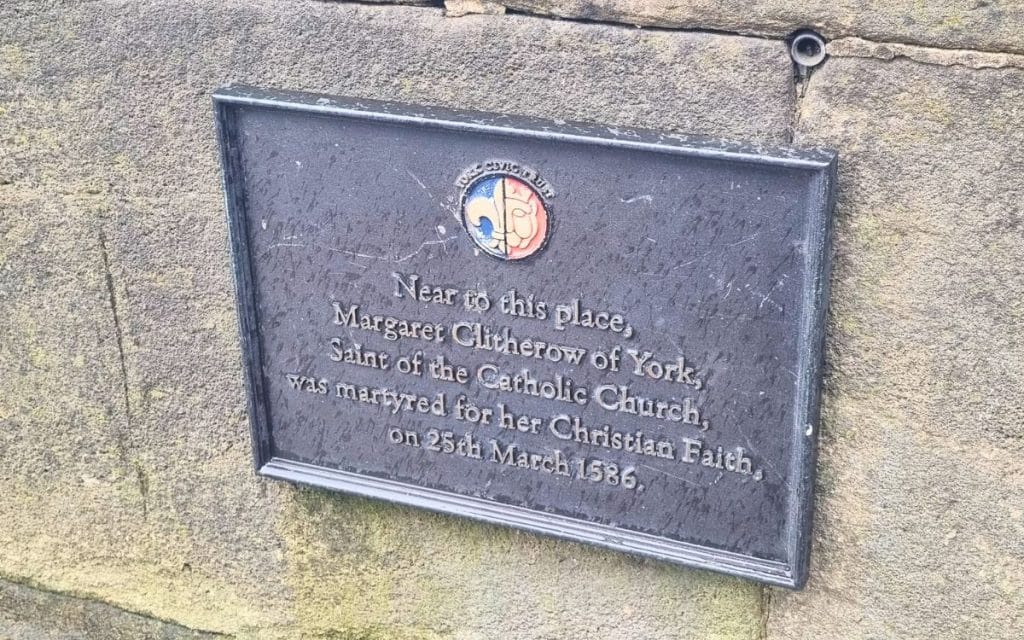
A plaque marks the approximate site of her execution at the Micklegate end of Ouse Bridge.
Many pass it without noticing.
Pause there for a moment, with traffic moving past and gulls over the water, and it is not hard to picture the crowd that once gathered there.
The Black Swan
Local tradition also links Margaret with The Black Swan at Peasholme Green, where priests were said to have been hidden while government agents lodged nearby.
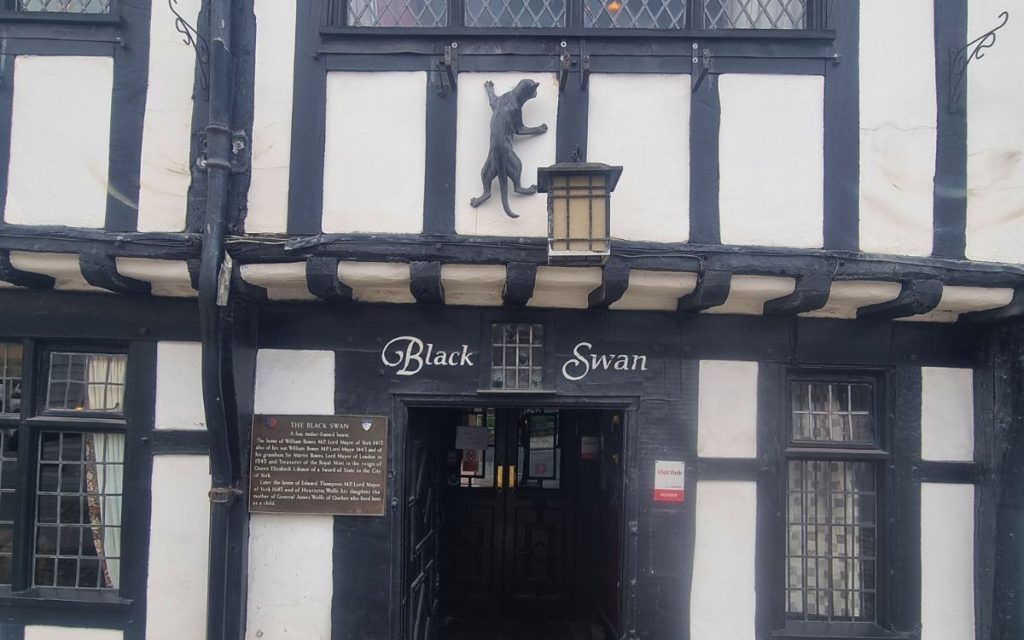
Whether every detail is true matters less than what it suggests: York was a city of secrets and divided loyalties.
York’s history is full of emperors, rebels, sieges and executions, yet Margaret Clitherow stands apart.
She was not a noblewoman or soldier. She was a wife, mother and businesswoman who chose conscience over safety.
Margaret Clitherow is considered a saint by the Catholic Church, remembered for her courage and faith in the face of certain death.