

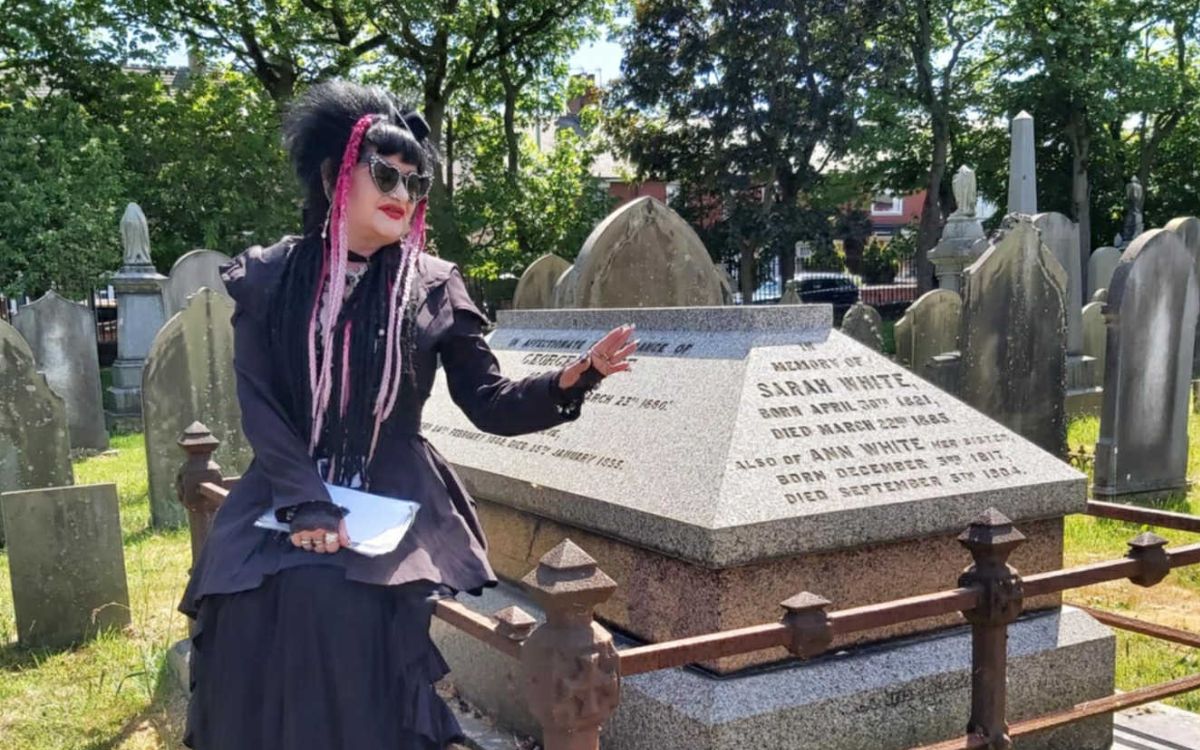
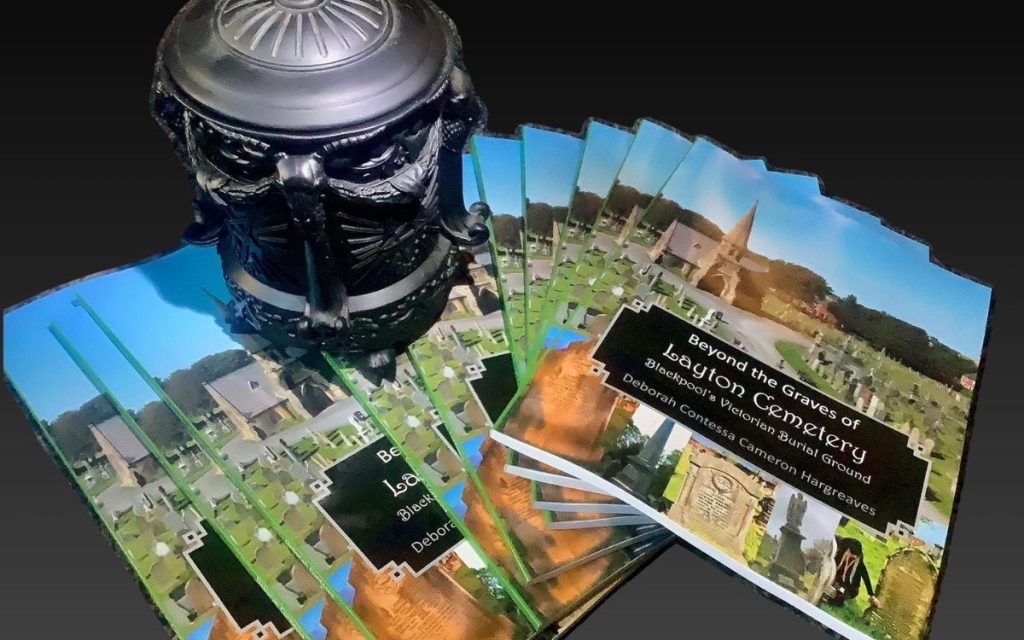
In her new book, Beyond the Graves of Layton Cemetery, Lancashire’s very own ‘Cemetery Lady’, Deborah Contessa, takes us on a fascinating, strange, and often heart-breaking tour of Blackpool’s Victorian burial ground.
In 1870, when Blackpool’s parish churchyard of St John was declared fit to burst, the council ordered the creation of a new, larger burial ground to better cater for the rocketing population of their booming seaside resort.
The result was Layton Cemetery, a grand cemetery park purposefully built on higher ground, with enviable views across the town.
Opening in 1873, Layton Cemetery once boasted three chapels of different denominations. However, the disused Grade II-listed Anglican chapel is the only survivor.
Yet it is Layton’s vast blanket of gothic, ornamental gravestones that continues to captivate visitors today.
Deborah Contessa Cameron Hargreaves, known to most as Deborah Contessa, is a devoted advocate for the preservation and protection of Layton Cemetery and its quiet residents.
An ardent taphophile, Deborah has tirelessly researched hundreds of graves and the lives of those buried beneath.
The author’s affinity with the cemetery began with her personal research into the tragic murder of ‘Brides in the Bath’ victim Alice Burnham, who she discovered was buried at Layton in an unmarked grave.
Deborah soon found the Friends of Layton Cemetery and their cemetery archive, and the rest, as they say, is history. Now in her book, Deborah shares the unrivalled knowledge she has amassed over the years and teaches us that the history of Layton Cemetery is as bright and vivacious as its residents were in life.
It is the stories of these people and their astonishing lives, often as keystones of Blackpool’s entertainment history, that Deborah so expertly captures in her book. From clowns and acrobats to fallen soldiers and cricket stars, Beyond the Graves of Layton Cemetery commemorates them all.
Here we will take a look at just a small selection of the book’s many remarkable entries.
One of the wildest and most intriguing graves that Deborah recalls is that of James Walmsley, known to everyone as ‘Jungle Jim’.
Living inside the Aquarium, Menagerie & Aviary as Blackpool Tower was built around him, he was the ‘Superintendent of Wild Beasts’ and famed for his impressive knowledge of creatures of land, air and sea.
Deborah tells how Jim was known for being an eccentric sort of chap and, due to having ‘beliefs in the medicinal properties of sea water’, drank a cupful each morning directly from the aquarium tanks.
Unfortunately for Jim, it was this quirk that would be his undoing, for on 17 June 1915, ‘his lifeless body was discovered beneath the filter beds’, appearing to have slipped and fallen into the huge fish tanks, although ‘mystery still surrounds his demise’.
And if you were already wondering — yes, Jim gave his name to the fondly remembered Blackpool Tower play area, known to all 80s and 90s kids as Jungle Jim’s.
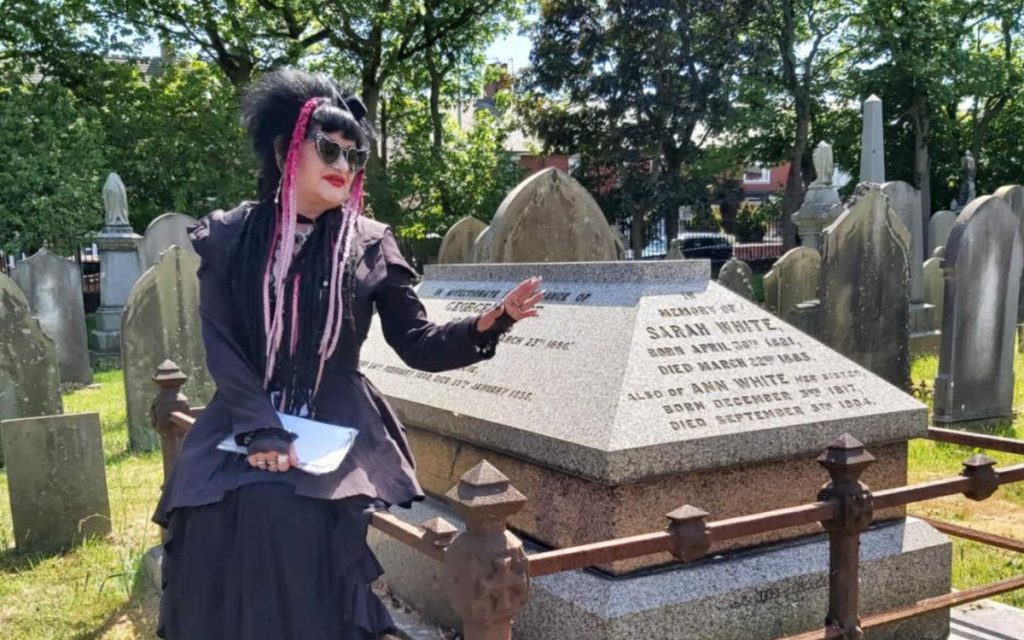
From this curious tale of a sea-swilling zookeeper, Deborah takes us next to the grave of the first true historian of Black America, who dedicated his life to ‘objective and scientific’ study.
George Washington Williams was an ‘American historian, Baptist clergyman, politician, lawyer, lecturer, and soldier’ who famously condemned King Léopold II of Belgium for his humanitarian crimes in the Congo.
But how does an esteemed American historian come to be buried in a Blackpool cemetery?
Deborah shares how his fate was the same as many others of the period, with tuberculosis prompting him to seek the benefits of sea air and convalesce on the Fylde Coast.
When George sadly passed on 2 August 1891, the Mayor of Blackpool ordered a burial befitting the great man.
Deborah also recounts the life and death of one of Blackpool’s founding mothers, ‘Queen of the Gypsies’, Ada Boswell. This grand title was rumoured to have been given to Ada for her tremendous skill in palmistry and clairvoyancy by none other than Queen Victoria herself.
An integral part of Blackpool’s foundation and early history, the Romani encampments on the sand dunes were famed by all who visited.
But Ada’s talents were especially prized, with her tent attracting ‘lengthy queues each summer as visitors eagerly sought her insights into their destinies’.
Ada died on 11 May 1901 and was buried in a specially constructed vault so that no dirt may touch her.
Next, we learn of another star of Blackpool’s entertainment heritage, the infamous Augusta Carolina Rosaline Wingfield, also known as ‘Alphonsine – La Belle Rose’. A fearless aerial artiste, Augusta was known for her ‘death-defying spiral ascension act’, which gained her the nickname Queen of the Spiral.
Often risqué and sometimes downright scandalous to Victorian sensibilities, Augusta’s acts eventually saw her arrested for public decency offences.
Living well into her 90s, Augusta passed of old age on 12 October 1947. Buried in a huge white tomb, Augusta was laid to rest in an elaborate white show costume and draped with glittering jewellery.
Deborah tells how, in her will, Augusta had decreed, ‘I have lived like a queen; I shall die like one’.
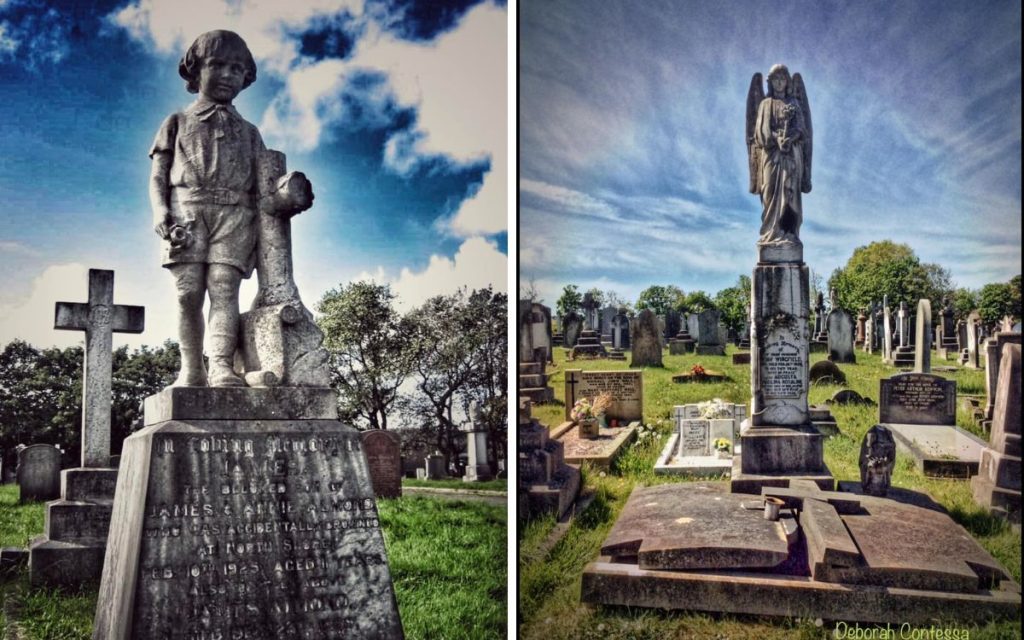
One of Layton’s most famous graves stands as a beautiful yet heartbreaking memorial to the tragic loss of 11-year-old James Almond.
Swept out to sea during a terrible storm on 10 February 1925, the child’s stricken family searched the shore tirelessly for a year until ‘the cruel sea relinquished its hold’ and his body was eventually found close by the old Wyre Light.
An effigy of the little boy stands atop his grave, carved in stone as a ‘lasting tribute to a life cut tragically short and as a silent reminder of the untamed power of the sea’.
It is Deborah’s passionate and thoughtful treatment of each grave that strikes the reader. Her love of these people, and their final resting places, is evident in every entry.
Touchingly, Deborah dedicates this book to the memory of Alice Burnham, the grave that started it all.
As well as cataloguing the graves of Blackpool’s great and good, Deborah also includes a chapter dedicated entirely to cemetery symbolism. Here, she skilfully explains the meaning behind many of the familiar symbols that we often see when visiting a graveyard.
From grounded anchors ‘depicting hope and steadfastness’, to broken columns representing ‘a life cut short’, many of these symbols are not as obvious as they may first seem.
Deborah enlightens the reader on the hidden significance of funerary art and its place in Victorian mourning practices, poignantly describing cemeteries as ‘gardens of silent storytelling’.
This book is a triumph.
The author really does take the reader far beyond the graves themselves and into the unique lives of our dead. This book is the culmination of a life’s work — a life dedicated to making sure that no one is forgotten.
As tombstones crumble and weeds engulf the graves, threatening to drown the memory of those buried, Deborah Contessa reaches out her hand to pull them from the mists of time, immortalising each one forever.
As Chair of The Friends of Layton Cemetery, Deborah leads cemetery tours, alongside fellow cemetery guide Pam Isherwood, every third Sunday and during Heritage Week each September.
The Friends’ headquarters are located in the original Victorian Cemetery Lodge and copies of Deborah’s book can be bought from there. Visit Layton Cemetery Heritage Tour website for more information.
Have you been to Layton Cemetery in Blackpool? Tell us your thoughts in the comments below!