
The silent film Dr Jekyll and Mr Hyde 1913 is an adaptation with a great lead performance and plenty of charm, writes KATHERINE SANKEY
Review of Dr Jekyll and Mr Hyde (1913)
Silent-era films are always fascinating to watch, as they allow us to see into a past that is truly and sadly gone.
These windows into a distant world let us consider not only the differences between then and now, but the commonalities.
This Dr Jekyll and Mr Hyde film from 1913 beautifully demonstrates the latter. The novella it is based on has remained relevant more than a century later, making the story as recognisable to audiences today as it was to those who first saw this film.
The film is incredibly short compared with modern blockbusters, with a running time of only about 26 minutes. Nonetheless, it encapsulates the plot extremely well, albeit with a few new ideas and a romance plot.
One excellent addition to the story is Jekyll working with charity patients, in a scene which quickly establishes his medical credentials and kind-heartedness. Another clever change is giving the poor child Hyde attacks a crutch, emphasising the vulnerability of the victim and the pure nastiness of his character – who would be so cruel as to hit a disabled child?
The romance plot also works well here. Perhaps it is the silent nature of the film, or the sweet performances of the actors themselves, but the love interest does not feel intrusive. In fact, Alice, as she is called, adds to the narrative, giving Jekyll something else to lose. Their relationship also increases the tension in the film, as the doctor keeps transforming when he is with her.

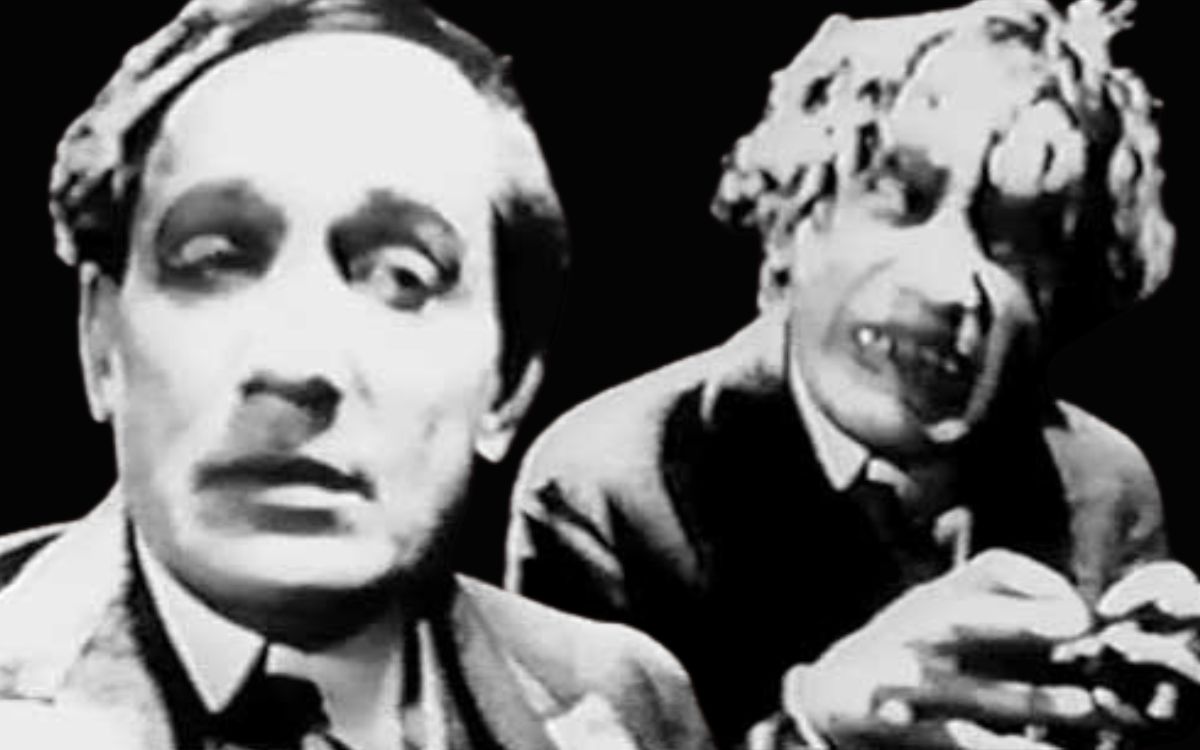
Performance-wise, the acting is great. It is more natural and subtle than you might expect, and while there are plenty of exaggerated movements, that was the style of the time. King Baggot makes a fantastic Jekyll – handsome, respectful and obviously distressed by his transformations. His Hyde, however, is perhaps more a matter of personal taste. While one can appreciate the limitations of the time, this Mr Hyde is somewhat comical-looking, thanks to his lank hair and big teeth.
Baggot’s attempt to physically differentiate Hyde from Jekyll is also rather hit-and-miss. His energetic and erratic walking and lurching are definitely strange, with the movements becoming almost ape-like at times, hinting at a de-evolved Jekyll. However, watching a man trying to shorten himself by constantly crouching, or scrambling about like a squirrel, also feels a little ridiculous.
Then again, considering when the film was produced, it would be unfair to judge such a performance too harshly. It is much easier nowadays for an actor to transform into Hyde, thanks to advances in special effects. Moreover, Baggot’s performance is still impressive. He commits a great deal of physical energy to his portrayal.
All things considered, the 1913 Dr Jekyll and Mr Hyde is a great adaptation that is surprisingly faithful to the text in many respects. The sets and locations still look good, and Baggot is an engaging actor to watch. There is also a certain delight to be had in watching a production made a mere 27 years after the original book was published. The sets and costumes are far closer to the period in which the novella was set than anything we could produce now.
Furthermore, the use of notes and letters to add context to a narrative that must remain silent makes the film feel closer to the book, where a variety of documents play key roles. In short, what this film lacks in dialogue and horror, it makes up for in dedication and charm. Well worth a watch!