

On 23 August 1914, British soldiers fought their first great battle of the First World War.
They were heavily outnumbered and facing powerful German forces around the Belgian town of Mons.
Then, according to one remarkable story, something supernatural appeared through the smoke and confusion.
Some soldiers supposedly saw shining figures standing between themselves and the advancing German army.
Others spoke of angels, mysterious horsemen and strange figures watching over the battlefield.
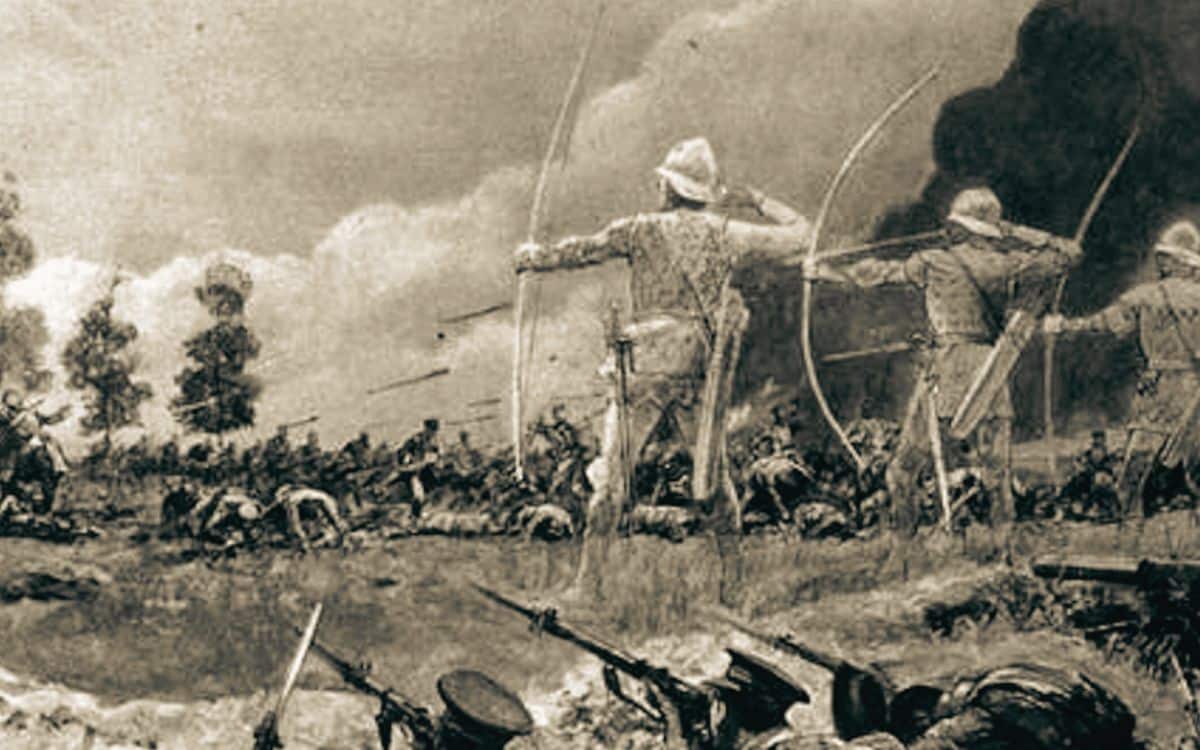
The strangest story claimed dead English bowmen had returned to fight beside the British.
These were the archers of Agincourt, summoned across five centuries to defend England again.
Soon Britain was talking about the mysterious Angels of Mons.
There is little reliable evidence that any supernatural army appeared on 23 August 1914.
But something almost as strange certainly happened during the months which followed Mons.
A writer invented some ghosts, then watched helplessly as Britain brought them to life.
Arthur Machen sends ghosts to Mons
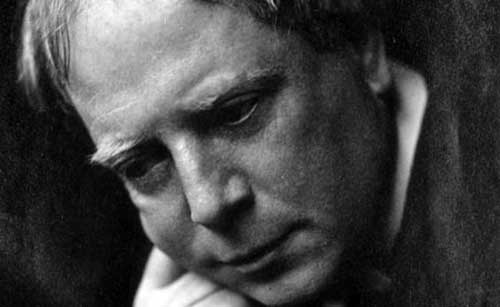
Arthur Machen was a Welsh writer fascinated by mysteries hiding beneath ordinary life.
His earlier work included The Great God Pan, now considered an influential horror classic.
The terrible reports from Mons caught his imagination during the war’s frightening opening weeks.
On 29 September 1914, the Evening News published his short story, The Bowmen.
It appeared barely five weeks after the bloody fighting around Mons on 23 August.
Machen imagined British soldiers surrounded by Germans and apparently facing destruction on the battlefield.
One soldier calls upon St George, England’s patron saint, for help against the enemy.
Something answers him.
Through the battlefield smoke appears an army which has been dead for centuries.
They are the English bowmen who fought at Agincourt nearly five hundred years earlier.
Their ghostly arrows strike the Germans and save the surviving British soldiers.
Machen had invented everything.
Then his ghosts escaped.
When fiction became folklore
Readers began asking Machen where he had discovered this extraordinary story about supernatural intervention.
Clergymen wanted his sources, apparently believing real soldiers had experienced something similar.
Machen explained that no sources existed because the story came entirely from his imagination.
Some people simply refused to believe him.
Stories began circulating about strange experiences supposedly witnessed during the retreat from Mons.
Machen’s bowmen became shining warriors, mysterious horsemen and eventually the famous Angels of Mons.
Another story claimed German soldiers were discovered dead from mysterious medieval arrow wounds.
That detail particularly amused Machen when the tale eventually returned to him.
He had considered arrow wounds while writing The Bowmen, then rejected the idea.
Machen thought they were too unbelievable even for his own supernatural fiction.
Now people presented his discarded idea as evidence that the miracle had really happened.
The legend was beginning to write itself.
Searching for the angels
The Society for Psychical Research investigated the growing stories during 1915.
These were serious investigators interested in ghosts, apparitions, telepathy and other unexplained experiences.
They were hardly determined to prove that supernatural events could never happen.
Yet they encountered one stubborn problem.
They could not find the angels.
Supposed eyewitnesses became unnamed soldiers, distant acquaintances or stories heard from somebody else.
Names disappeared and apparently first-hand testimony became second-hand remarkably quickly under examination.
The Society received no convincing first-hand testimony supporting supernatural intervention around Mons.
One named soldier even described misty bushes being mistaken for distant French cavalry.
That mundane little incident shows how easily exhausted soldiers could misinterpret uncertain shapes.
Yet rumours proved much harder to kill than ghosts.
The Irishman at Mons
One genuine veteran provides a wonderful contrast with the supernatural stories surrounding the battle.
Thomas Fitzpatrick came from County Wexford and served with the 2nd Royal Irish Regiment.
On 23 August, he helped lead around fifty men during desperate fighting at La Bascule.
His small force resisted repeated German attacks while helping other British troops withdraw.
By the battle’s end, only 17 of those 50 men remained alive.
Fitzpatrick survived and eventually completed an extraordinary 52-year career in the British Army.
He received numerous decorations and rose remarkably far from his beginnings as a quartermaster.
Yet the real courage displayed at Mons required no heavenly army descending through clouds.
Real men had already done extraordinary things there.
Britain finds its angels
By 1915, Britain understood that this terrible war would not end quickly.
Casualty lists filled newspapers while families waited anxiously for letters arriving from France.
The Angels of Mons offered something casualty figures and military reports could never provide.
They offered hope.
Perhaps British soldiers were not entirely alone within the mud, smoke and darkness.
Perhaps something older stood beside them when everything around them appeared hopeless.
Saint George represented England, while Agincourt remained one of its greatest military legends.
The dead returning to protect the living was already an ancient supernatural idea.
Machen had accidentally brought these powerful ideas together at exactly the right moment.
His ghosts belonged to everybody now.
Angels everywhere
The Angels spread through British popular culture with astonishing speed during 1915.
Churches discussed them, newspapers reported them and occultists searched eagerly for supporting evidence.
Writer Harold Begbie even argued that supernatural intervention might genuinely have occurred around Mons.
The argument became wonderfully strange.
Perhaps Machen had somehow received soldiers’ experiences psychically without consciously understanding their origin.
The man who invented the ghosts could therefore become evidence that they existed.
The Angels appeared in pamphlets, poems, pictures, music and stories during the war.
The Illustrated London News published Amedée Forestier’s striking picture of ghostly bowmen above British soldiers.
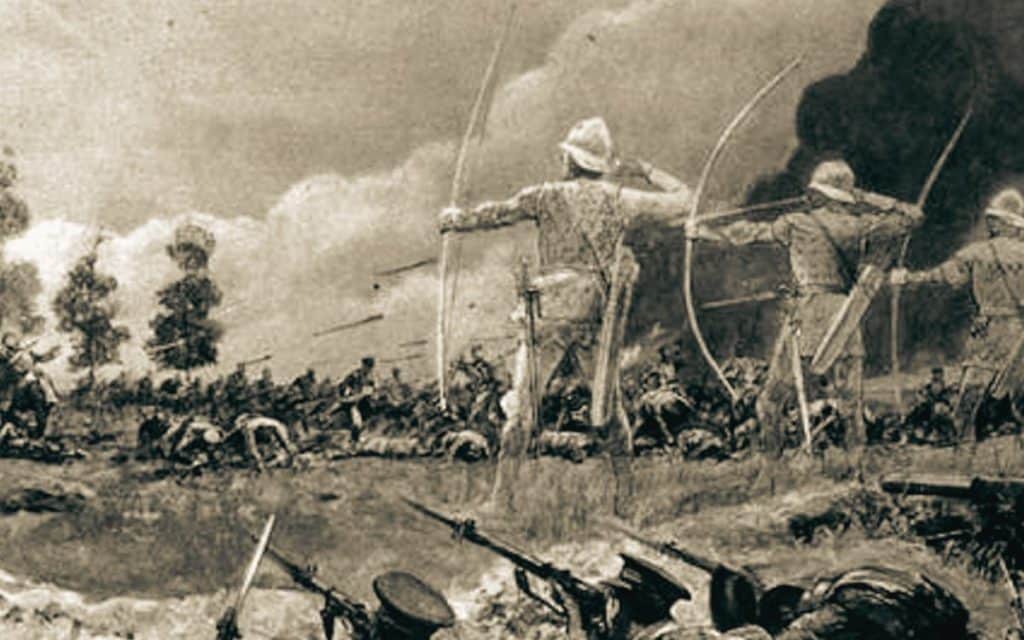
Within months, Machen’s newspaper story had become something much larger than fiction.
It had become folklore.
Are the Angels still at Mons?
There is no convincing evidence supernatural warriors appeared at Mons on 23 August 1914.
But simply dismissing the Angels misses something far stranger about their remarkable story.
Nobody deliberately created the complete legend Britain eventually came to believe.
Machen supplied the bowmen, while newspapers, churches, rumours and frightened families supplied everything else.
The story acquired witnesses, shining figures, mysterious deaths and supposed miracles as it travelled.
Eventually, believers were effectively telling Machen that he misunderstood his own creation.
Britain had taken possession of his ghosts.
Perhaps no shining angels stood above the frightened British soldiers retreating from Mons.
Perhaps no medieval archers fired ghostly arrows through the smoke towards advancing German troops.
Yet something extraordinary certainly emerged from those terrible weeks during the autumn of 1914.
A frightened country transformed military retreat into a powerful story about supernatural protection.
For people facing years of terrible uncertainty, those imagined guardians offered something precious.
They suggested that even during the darkest moments, perhaps somebody was still watching over them.
We cannot find the Angels of Mons on the battlefield.
More than a century later, however, we can still watch them being born.