

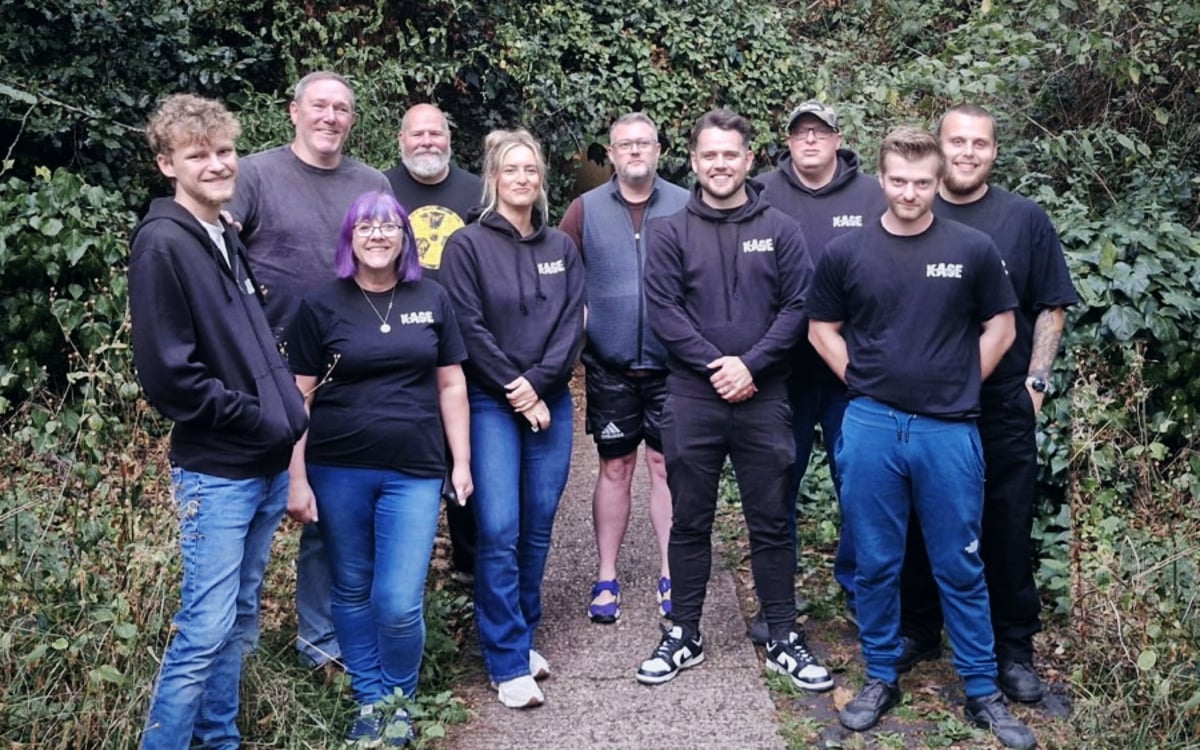
At Slough Fort, KASE Paranormal says it recorded what appears to be a pair of legs passing outside a window. At the Black Horse in Pluckley, the team filmed a small, dark shape that Laura Lumb says it still cannot explain.
Those experiences sit alongside a wider interest in how ghost stories begin, spread and change. Kent and South East Paranormal has launched a free haunted directory that separates the team’s own investigations from documented reports and folklore.
Laura, KASE’s lead medium and deputy team lead, discusses the places that have left their mark, the limits of paranormal evidence and why a haunted reputation is never permission to disturb the people who live there.
DAVID SAUNDERSON: Why do you think Kent has so many ghost stories and haunted places?
LAURA LUMB: Kent has so much history packed into it. You have castles, Roman sites, old coaching inns, churches and military forts, alongside a coastline that has brought people into and out of the country for centuries.
Those places have seen ordinary lives as well as conflict, loss and change.
Stories get passed down alongside that history. For us, the interest is in both: what people have experienced and how a particular story became attached to a place.
How do you decide which locations and stories are worth researching?
Any location can be worth researching. For us, that’s the point of investigation: going somewhere, learning about it and trying to understand what might be happening.
A story might turn out to be folklore or an urban legend, or there might be something more behind it. We can’t decide that from a place’s reputation alone.
Researching its history and, where we have permission, investigating it ourselves gives us a chance to explore those possibilities. We might still leave with questions, but somewhere doesn’t have to be famous or have dramatic reports to deserve our interest.
Your directory separates KASE investigations, documented reports and folklore. Why was it important to make that distinction?
Readers should know whether we’ve investigated somewhere ourselves, found a recorded account or are sharing a local tradition. Those are different starting points.
Folklore still deserves a place, but a story being repeated for years doesn’t make it verified. Equally, our having investigated somewhere doesn’t mean we’ve proved a haunting.
How difficult is it to find the original source of an old ghost story?
It can be surprisingly difficult. Several websites repeating the same account can look like corroboration when they’re all drawing from one retelling.
We try to trace names, dates and earlier publications. Sometimes the trail stops, and we need to say that rather than fill the gaps ourselves.
Although it’s outside Kent, Kelvedon Hatch is a good example of how far we’ll take that research. We contacted a company involved in its construction to try to verify a longstanding story about a man who reportedly drowned in concrete while it was being built.
Rather than simply repeat the account, we wanted to find out whether there was any factual basis for it.
Of the places KASE has investigated, which has made the biggest impression on you and why?
Slough Fort has probably made the biggest impression on us as a team. The energy there can feel very intense, particularly in the lower magazine, and it’s somewhere we’ve returned to because there’s still so much we want to understand.
What stands out is the variety of experiences. Some moments feel heavy and unsettling, while others feel almost playful.
We also have footage that appears to show a pair of legs passing outside a window, which people can watch on our YouTube channel.
It’s a place that leaves you with questions long after you’ve packed up and gone home.
Have you ever experienced anything during an investigation that you still cannot explain?
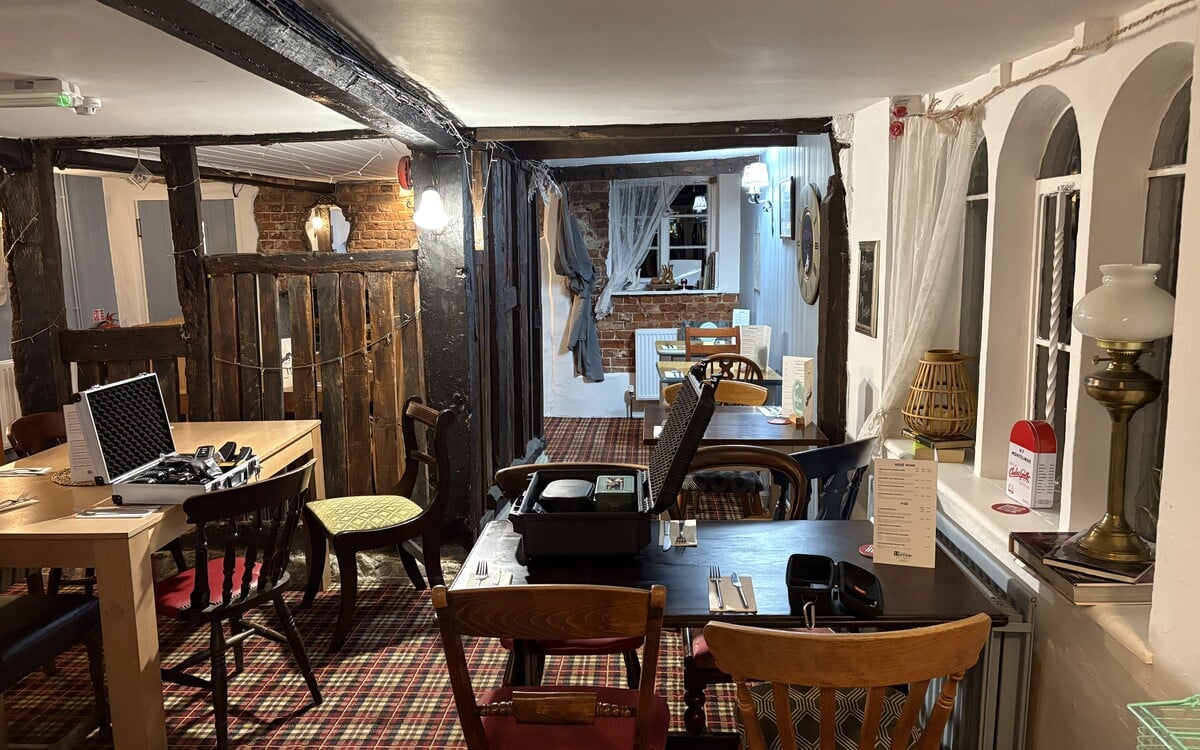
The Black Horse in Pluckley is a good example. You could feel the energy as soon as we arrived.
Whether that came from the history of the building, knowing its paranormal reputation or an actual presence, I couldn’t honestly say.
We captured footage that appears to show a small, dark shadow figure peeking out from behind a supporting pillar towards one of our investigators. It happens twice, and each time it seems to retreat as he looks as though he might turn around.
Everyone on the team was accounted for, and none of them matched the apparent size or appearance of what we captured. That makes it particularly interesting to us.
We haven’t established what it was, but it’s a piece of footage we still haven’t been able to explain.
Of Fort Amherst, Slough Fort, Fort Horsted, Fort Burgoyne and Pluckley, is there one you would particularly recommend people learn more about?
We’d encourage people to learn more about any location that interests them. All of these places have fascinating histories, quite apart from their paranormal reputations.
Understanding what a place was used for and the lives of the people connected to it adds so much to a visit.
Slough Fort has given us particular reasons to keep researching. Beyond the footage I mentioned, some of our experiences in the lower magazine have felt playful and teasing, almost like a game of cat and mouse.
That helped lead us to explore an elemental hypothesis. It’s a working idea, and our case studies explain what prompted it alongside the ordinary explanations we’ve considered.
But that’s our own connection to one location. Every place deserves curiosity and care, and we think people should take the time to understand the places they go into.
How much of Pluckley’s reputation comes from genuine reports and how much from folklore and publicity?
I don’t think you can honestly put a percentage on it. There are local accounts, generations of storytelling and a great deal of publicity, and they’ve become intertwined.
Research into the stories shows that some changed considerably as they were retold.
Our own experiences also need separating. Our general visits around the village were quiet, but our investigation inside the Black Horse was different.
We felt a presence there and captured a piece of video we find interesting.
Neither experience settles the reputation of the whole village. You have to look at each account and location individually.
Related reading: Pluckley Ghost Storytellers: The Men Who Gave Kent Its Hauntings
Have you ever researched a famous haunting and found that there was probably a more ordinary explanation?
I wouldn’t claim we’ve explained away an entire famous haunting. What we regularly do is find ordinary explanations for individual things that initially looked or sounded unusual.
That’s part of reviewing footage across all our investigations. Insects, reflections or people moving around a site can create something that seems strange at first.
It’s easy to get excited about something in the moment, but reviewing it afterwards can give you a different perspective.
Explaining one incident doesn’t settle every other report from that location. Each needs to be considered on its own, and sometimes the honest answer is that we still don’t know.
Are there any lesser-known Kent ghost stories or haunted places that deserve more attention?
Fort Burgoyne is one I’d encourage people to learn about. It has a fascinating history, and our investigation there gave us plenty to examine, including whistles reported by separate teams and unusual light and equipment responses.
The interesting part was comparing the accounts and testing possible explanations afterwards. There’s much more to discuss than a single dramatic moment.
It’s also a managed site, so anyone interested in visiting should follow the official access arrangements.
What are the biggest misconceptions people have about paranormal investigation?
That something dramatic happens every time, or that a piece of equipment can immediately tell you a ghost is present. There’s a lot of waiting, listening, checking and reviewing footage afterwards.
Another misconception is that having spiritual beliefs means you won’t question an experience. Being a medium doesn’t mean I think every noise or shadow is paranormal.
I can describe what I felt while still asking what else might explain it.
Personal experiences matter, but we should be clear about what was felt, what was recorded and what we think it might mean.
What advice would you give someone exploring Kent’s haunted history responsibly?
Start with the history and the current visitor information. A place appearing in a haunted directory isn’t permission to enter it.
Respect residents, private land and restricted areas, and leave everything as you found it.
We’ve seen first-hand what residents in Pluckley have to deal with: people descending on the village, being loud, entering private property without permission and shining torches into people’s windows. That’s not okay.
A village’s haunted reputation doesn’t stop it being somebody’s home.
Every location should be treated with respect for its history, any spirits you believe may be there and the living people who call it home. You can explore its stories and enjoy your visit without disturbing others or expecting a paranormal experience.
After researching 50 locations for the directory, did anything surprise you about Kent’s paranormal history?
What surprised me most was just how many locations have some kind of paranormal story attached to them. Once you start looking beyond the well-known places, you realise how widespread these accounts are.
I also noticed how stories overlap between locations. Similar figures, experiences and themes turn up in different places, and that raises questions for me.
Are stories travelling and changing as people retell them? Do we share expectations that influence how we interpret something unfamiliar?
Could some of those similarities tell us more about human psychology than paranormal activity?
I don’t think we should shy away from those questions. I’m interested in the paranormal, but I also want to understand why people experience and describe things in the ways they do.
More than anything, the research reinforced how deeply interested people are in the unexplained. Whether someone believes, doubts or simply enjoys a ghost story, there’s something about a mystery that keeps us coming back.
Find out more about KASE Paranormal
Visit the KASE Paranormal website and its Haunted Directory for the team’s research into reported hauntings and folklore.
Investigators Rick and Graham, known as Crabby, also host The KASE Files podcast, discussing cases, local history and investigation methods. Follow KASE on YouTube or Facebook.
