


For more than 2,000 years Dover has been England’s front door. Roman soldiers landed here, medieval pilgrims passed through, kings strengthened its defences and generations of sailors crossed the Channel beneath its cliffs.
That history has left its mark. Dover’s castles, tunnels, churches and military forts have all attracted tales of ghosts. Some are centuries old, others come from modern visitors and staff. Whether you believe them or not, they add another layer to one of England’s most historic towns.
1. Dover Castle
Address: Castle Hill, Dover, Kent CT16 1HU
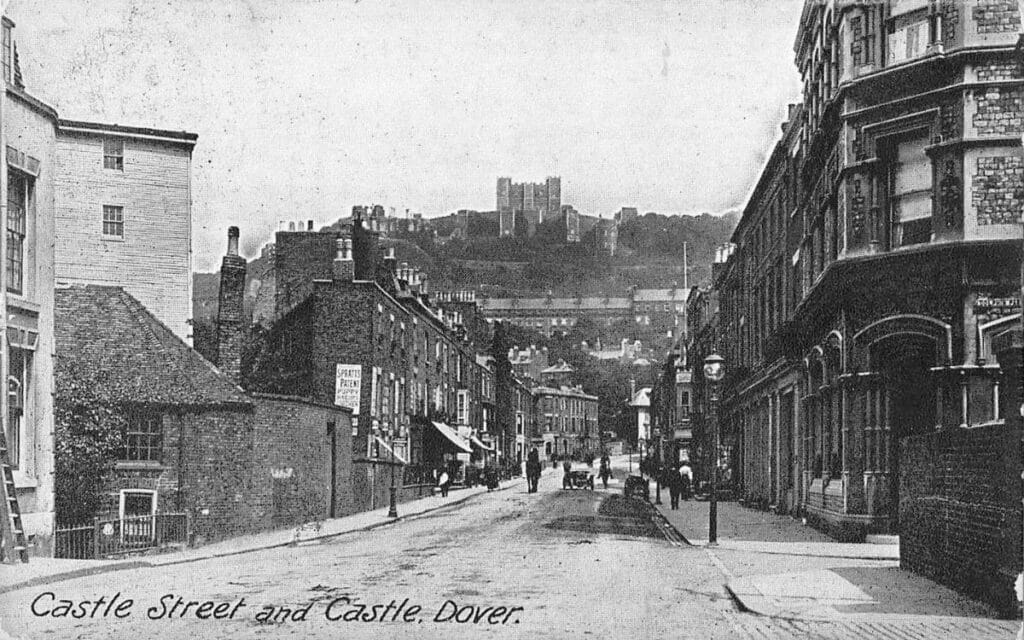
Dover Castle has watched over the Channel since the 12th century, although the hill itself was fortified long before Henry II built the great stone fortress that still dominates the skyline. It has survived sieges, civil war and two world wars, earning the nickname “The Key to England”.
It is also said to be one of Kent’s most haunted buildings.
The castle’s best-known ghost is a young drummer boy who was sent into the tunnels beneath the castle and never returned. According to the story, search parties found no trace of him, but the sound of his drum has been heard underground ever since. Visitors have also reported a headless soldier, a woman in red wandering the Great Tower and shadowy figures in the wartime tunnels. Staff have spoken of footsteps, voices and doors moving when nobody else is around.
With nearly a thousand years of history packed inside its walls, Dover Castle has accumulated enough stories to keep ghost hunters occupied for years.
2. Western Heights
Address: Drop Redoubt Road, Dover, Kent CT17 9DW
The Western Heights were built during the Napoleonic Wars to defend Dover from a possible French invasion. Massive earthworks, forts and underground passages spread across the hill above the town, linked to the harbour by the remarkable Grand Shaft staircase.
Today the fortifications are quiet, but many visitors claim they are not empty.
People have described hearing boots marching through deserted tunnels, catching sight of soldiers disappearing around corners and feeling an unexplained presence in rooms that have stood empty for decades. Whether these experiences are tricks of the imagination or something stranger, the Western Heights have an atmosphere unlike anywhere else in Dover.
The combination of dark tunnels, abandoned barracks and military history makes this one of Kent’s most atmospheric places to explore.
3. Maison Dieu
Address: Biggin Street, Dover, Kent CT16 1DW
The Maison Dieu was founded in 1203 as a hospital for pilgrims travelling to Canterbury. Over the centuries it became a naval victualling yard, a courthouse and Dover’s town hall. Few buildings in Kent have served so many different purposes.
Its long history has also produced stories of unexplained activity.
People working in the building have reported footsteps echoing through empty corridors, doors opening without explanation and the feeling that somebody is standing just out of sight. Local tradition says monks from the medieval hospital still walk the halls they once called home.
Even if you never encounter anything supernatural, it is one of Dover’s finest medieval buildings and well worth seeking out.
4. Roman Painted House
Address: 25 New Street, Dover, Kent CT17 9AJ
Hidden beneath modern Dover is one of Britain’s best-preserved Roman buildings. The Roman Painted House dates from around AD 200 and still contains remarkably colourful wall paintings, giving visitors a rare glimpse of life in Roman Britain.
Ancient sites often attract ghost stories, and this one is no exception.
Some visitors have reported seeing fleeting figures dressed in Roman clothing, while others describe an odd stillness that seems to settle over the rooms. Whether these experiences are supernatural or simply the effect of standing inside a building almost two millennia old is impossible to say.
Either way, it is one of Dover’s most remarkable historic sites.
5. South Foreland Lighthouse
Address: The Front, St Margaret’s Bay, Dover, Kent CT15 6HP
Standing on the cliffs east of Dover, South Foreland Lighthouse has guided ships through the busy Strait of Dover since the Victorian era. It was also the world’s first lighthouse to demonstrate electric lighting successfully.
Like many isolated lighthouses, it has gathered its share of strange tales.
Visitors have reported mysterious figures near the keeper’s cottages, unexplained noises after dark and odd lights on the cliffs. Local folklore links some of the stories to sailors lost in Channel storms, whose spirits are said to linger where sea and land meet.
On a foggy evening, with France only twenty miles away across the water, it is easy to understand why this lonely stretch of coastline has inspired so many legends.
Dover has always been a place of arrivals and departures. Roman legions, medieval pilgrims, Tudor sailors, Napoleonic soldiers, wartime airmen and millions of ordinary travellers have all passed through its gates.
Perhaps that is why so many of its ghost stories involve people who seem unable to leave.
A drummer still searches the castle tunnels, soldiers continue their lonely patrols and watchers are said to stand looking out across the Channel, waiting for someone who never came home.