

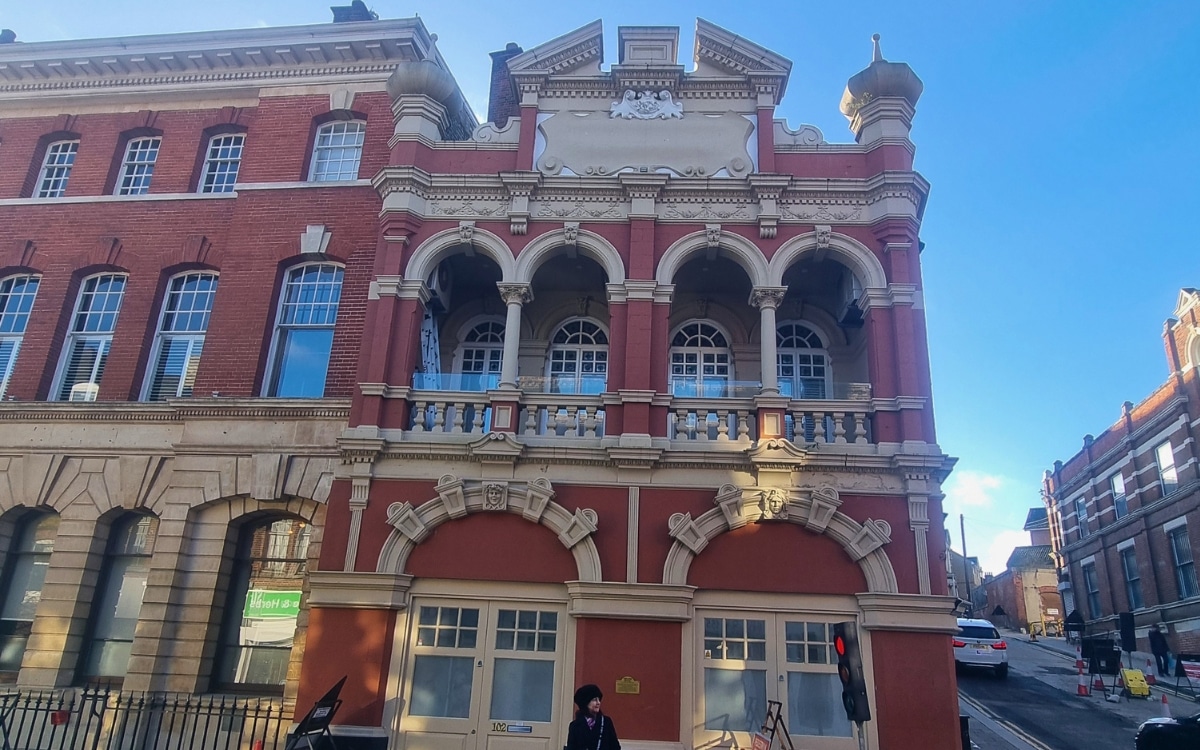

The grand auditorium of Chatham’s Theatre Royal has disappeared, but its ghosts may not have gone quite so quietly.
For more than half a century, the theatre entertained audiences on Chatham High Street.
Later, as the building declined and much of it fell into dereliction, stories circulated of ghostly figures appearing where thousands of people had once watched performances.
Among them was a particularly unusual spirit. Nicknamed “Humphrey”, this phantom theatre-goer apparently had strong opinions about the entertainment.
History of the Theatre Royal Chatham
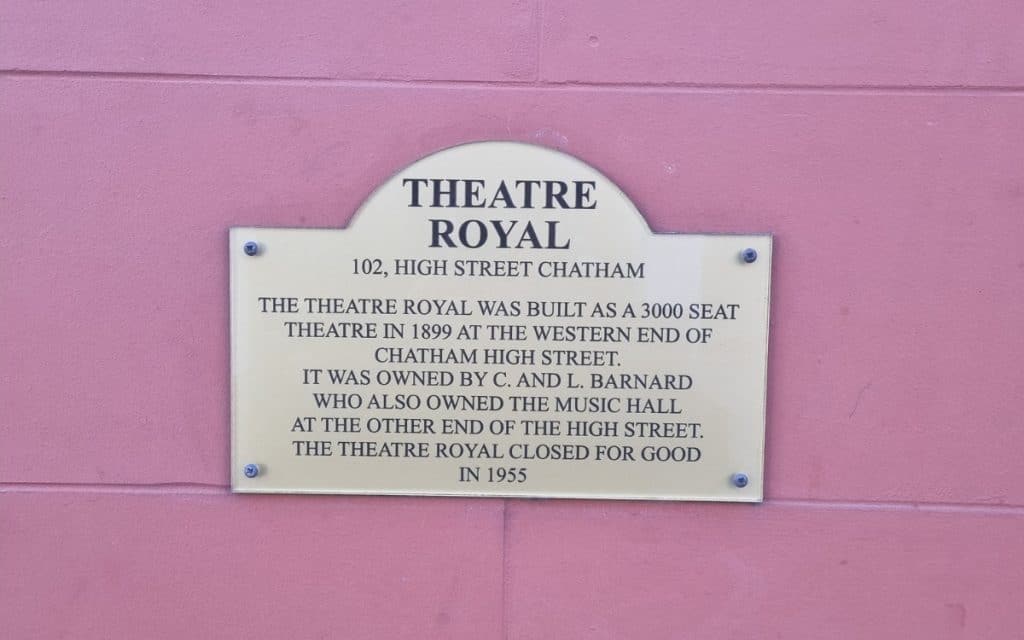
The Theatre Royal opened on 31 July 1899 as a theatre and variety house, with seating for 2,840 people.
Designed by Rochester architect G.E. Bond, the building was an impressive addition to Chatham High Street, with an ornate façade that survives today.
Its first incarnation did not last long. A fire destroyed the theatre soon after it opened and it was rebuilt in 1900.
In 1938, it was redecorated and renamed the Royal Hippodrome Theatre, but by 1940 the Theatre Royal name had returned.
Changing tastes eventually caught up with the venue. Audiences declined during the 1950s and the Theatre Royal closed on 3 January 1955. The building was subsequently divided into shops and warehouse space.
Ghosts of the Theatre Royal
The best-known ghost associated with the Theatre Royal is a mysterious man who has acquired the name “Humphrey”.
Stories recorded by paranormal sources claim the male apparition was seen sitting among audiences during performances in the 20th century.
Rather wonderfully for a theatrical ghost, Humphrey was apparently also a critic.
If he enjoyed a performance, he supposedly remained in his seat. If the production failed to impress him, witnesses claimed the phantom would stand up and walk out.
Later versions of the story describe Humphrey as wearing formal evening clothes and attribute some of the theatre’s reported poltergeist activity to him.
Seats were allegedly lowered just as unsuspecting people were about to sit down.
Humphrey was not supposedly alone.
Another apparition associated with the building is a woman wearing a long evening dress. Unlike Humphrey, she does not appear to have acquired either a name or a convincing explanation for her presence.
Stories simply describe a female figure dressed as though attending the theatre during an earlier period.
Other reports mention unexplained noises, footsteps and mild poltergeist activity.
There are claims online that the female ghost was an actress who died at the theatre, but there appears to be no historical evidence supporting the story. Her identity remains unknown.
Fire and the Theatre Royal’s Darker History
The Theatre Royal’s documented history is almost as dramatic as its ghost stories.
Fire struck the building soon after its 1899 opening, forcing its reconstruction. Another serious fire gutted the stage house during the 1960s, after the theatre had already closed.
The former auditorium was subsequently used for storage, with its floor levelled in concrete. As commercial use ended, neglect and vandalism took their toll.
By 1982, the Theatres Trust considered the building probably too badly deteriorated for restoration to be economically feasible.
Campaigners nevertheless fought to save it. The Theatre Royal Chatham Trust cleared rubbish, opened staircases and attempted to arrest the decay, but plans to return the building to theatrical use ultimately failed.
The derelict auditorium became unsafe and was demolished in 2009, although the Grade II-listed façade and parts of the front-of-house area survived.
Do the ghosts remain?
The disappearance of the auditorium raises an intriguing question about the Theatre Royal’s ghosts.
If Humphrey really occupied a favourite seat, that seat – along with the auditorium surrounding it – has gone.
The woman in the evening dress may have fared rather better. Parts of the entrances and former foyer survived the demolition and were incorporated into the redevelopment of the site.
There is no good historical evidence explaining who either apparition might have been, and the ghost stories remain folklore rather than established fact.
But there is something wonderfully appropriate about the Theatre Royal’s most famous ghost being a man who simply wanted to watch the show – and wasn’t afraid to walk out when it wasn’t very good