

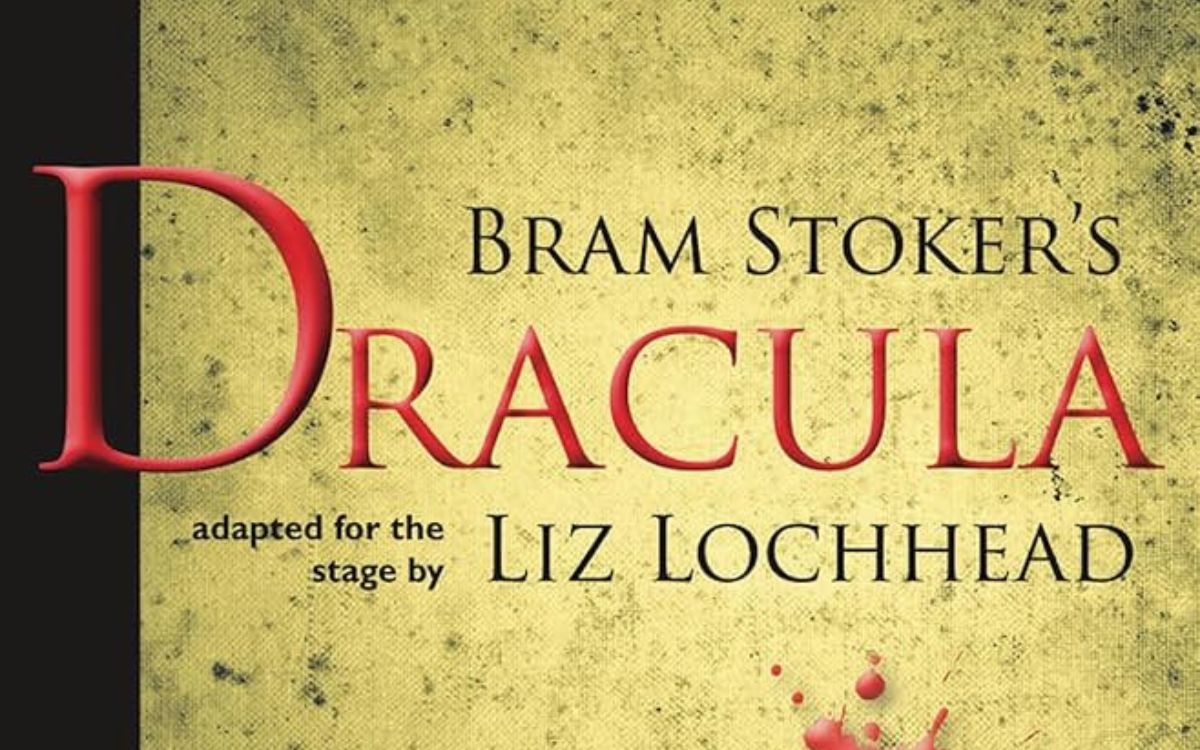
It was the mid-1980s when Ian Wooldridge, the Artistic Director for the Royal Lyceum Theatre in Edinburgh, called the playwright and poet Liz Lochhead. He needed a new stage adaptation of Dracula to show in the spring and wondered if she’d do it.
Lochhead was unsure. She had never read the novel. So, she asked for a week to tackle the book. In the end, she didn’t need it. She spent the night reading Stoker’s work, and by the morning was ringing Wooldridge up again – she’d take the job!
This series of events is narrated by Lochhead herself in the introduction to this reprint of her script. It’s a fascinating read, as she candidly reflects on how she wrote her adaptation all those years ago.
The script itself is as passionate as Lochhead’s description of writing it. Lochhead enthusiastically expands on ideas from the book whilst also adding brand-new material and characters. Mina’s household, for example, now includes a maid called Florrie, while Dr Seward’s asylum has two new nurses called Nisbett and Grice.
These three characters stand out because of their class. The original novel mainly centred on the upper and middle classes, with working-class people appearing in more secondary roles. Here, Lochhead gives the audience a window into the lives and opinions of characters normally confined to the margins: regular workers.
The main theme of Lochhead’s play, however, is not class but sex. As she explains in her introduction, ‘I always knew – who couldn’t? – that Dracula was a narrative of suppressed sexuality and sexual guilt’ (Lochhead, 2009).
All this suppressed sexuality is brought to the surface in Lochhead’s script. Both Jonathan and Lucy ask their fiancés to come to bed with them before their weddings. Then, when the Harkers are finally married, the couple take a detour to Switzerland and have a honeymoon, despite Jonathan having just recovered from vampire-related trauma.
Jonathan and Mina’s relationship is soon tested, though, as both are horrified by the other’s apparent willingness to embrace their vampire attackers. They do reconcile, of course, after Dracula has been killed, though both seem to admit that they had desired their vampiric seducers.
The play then ends in a strangely dreamy scene between them. Left alone together whilst Van Helsing deals with the Brides, the newlyweds begin to kiss on top of Dracula’s discarded cape, whilst the snow falling around them turns into pink, and then red, rose petals.
The inspiration behind this unusual fairy-tale finish to Dracula can probably be traced to Angela Carter. Lochhead mentions that a lot of the play’s atmosphere came from what she was reading at the time, including Carter’s The Bloody Chamber.
Included in the collection is a vampiric version of Sleeping Beauty which uses roses as a key motif. Lochhead’s ending seems to echo this story, and Carter’s style in general, as she mixes an eerily magical moment with sex and death.
Altogether, it works well, as Lochhead leans into the tradition of exploring sexual desires through vampires and offers a fresh take on the characters – although the changes are a little jarring at first. Jonathan Harker, so often portrayed as serious and repressed, becomes more forward and flirty. Meanwhile, Seward makes a rather misogynistic comment about his female staff, and Mina is turned into a sugar millionairess!
Nevertheless, this is an adaptation, and these are Lochhead’s versions of the characters. Moreover, her alterations do not feel superficial, as she explores a myriad of themes, including class, women’s lives and mental health, in her retelling.
In fact, there is so much to discuss – her poetic Renfield, her use of Stoker quotes in the stage directions, the character of Florrie – that it would be impossible to cover everything in this brief review. So, in summary, Liz Lochhead’s play is a bold and intriguing adaptation that still offers a new perspective on Stoker’s novel decades later. Do purchase a copy when you’re next in Whitby!