

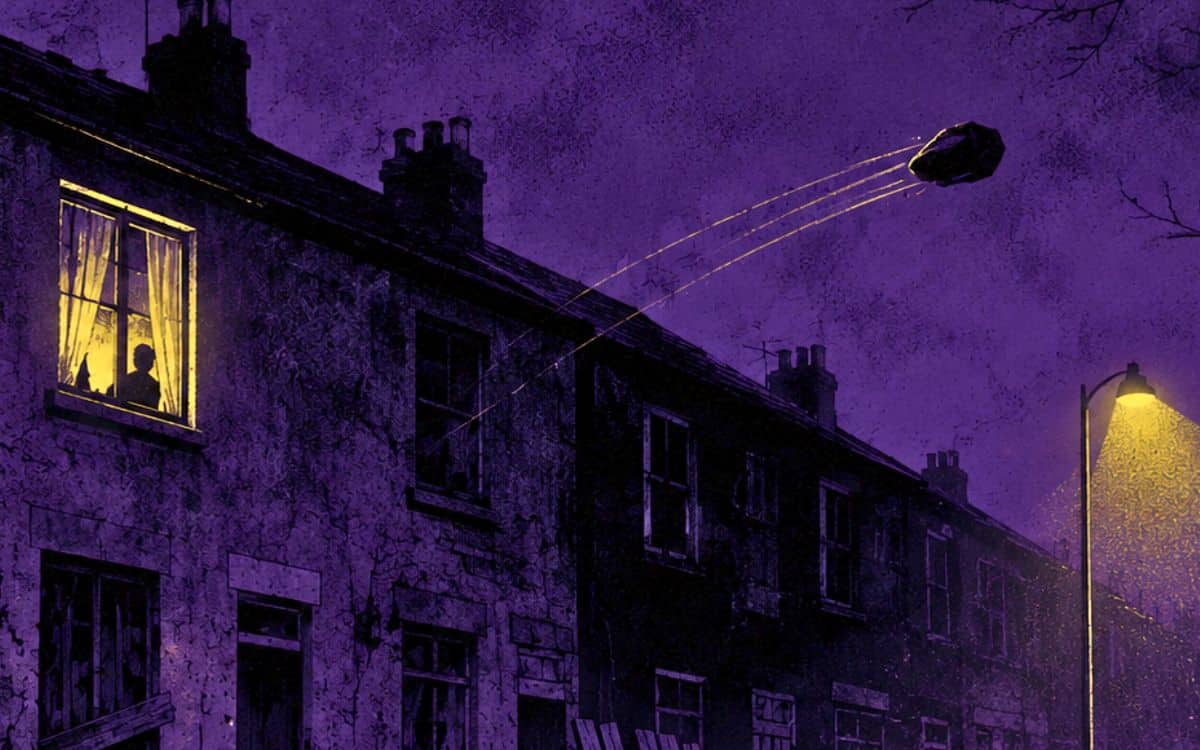
For years, terrified families in an ordinary Birmingham street endured mysterious nightly stone attacks that police could never solve – but was Thornton Road truly haunted, or was there a determined vandal hiding in the darkness?
Most famous British hauntings are tied to castles, ruined abbeys or lonely old pubs. The Thornton Road case felt different because it unfolded in a completely ordinary suburban street in Ward End, Birmingham.
Beginning in the late 1970s and reaching its peak around 1981, several homes came under repeated attack from stones hurled in the night. Windows shattered without warning. Roof tiles cracked. Families barricaded themselves indoors while police mounted large-scale surveillance operations to catch whoever was responsible.
So why did anyone even consider the paranormal?
The answer lies in the sheer frustration surrounding the investigation. Despite thousands of police man-hours, overnight stakeouts, infra-red cameras and tracker dogs, nobody was ever caught. Residents said the stones seemed to come from nowhere. In that atmosphere of fear and confusion, rumours of a poltergeist naturally spread through the neighbourhood.
Today, the strongest explanation remains a human one involving a powerful catapult or slingshot. Even many residents dismissed ghost theories at the time. But because the case remained unsolved, Thornton Road still occupies a strange place in Britain’s paranormal folklore.
The start of Birmingham’s strangest mystery
Reports suggest the disturbances may have begun around 1978 before escalating dramatically in 1981.
Four or five houses on Thornton Road became repeated targets for mysterious stone attacks, usually after dark. Residents described hearing sudden violent impacts against walls, roofs and windows.
The damage quickly mounted. Windows were smashed night after night. Gutters were damaged. Roof tiles cracked under the force of the missiles.
What made the situation stranger was how selective it appeared. Nearby streets remained unaffected while only a small cluster of homes suffered repeated bombardment.
Families began protecting their homes with wire mesh screens and wooden shutters. One resident reportedly even sat outside wearing a tin helmet in the hope of spotting whoever was responsible.
The nightly attacks that sparked ghost rumours
Although the attacks almost certainly involved physical objects being thrown, the mystery surrounding them gave the case an eerie reputation.
Witnesses claimed stones arrived from impossible angles or appeared without warning. Some residents said they could never identify where the missiles had come from before impact.
The stones themselves added another strange detail. Police reportedly found many of them unusually clean, almost scrubbed free of dirt, and no fingerprints were recovered from them.
As fear spread, local rumours about a possible poltergeist began appearing in conversations and newspaper reports.
Unlike traditional ghost stories involving apparitions or shadowy figures, Thornton Road became associated with violent physical disturbance rather than visible spirits.
The fact the attacks seemed unstoppable only deepened the unease.
Why police could never catch the stone thrower
West Midlands Police launched a major investigation led by Chief Inspector Len Turley.
At first, officers believed the culprit would quickly be identified. Instead, the case became one of the strangest investigations in the force’s history.
Police spent more than 3,000 man-hours trying to solve the mystery. Officers carried out overnight stakeouts in freezing gardens while infra-red cameras, image intensifiers, tracker dogs and night-sight equipment were deployed.
Ballistics experts from Aston University were even consulted.
The leading theory became the “catapult explanation”. Police believed the stones may have been fired from a considerable distance using a powerful homemade slingshot or catapult.
That explanation made practical sense. The damage was genuine. The stones were similar in size. The attacks happened mostly at night.
Yet despite all the surveillance, nobody was ever caught.
Stones, surveillance and unanswered questions
The strongest evidence in the case was physical rather than supernatural.
Homes suffered real damage. Police officers personally witnessed stones striking houses during stakeouts. Families endured genuine fear and mounting repair bills.
At the same time, there was never any confirmed supernatural evidence. No apparitions were documented. No objects floated through rooms in front of investigators. No scientific proof of paranormal activity ever emerged.
The mystery rested on one uncomfortable question: how could somebody continue these attacks for years without ever being seen?
Sceptics pointed to the fact the attacks often stopped on Saturdays as evidence of a human culprit rather than a ghost.
At the same time, supporters of the paranormal theory argued that the scale of the investigation and the failure to identify a culprit kept the mystery alive.
Fear, rumours and media frenzy
By the early 1980s, Thornton Road had become locally notorious.
Newspapers covered the strange story heavily, often mentioning rumours of poltergeist activity. Science fiction writer Arthur C. Clarke later referenced the case while discussing unexplained phenomena.
Still, many residents rejected paranormal explanations entirely. Some openly described the ghost theory as ridiculous.
Most simply wanted the attacks to stop so normal life could return.
When the attacks suddenly stopped
As mysteriously as the disturbances began, they eventually faded away.
By the mid-1980s, the attacks had stopped completely. No dramatic confession emerged. No arrests were made. The bombardments simply ended.
New residents later moved into Thornton Road without experiencing similar incidents.
The culprit, if there was one, was never officially identified.
Why the Thornton Road mystery refuses to die
Today, the Thornton Road case remains one of Britain’s strangest unsolved mysteries associated with alleged poltergeist activity.
Many later accounts, residents and investigators leaned towards the idea that the disturbances were caused by an unusually determined vandal operating under cover of darkness with a catapult.
Yet the case continues to fascinate because the investigation was so extensive and still failed to produce clear answers.
Perhaps that is why the story endures.
Not because Thornton Road proved the existence of ghosts, but because a major police investigation never fully explained how the attacks were carried out for so long without anyone being caught.