

Some of the most intriguing EVP cases don’t begin with a famous ghost story or a well-known historical figure. Sometimes they begin with a single word, a name that means absolutely nothing until the research starts.
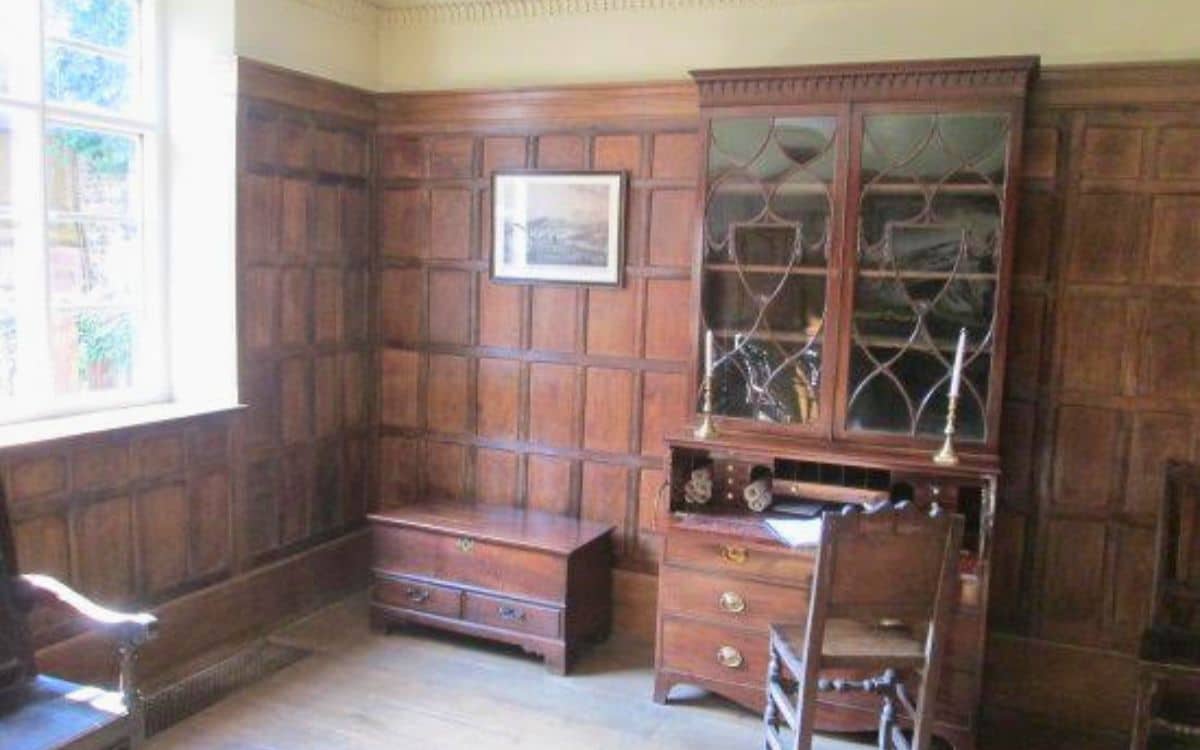
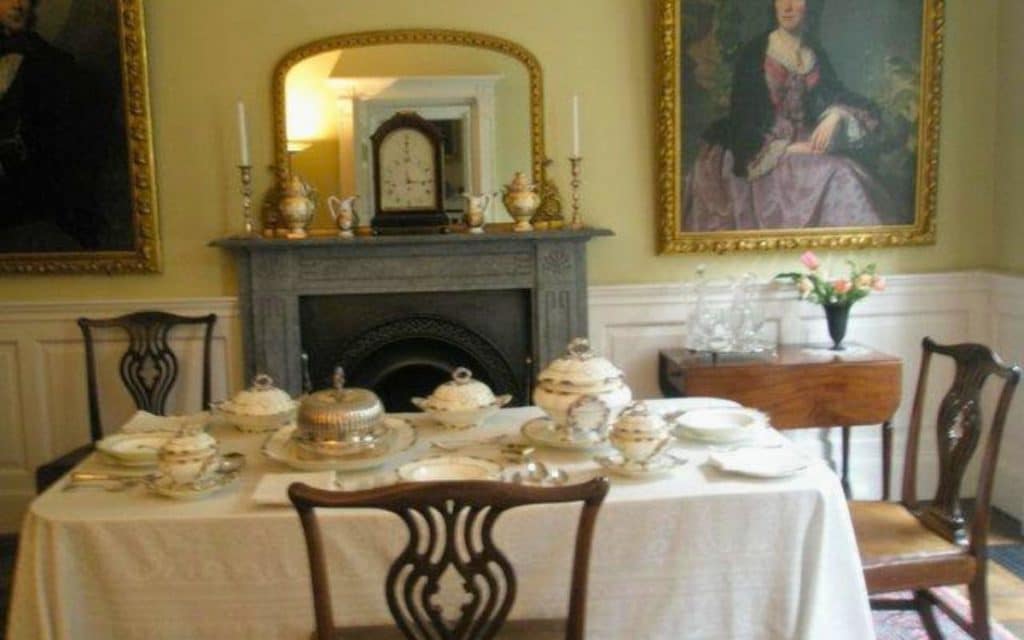
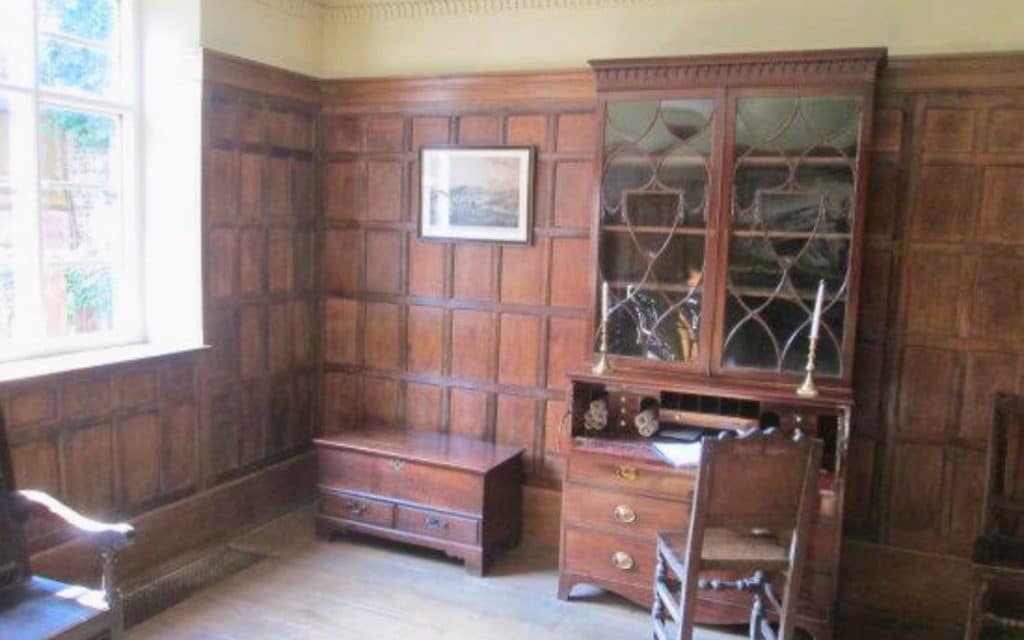
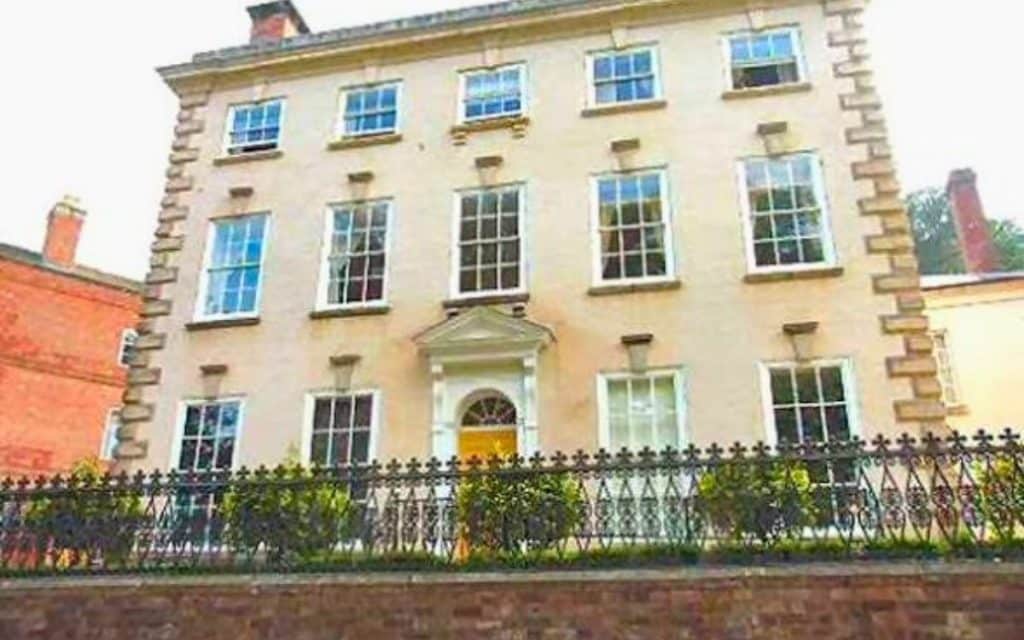
For me, one such case began inside Dale House, part of the historic Darby Houses at Coalbrookdale in Shropshire.
During the recording, two unusual voices were captured. The first appeared to say: “Go round the room.”
Shortly afterwards came a completely different voice, softer, higher and distinctly childlike.
It appeared to whisper just one name: “Enid.”
At the time, I had no Enid connected with the building in mind. I wasn’t attempting to contact somebody by that name, and I hadn’t researched an Enid before making the recording.
As with my other investigations, the recording came first.
The history came afterwards.
And that is where this particular case became fascinating.
Finding a nine-year-old Enid
Research eventually led to Enid May Dickinson.
The 1901 census records Enid living with her parents, Alfred Ernest Dickinson and Cicely Frances Dickinson, at Brookside House in Avening, Gloucestershire.
Enid was just nine years old.
That immediately added an intriguing detail to the recording. The voice saying “Enid” had sounded to me like that of a young girl, and here was an Enid appearing in the historical record at precisely that stage of childhood.
This doesn’t prove that the voice belonged to Enid May Dickinson. A perceived age from a recording cannot establish identity.
But it gave me a reason to investigate further.
And Enid’s father provided the next clue.
Back to Coalbrookdale
Alfred Ernest Dickinson was born in the Madeley/Coalbrookdale area in 1863.
A contemporary newspaper announcement concerning Alfred’s marriage described him as the son of the late Henry Dickinson of Coalbrookdale.
Other records helped strengthen that family trail.
Alfred’s mother’s maiden name appears as Hadwen/Hadwin, while Henry Dickinson had married Susannah Hadwen in 1858.
The 1871 census records Henry, aged 59, at Eastfield House in Madeley with his wife Susannah, born in Liverpool. Henry is described as a retired ironmaster.
Twenty years earlier, the 1851 census had recorded him at Severn House with his first wife Deborah, describing him as a proprietor of land and mines.
Following Henry backwards led into one of the most important families in Coalbrookdale’s industrial history.
Henry was part of the Dickinson family descended from Barnard Dickinson and Ann Darby.
Ann was a daughter of Abraham Darby III and Rebecca Smith Darby.
The marriage of Ann Darby and Barnard Dickinson in 1805 therefore united the Dickinson family directly with the celebrated Darby family of Coalbrookdale.
Barnard became closely involved with the Coalbrookdale Company, and historical material associates him with Dale House.
That detail stopped me in my tracks.
Because Dale House wasn’t merely somewhere within the surrounding historical landscape.
Dale House was the building in which the EVP had been recorded.
The research trail had effectively travelled:
“Enid” → Enid May Dickinson → Alfred Ernest Dickinson → Henry Dickinson → Barnard Dickinson and Ann Darby → Dale House.
It had returned to where the recording began.
But who was Enid?
I could have stopped there.
For me, however, historical EVP research shouldn’t simply be about finding a name that appears to correlate with a recording. These were real people with relationships, experiences and lives that extended far beyond a census entry.
So I continued following Enid.
She remained with her parents into adulthood and was their only child. She later trained as a nurse at St Thomas’ Hospital in London.
Eventually she married Captain John Cecil Maples, becoming Enid May Maples, née Dickinson.
Then, shortly after midnight on 24 July 1924, Enid became a mother.
She gave birth to twins at Rowley Hill, Kings Marsh, Cheshire:
Ernest Mark Cecil Maples, known as Mark, and Cicely Mary Maples, known as Mary.
Accounts of the family describe the babies as unexpectedly small. Yet both survived.
The family later settled at Grassgarth, Natland, where Mark and Mary grew up together.
Enid’s life had travelled a long way from the nine-year-old girl appearing in the 1901 census.
Then came tragedy.
The son she lost
During the Second World War, Mark joined the Royal Naval Volunteer Reserve and served with the Fleet Air Arm.
He was sent to the United States for advanced flying training.
On 23 May 1944, Mark was killed in a flying accident.
He was only 19 years old, just weeks short of his twentieth birthday.
He was buried at St Augustine National Cemetery in Florida, thousands of miles from his family in Britain.
For Enid, the little girl I’d first encountered as a name in a census had become a mother experiencing one of the greatest losses imaginable.
But remarkably, Mark’s story did not quite end there.
A connection that survived him
While attending Harrow, Mark had become a pen friend of a young Danish man named Bent Einer Juel-Jensen.
They exchanged letters, but apparently never had the opportunity to meet.
After Mark’s death, Enid invited Bent to visit the family at Grassgarth.
There he met Mark’s twin sister, Mary.
The two subsequently married.
There is something deeply poignant about that sequence of events.
Mark never met his pen friend in person.
Yet a relationship he had created ultimately brought Bent into the life of his own twin sister.
One connection ended.
Another began.
Could emotion matter?
Cases like this are why I have become increasingly interested in what I describe as an Emotional Historical Imprint Hypothesis.
Traditional paranormal interpretation often assumes a straightforward relationship:
A person lived or died somewhere, therefore a voice captured there must belong to that person.
I’m beginning to question whether EVP – whatever its ultimate explanation – necessarily works in such a direct way.
Perhaps a name doesn’t always identify the person speaking.
Perhaps occasionally it acts more like a piece of information pointing towards a relationship, family, event or memory.
Enid’s story contains powerful relationships across several generations.
She was the only daughter of Alfred Ernest Dickinson. She later became a mother of twins. She experienced the devastating death of her teenage son, while the friendship he had begun continued after his death and eventually became part of his twin sister’s future.
Could love, grief, attachment or significant moments somehow be relevant to whatever produces some anomalous recordings?
At present, I don’t know.
It remains a hypothesis.
The importance of not forcing the evidence
There is an important distinction in this case.
I cannot say that the voice captured at Dale House was Enid May Dickinson.
Finding a historical person whose name corresponds with an interpreted EVP does not establish the identity of the speaker.
But that’s precisely why I find this case valuable.
I entered Dale House without knowing Enid’s story.
I didn’t know about Alfred.
I didn’t know about Henry and Susannah.
I didn’t know where the Dickinson family would lead.
And I certainly didn’t know about the nine-year-old girl who would grow into a nurse, wife and mother before losing her nineteen-year-old son during wartime.
All of that came after the recording.
The EVP therefore wasn’t the conclusion.
It was the starting point.
One young, whispering voice appeared to say: “Enid.”
Behind that single name was an entire human story: childhood, family, marriage, twins, friendship, war, devastating loss and a connection that continued into another generation.
Perhaps that’s one of the greatest lessons historical EVP research has taught me.
Sometimes the most interesting question isn’t: “Whose voice did we capture?”
It’s: “Where does the information lead us?”
And sometimes, when we follow it carefully enough, it leads us somewhere completely unexpected.