

There are few creatures in Gothic literature quite like Frankenstein’s Creature. Frankenstein is not even his name: he has no name at all.
Yet having no name does not mean having no identity. Far from it.
This is only the first of many things that make Victor Frankenstein’s creation unique.
Many other monsters of Gothic literature are brought about by curses, murder, ancient transgressions or some dark supernatural force. Frankenstein’s Creature does not comfortably fit any of these categories.
Nor is he explicitly supernatural. No spell or demonic force is said to raise him.
Instead, he is created through the determination of a man obsessed with changing the world and conquering one of its greatest boundaries: death itself.
More than human
The Creature possesses qualities that can easily appear supernatural.
He has extraordinary strength and endurance. Shelley describes him moving with “superhuman speed”, bounding across dangerous ice that Victor himself crosses with caution.
He is exceptionally agile and physically powerful. His ability to survive terrible conditions also appears to go far beyond that of an ordinary human being.
All this makes him something more than the human material from which Victor constructs him.
Victor does not set out merely to revive a corpse. He wants to create life and, through doing so, achieve something no human being has accomplished before.
There is ambition here as well as discovery. Victor dreams of the glory that would follow success and of a new race looking upon him as its creator.
But what comes to life is something even Victor does not understand.
What does Frankenstein’s Creature look like?
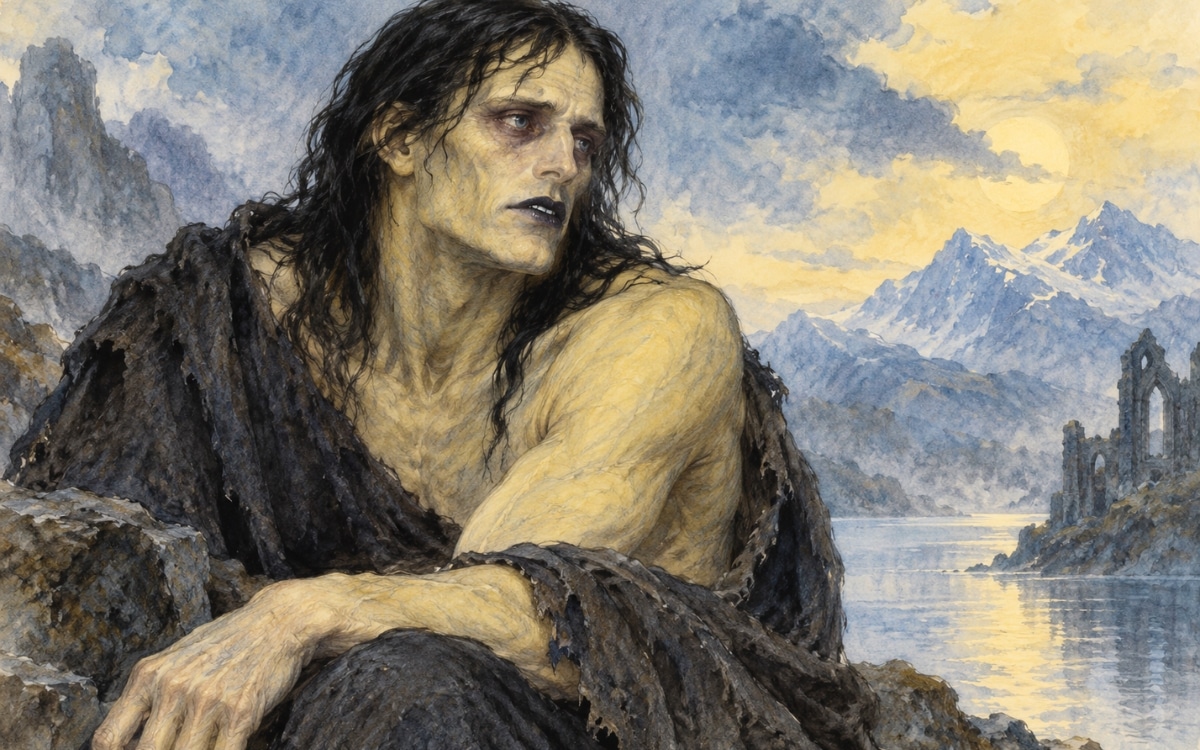
The Creature is gigantic, about 8 ft tall and proportionately large.
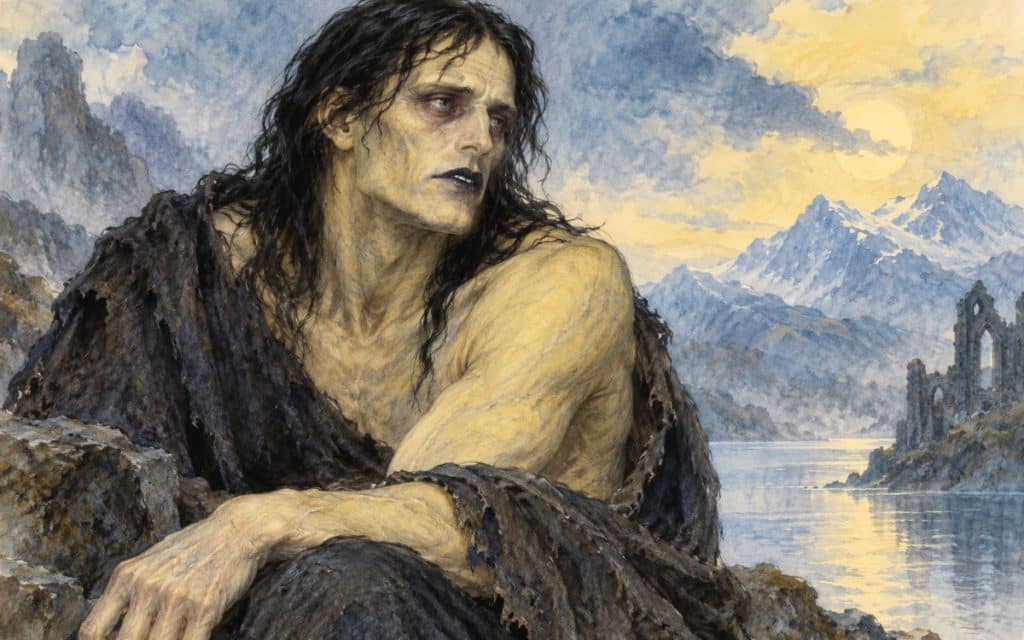
His skin is yellow and scarcely covers the muscles and arteries beneath it. His hair is lustrous and black, while his teeth are pearly white.
His eyes are watery, his complexion shrivelled and his lips straight and black.
The result is a terrible contradiction. Victor had deliberately selected features he considered beautiful, yet when those features are brought together and animated, he is horrified by what he has made.
This enormous and cadaverous being is certainly frightening to look upon. Yet appearance tells us very little about what he really is.
The Creature is highly intelligent, well-read, sensitive and deeply self-aware. He learns quickly, feels profoundly and desperately wants to understand both himself and the world around him.
For more on Shelley’s novel and its enduring power, read Why I Love Mary Shelley’s Frankenstein.
Is Frankenstein’s Creature undead?
This is where the mystery becomes particularly interesting.
The Creature is associated with dead matter. Victor gathers bones from charnel houses and obtains materials from dissecting rooms and slaughterhouses.
Dead things have somehow been made to live.
To me, this makes the Creature a new and unique form of undead being.
He is certainly alive. He breathes, thinks, learns, feels pain, experiences loneliness and possesses what seems to be a soul.
Yet death is part of him from the beginning.
He has emerged from the graveyard, the dissecting room and the charnel house. His existence depends upon Victor having broken through a boundary that human beings were never supposed to cross.
If we describe Victor’s work as a rudimentary form of necromancy, then the Creature becomes something neither completely alive nor completely dead.
He exists somewhere between the two.
A creature without a category
There is no simple definition for what Frankenstein’s Creature is. That is one of the reasons he remains such an extraordinary figure.
He does not comfortably belong among ghosts, vampires, revenants or other traditional creatures of the undead. He belongs to a category of his own.
Even the normal rules of death appear uncertain around him.
At the end of the novel, the Creature speaks of destroying himself upon a funeral pyre. He therefore appears capable of destruction, but that does not necessarily make him an ordinary mortal being.
He is an outsider in almost every possible sense. He does not truly belong among the living, yet neither does he belong peacefully among the dead.
Born from death
The Creature was born from death.
A mortal man reached into something unknown, discovered the secret by which lifeless matter might be animated and brought a being into existence.
What, then, came back when the Creature drew his first laboured breath?
Perhaps that is the question at the heart of Mary Shelley’s 1818 text of Frankenstein.
We may never know exactly what the Creature is. I think that is important.
Mary Shelley understood the power of mystery. To define her Creature too neatly would take something valuable away from the story.
Imagination, curiosity and intuition allow that mystery to remain alive.
For me, the Creature is undead. Beyond that, the answers remain where Victor first sought them: in the charnel house and the grave, among the remains of slaughterhouses and dissecting rooms, and in the dreadful stillness of cemeteries just after midnight.
Seek the answer there and perhaps you will find what you are looking for. But take care that something much worse does not find you first.