

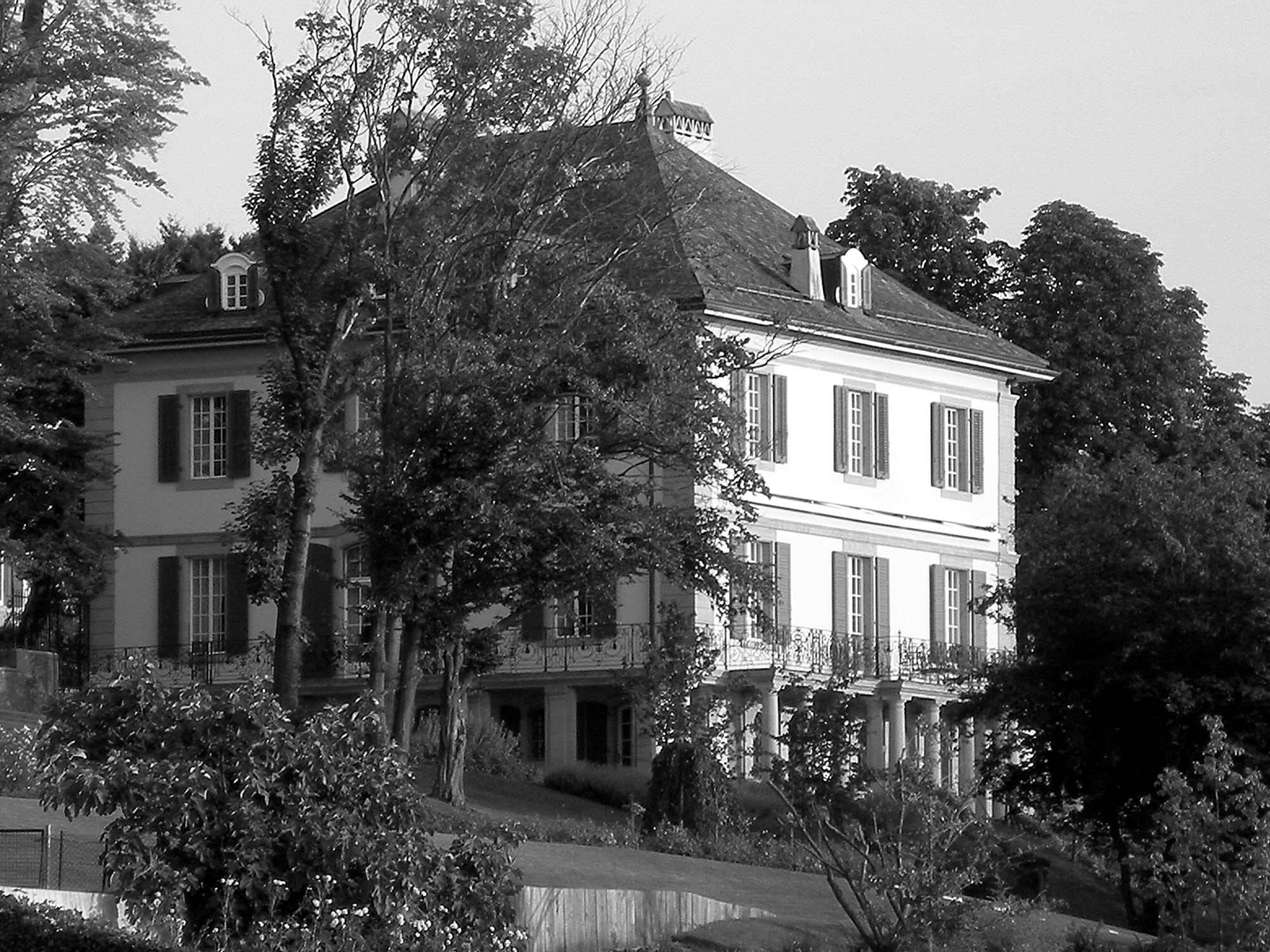
Many people light candles to keep ghosts away, but how many light candles to create them? At the Villa Diodati, Mary Wollstonecraft Godwin, who was not yet Mary Shelley, Percy Shelley, Claire Clairmont, Lord Byron and John Polidori had gathered, seeking shelter from a storm that would turn out to be the greatest boon to all of their lives, especially Mary’s.
They all retreated into the dark, lit candles and would set out to conjure ghosts that would invoke the greatest horrors of their lives. Strange and terrible things that would haunt the villa, consume the corridors with nightmares, leaving every soul with a lasting and permanent chill as sure as the grave.
Fantasmagoriana and the gathering of ghosts
First, they needed to feed their souls. A collection of German ghost stories, translated into French, was chosen, called Fantasmagoriana. Like the chanting of an old ritual, they read each story aloud to one another, carefully bringing each frightening moment out of the book. Every shriek exhuming a monstrous spectre from the grave. Waking what lay silent and putrid until they brought the living dead to life, to surround them all.
Outside, summer had turned dour. A cold and gloomy spirit invaded the heart of the season. Teaching what was once hot to taste dread and embrace a chill that favoured the grave. While inside the Villa Diodati, an ominous presence grew stronger, turning the house into a tomb.
The candlelight flickered, stirring each ghost as it freed itself from the turning page. Every story invited them in from the dark. They brought the icy chill of the grave with them. A dread promise that death was there with them and would be for the rest of their lives.
This was more than just a subtle reminder of mortality. There was a certainty in it. Every apparition brought with it the knowledge that there was something beyond the grave. A liminal space between what was natural to the living and what lay in wait for us after we died. There was another place that horror, terror and fiendish dread had created.
It was here that one could tread, if they dared, where no living thing was meant to trespass. One could seize for themselves the means and understanding to pervert life and reshape the soul of the grave as they saw fit.
Mary Shelley and the birth of Frankenstein
Before the macabre show that was Fantasmagoriana, these authors, poets and literary explorers examined the possibilities of galvanism. If an electrical current, placed into dead tissue, could give the corpse of an animal the appearance of life, would it then be possible to bring the dead back to life?
This notion held particular interest for Mary Wollstonecraft Godwin. The idea nestled itself inside her imagination and provided much-needed nourishment. The foundation for the story that would become Frankenstein was awakened, and the force it had to frighten was on its way.
Of all the stories in Fantasmagoriana, one in particular stood out to Mary. The story was called The Death-Bride.
In the story, a less-than-faithful man wanted to marry the woman whom he had jilted. On their wedding day, he reached out to his love, but all he grasped was the undead, pale hand of his love. The ghost of her corpse was all that stood beside him that day. Their wedding had become a funeral. His bride had returned from the grave to exact revenge upon the one who had broken her heart.

Mary was truly inspired. Her soul was ready to write Frankenstein, though she was not yet aware of the fact. Something more was needed. A nightmare would have to take place. The vision that would take all the fear, dread and loss that Mary had experienced and transform it into the greatest horror of her life.
It was this part of the story that inspired another scene in Frankenstein. Victor had a dream that plagued his heart. He experienced a vision of his true love, Elizabeth, walking the streets of Ingolstadt.
Victor could not have been more ecstatic. He quickly rushed up to Elizabeth and embraced her. He kissed her and then noticed something strange. She had changed. Elizabeth had become his mother.
Victor’s mother had been claimed by death early on and taken to the grave. But she was here and crawling with worms from the grave. They squirmed and writhed with life under the folds of her coffin clothing.
He awoke in a state of dread and feared for Elizabeth. The creature would later take her life and ensure greater heartbreak and isolation for Victor.
Reflecting on how Frankenstein began, Mary Shelley wrote: “I saw the pale student of unhallowed arts kneeling beside the thing he had put together. I saw the hideous phantasm of a man stretched out, and then, on the working of some powerful engine, show signs of life, and stir with an uneasy, half-vital motion.”
Mary Shelley was jolted awake by a horror all-consuming. It filled her being, her mind, her soul and her imagination.
From the simple challenge of a ghost story came one of the most enduring stories of horror, sadness and isolation the world has ever known.
Since its inception, the world has been in love with Mary Shelley and Frankenstein. She taught us the importance of the grave, family, accountability and what happens when our reach exceeds our grasp.
Perhaps the most important wisdom Mary Shelley left us is to cherish the mysterious. For without mystery, we would lose the wonder and whimsy our souls so desperately need.
John Polidori and the creation of The Vampyre
However, there is still more blood yet to give. Mary Shelley’s creature has not entirely bled us dry. The night still hungers for blood, and it hungers for us.
John Polidori knew this and knew it well. Polidori sought to create a creature as well. Though this one he would bring forth would not haunt our dreams with grotesque creations of a mad scientist hell-bent on sacrificing his soul to save a species.
Polidori chose the undead for his ghostly model. A man of means, wealth and taste. A man who was not a man at all, but a creature who played at being alive while being quite dead. An undead noble who would tear life away from anyone by the spilling of blood.
There was a tale that John Polidori would write, with a character he would base on Lord Byron. Byron was the inspiration for the tale. The character of Lord Ruthven was strongly based on Lord Byron.
Polidori travelled with Byron through Europe and got to know him quite well, unfortunately. Even though Lord Byron was charming, with a taste for danger and a rakish manner, Byron was also cruel, mean and highly manipulative.
In spite of this, Polidori was still quite taken with Byron. Taken enough to write a story based on the man.
The story had its beginnings in a fragment written by Byron and later became known as The Vampyre. Byron had begun his own story during the Villa Diodati Ghost Story Challenge, but it was soon abandoned. Polidori would develop his own vampire tale, drawing on Byron’s fragment and his experiences with the poet.
Upon its publication three years later, in 1819, the publisher saw fit to attribute the work to Lord Byron. This was done in the hope that the story would make a great deal more money. A literary work with Byron’s name, he thought, would do just that.
I can definitely assure you that this effort did not go unchallenged. Polidori spoke out over The Vampyre, asserting that the work was his own. And henceforth, John Polidori would be known as the true author of the vampiric tale.
John Polidori is credited in literary history as one of the great contributors to vampire fiction.
The spelling of Vampyre with a “y” was used in the 18th and 19th centuries. While being a very romantic way of spelling the word, it was not, however, a unique creation of his own.
The enduring legacy of the Villa Diodati
It is the eager promise of Gothic horror and Gothic Romantic literature that, though we close the book on a story, the story never leaves us.
In fact, it is the dearest wish of our souls that we keep the stories with us. We draw comfort from these dark horrors. They fill us with whimsy, wonder and curiosity.
There is inspiration in shadows, fog, the rising of mists and the movements in shadows we find unnatural. The inspiration is dear to us and teaches us to truly fall in love with life, being alive and the greatest excitement of all aside from true love.
The excitement of being scared.
We will always be inspired by that night in 1816, and literature will always be waiting with a place for us… in the grave.