

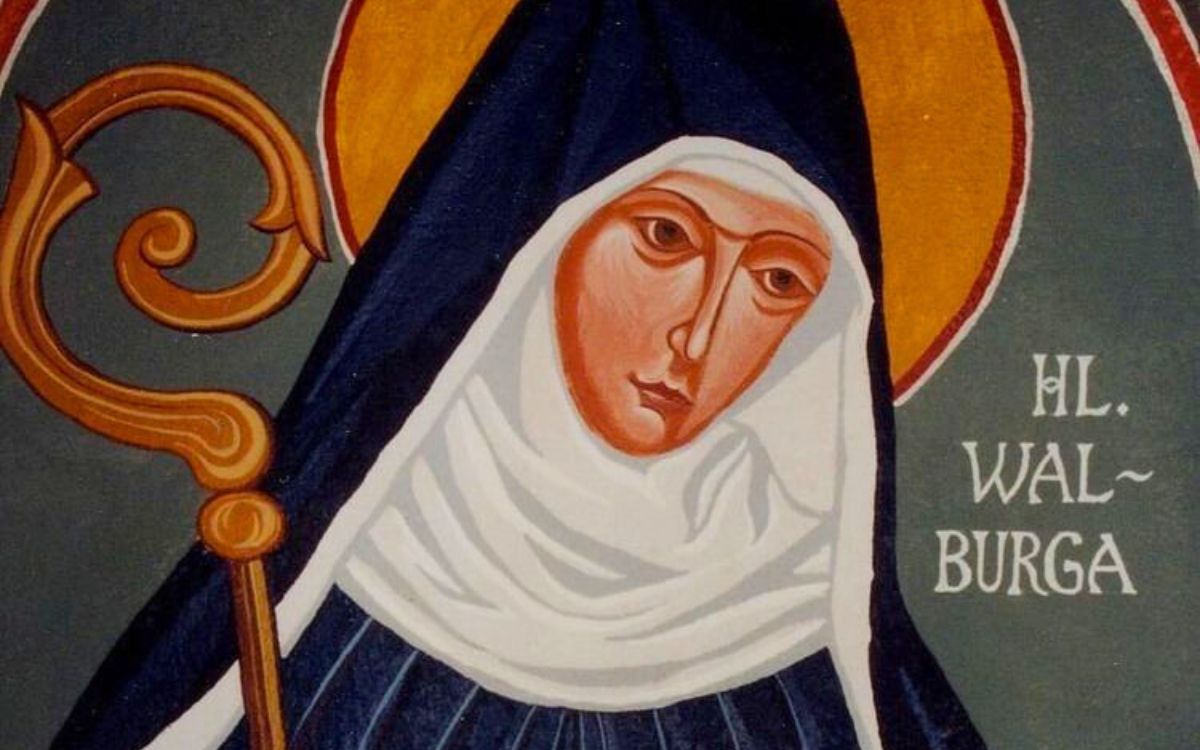
Walpurgis Night feels as though it belongs to the forests of Germany or the mountains of Transylvania.
It is a night of witches, spirits and dark gatherings, far removed from anything we might call British.
And yet the name comes from St Walpurga, a woman born in Devon, England, more than 1,300 years ago.
It is a curious journey, from Anglo-Saxon England to the pages of Dracula.
An Anglo-Saxon woman abroad
Walpurga was born around 710 into a well-connected Anglo-Saxon family, part of a network of religious figures who helped shape early English Christianity.
This was a world still close to its pagan past, where old beliefs had not vanished but sat alongside the new religion, sometimes uneasily.
She became a nun and later joined a remarkable movement of English missionaries travelling into mainland Europe to spread Christianity.
Alongside figures like St Boniface, these men and women left the relative safety of Anglo-Saxon England for regions where local traditions, spirits and seasonal rites still held sway.
Walpurga’s journey took her into what is now Germany, where she eventually became abbess of Heidenheim.
She was not a passive figure, as she led a religious community, wrote about the lives of saints and helped establish Christian practice in a landscape still shaped by older customs.
There is nothing in her life to suggest anything supernatural.
She was known for discipline, learning and a steady hand.
Which makes what happened after her death all the more striking.
St Walpurga and the oil
Walpurga died around 777 and was later buried in Eichstätt.
Over time, reports began to circulate of a strange phenomenon at her tomb.
A clear liquid was said to seep from the stone.
This “Walpurga oil” became famous across the region, drawing pilgrims who believed it had healing properties.
It was used in blessings, cures and protection.
Whether natural or miraculous, it added a quiet aura of mystery to her legacy, not dark or frightening but unusual enough to linger in the imagination.
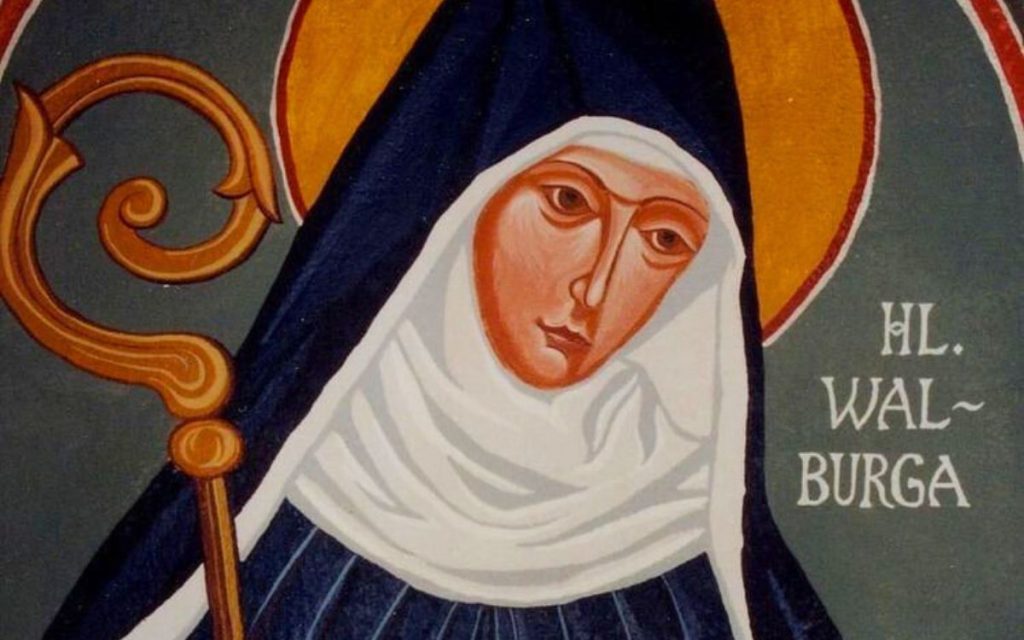
A name laid over an older night
Her feast day was set as 1 May.
The night before, however, was already significant.
Across Europe, 30 April marked a turning point in the year, the shift from winter into summer.
Fires were lit, rituals performed, and there was a long-standing belief that the boundary between worlds was thinner than usual.
In Britain and Ireland, this survives as Beltane, a fire festival focused on protection and renewal.
On the continent, the same night took on a darker tone, becoming associated with witches, spirits and gatherings in wild places.
Over time, this belief fixed itself onto the calendar.
Because Walpurga’s feast followed immediately after, the night became known as Walpurgis Night.
The saint did not create the festival.
Her name simply settled over it.
From folklore to Dracula
By the 19th century, Walpurgis Night had become firmly embedded in European folklore as a night of supernatural danger.
This is the version that caught the imagination of Bram Stoker.
In his short story Dracula’s Guest, Stoker describes Walpurgis Night as a time when the dead rise and evil walks freely.
The story is filled with unease, including abandoned villages, restless spirits and a growing sense that the night itself is alive.
He writes of it as a night “when, according to the belief of millions of people, the devil was abroad, when the graves were opened and the dead came forth and walked”.
The link is clear.
A Devon-born nun who spent her life challenging belief in pagan magic becomes the namesake of a night in which those very fears return in force, immortalised in one of the most famous works of Gothic horror.